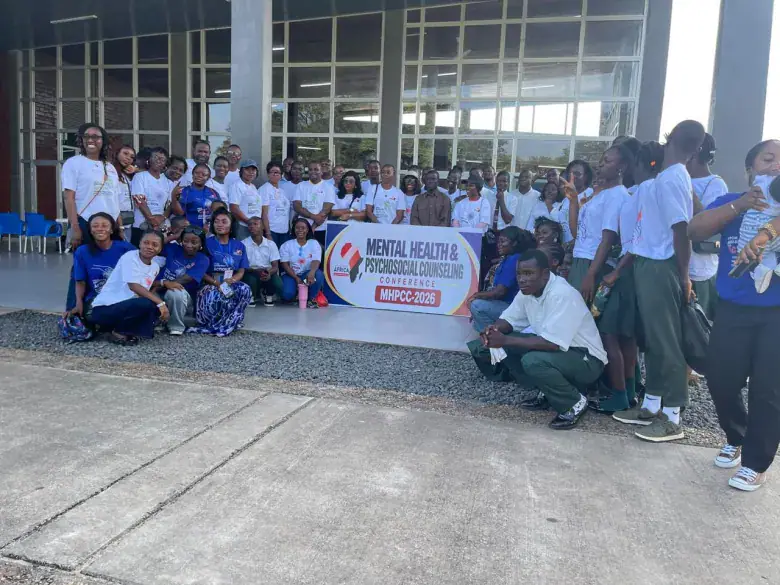
The Chairperson of the National Civil Society Council of Liberia, Cllr. Lawrence Yealue, has identified historical trauma, political pressures, and economic hardship as major contributors to Liberia's mental health and psychosocial challenges. Speaking at the 2026 Mental Health and Psychosocial Counseling Conference in Monrovia, Yealue emphasized the need for practical interventions to support young people and communities. He highlighted the country's founding by the American Colonization Society as a significant factor in shaping Liberia's psychological landscape.
Yealue argued that the circumstances surrounding Liberia's establishment have led to a widespread mindset of dependency, influencing national identity and young people's perceptions of opportunities and independence. He stressed that the country's history must be considered when examining social and psychological difficulties confronting its population. This historical context, combined with present-day challenges, has resulted in significant psychological distress among Liberians.
Contemporary challenges, such as political pressure and economic hardship, have a profound impact on the mental well-being of young people. Yealue cautioned against allowing political divisions and negative influences to draw young people into conflicts that could undermine their peace of mind and personal development. He also raised concerns about corruption, alleging that some influential individuals recruit young people as intermediaries in questionable financial activities.
To address these challenges, Yealue outlined three key approaches: humanizing people's experiences, moving from awareness to action, and building sustainable mental health support systems. He called for greater empathy toward people experiencing mental health difficulties, warning against stigma, discrimination, and public ridicule. Yealue also recommended integrating mental health services into primary healthcare and establishing youth-led peer counseling networks.
Nelson Teah Toe Jr., founder of the Encourage Africa Counseling and Career Foundation (EACCF), emphasized the need for stronger collaboration among institutions and organizations to improve mental health awareness and support in Liberia. The conference, held under the theme "From Awareness to Action: Building Sustainable Mental Health Support Systems in Liberia," brought together students, mental health practitioners, and stakeholders to discuss challenges and explore practical solutions.
The Encourage Africa Counseling and Career Foundation, established on May 31, 2020, is a nonprofit organization providing counseling, education, and psychosocial support. Its mission is to promote an environment where individuals and families can receive support for their mental, spiritual, and physical well-being. The foundation seeks to equip individuals and families with the skills and support needed to reach their full potential and contribute positively to society.
The conference featured keynote presentations, panel discussions, and interactive learning sessions aimed at challenging stigma, strengthening partnerships, and identifying practical measures to improve mental health services. Experts and stakeholders emphasized the need for collective action to address Liberia's mental health challenges, which affect individuals, families, and communities. By working together, they aim to create a supportive environment that fosters mental well-being and promotes sustainable development.
Key points
- Historical trauma, political pressures, and economic hardship are major contributors to Liberia's mental health challenges.
- Practical interventions, such as integrating mental health services into primary healthcare and establishing youth-led peer counseling networks, are needed to support young people and communities.
- Stronger collaboration among institutions and organizations is essential to improve mental health awareness and support in Liberia.