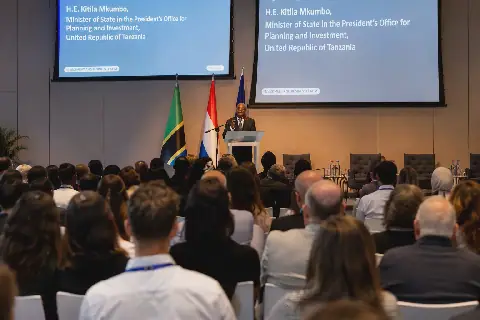
The Liberia Special Economic Zones Authority (LSEZA) has become a member of the Africa Economic Zones Organization (AEZO), a network of institutions that build and run economic zones across Africa. This move aims to make Liberia a leading destination for special economic zone (SEZ) investment in West Africa. AEZO is a peer network that provides its members with practical benefits, including a one-stop shop for information on partners and regulations, capacity-building, regional workshops, and training.
AEZO was founded in November 2015 by Tanger Med, a Moroccan port and logistics complex, and currently has around 80 members from over 40 countries. The organization reports that Africa has approximately 203 active SEZs, with 73 more in development, spread across 47 of the continent's 54 countries. Liberia, which has historically relied on a narrow range of raw materials for its economy, including iron ore, rubber, timber, and gold, is now part of this continental network.
Liberia's zone ambitions date back to 1975, when the Liberia Free Zone Authority was created, but it never transformed the economy. The modern framework for SEZs was established with the Special Economic Zones Act, adopted on October 9, 2017, which created LSEZA to oversee and regulate SEZs nationwide. The law offers investors special tax incentives, clear rights and obligations, and a one-stop shop for registrations, licenses, permits, and tax collection.
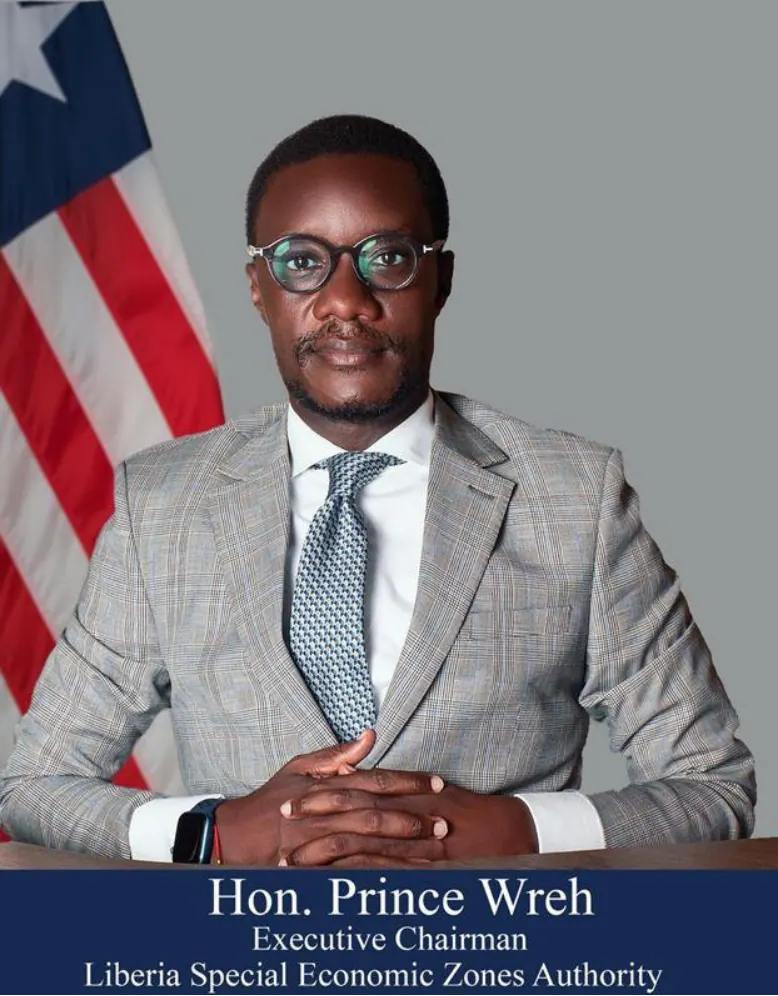
Despite being established in 2017, LSEZA only became operational under President Joseph Nyuma Boakai, with Prince Wreh appointed as its first Executive Chairman in April 2024, followed by a Board of Directors. Since then, the Governance Commission has led a reform of the Authority's internal structure aimed at efficiency, fiscal accountability, and investor confidence. LSEZA is currently developing five potential zones, supported by land secured in six counties.
The most advanced concept is in Grand Bassa, where around 500 acres near the Port of Buchanan have been designated for export-oriented manufacturing, logistics, and value-added industry. In Margibi, the Authority is pitching an "airport city" beside Roberts International Airport, combining residential, commercial, industrial, hospitality, and recreational facilities. The government frames the program as part of Pillar 1, Economic Transformation, of its ARREST Agenda.
Membership in AEZO offers LSEZA three key benefits: know-how, visibility, and positioning under the African Continental Free Trade Area (AfCFTA). Through peer exchange, Liberia can avoid costly lessons learned by other countries and gain visibility for investors scanning the continent for manufacturing sites. Additionally, AEZO's leadership has argued that African zones must connect quickly to global value chains as the AfCFTA takes hold.
The promise of SEZs is jobs, particularly for Liberia's young, fast-growing workforce, which faces chronic underemployment. Spreading zones across six counties could carry this opportunity to rural communities and ease pressure on the capital. However, challenges remain, including unreliable power, poor roads, weak port links, and slow land titling. LSEZA's success will be judged by signed tenants, functioning one-stop shops, reliable electricity, and the number of Liberians on factory payrolls.
Key points
- Liberia's LSEZA joins Africa's Economic Zones Organization to attract investment and create jobs.
- The country's SEZs aim to concentrate infrastructure, services, and incentives for labor-intensive industries.
- Membership in AEZO provides LSEZA with know-how, visibility, and positioning under the African Continental Free Trade Area.