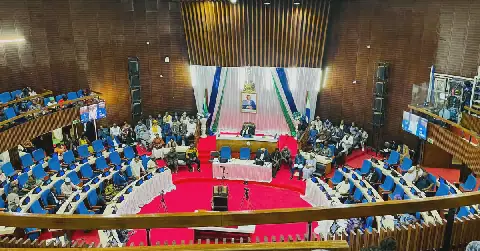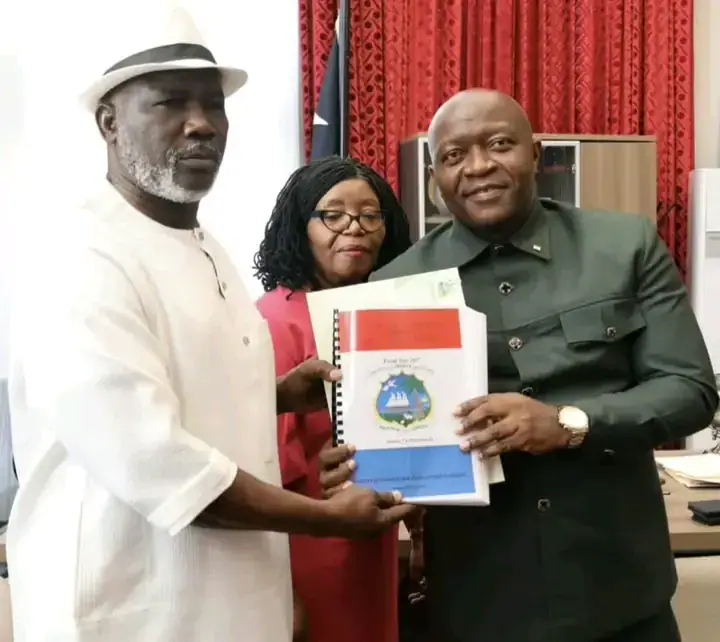
Liberia's government has submitted a draft budget of US$1.538 billion for 2027, the largest in the country's history. The proposed budget is about 18 percent larger than the current year's revised US$1.302 billion budget. President Joseph Nyuma Boakai's budget message, titled "A Growing Budget for Bigger Impact," ties the plan to his government's development blueprint, the ARREST Agenda. The budget aims to increase public sector wages, improve healthcare, and enhance education.
The budget's revenue projections are based on a recent surge in tax collections, with domestic revenue crossing US$1 billion for the first time in Liberia's 179-year history in September. The Liberia Revenue Authority reported that collections for the year had reached just over US$1.005 billion, roughly 63 percent more than the US$612 million collected in 2023. However, a large share of the revenue came from a single source: a US$200 million signature bonus from steelmaker ArcelorMittal.
Economists and opposition lawmakers are likely to scrutinize the budget's revenue projections, questioning how much of the revenue will be sustainable. LRA Commissioner General James Dorbor Jallah argues that Liberia would have neared the billion-dollar mark even without the bonus. The underlying trend in revenue collections is more modest, with monthly collections running at around US$88 million between January and July.
The budget allocates US$135.8 million for healthcare, a 22 percent increase from US$110.9 million. The funds will be used to staff and equip the New Redemption Hospital in Monrovia, buy dialysis machines and other equipment for the John F. Kennedy Medical Center, and keep medicines flowing to rural clinics. Education will receive US$163.5 million, up 13.9 percent from US$143.6 million, with US$7 million allocated for renovating the University of Liberia.
The budget also proposes significant increases in public sector wages, with a new pay floor of US$650 a month for teachers with a master's degree, US$400 with a bachelor's, US$240 with an associate degree or B-Certificate, and US$200 with a C-Certificate. More than 17,000 people will benefit from pay changes, including 1,934 police officers and 616 staff of the Liberia Drug Enforcement Agency.
The government has also committed to repaying nearly US$60 million owed to the National Social Security and Welfare Corporation in employer contributions. The budget sets aside US$2 million for commercial motorcyclists and funds 1,400 new recruits for the army and police. Additionally, US$3 million will be allocated for the national football team, and US$650,000 for former players.
Lawmakers are likely to probe the budget's gaps, including the 77 percent rise in funding for the Ministry of Gender, Children and Social Protection, and the allocation of US$2.5 million for small businesses, mostly run by women. The Legislature's budget committee will also scrutinize the budget's silence on agriculture, a sector that has received less than 1 percent of recent budgets despite employing a large share of Liberians.
Key points
- The proposed budget is based on a revenue milestone that was lifted in part by a one-off mining payment.
- The budget allocates significant increases for healthcare, education, and public sector wages.
- Lawmakers are likely to scrutinize the budget's revenue projections and gaps in funding allocations.