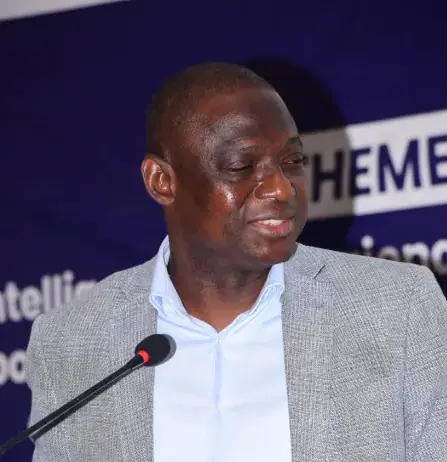
Commissioner Saa Saamoi of Liberia's Revenue Authority emphasized the need for stronger customs intelligence and regional cooperation to effectively combat transnational crime. Speaking at the 17th Joint Annual Meeting of National Correspondents of the Regional Intelligence Liaison Offices for West and Central Africa, he highlighted the importance of analyzing and acting on collected intelligence to disrupt increasingly sophisticated criminal networks. The meeting, held in Margibi County, Liberia, brought together customs officials and regional intelligence representatives to discuss strengthening intelligence and regional cooperation.
Commissioner Saamoi described the RILO network as critical to customs operations, particularly with expanding international trade, complex supply chains, and evolving concealment methods. He noted that customs administrations face multiple responsibilities, including mobilizing revenue, securing borders, protecting society and the environment, and facilitating legitimate trade for economic growth. Effective intelligence gathering, information dissemination, and coordinated enforcement are essential to balancing these responsibilities, he stressed.
The Commissioner welcomed recommendations from the meeting to strengthen national legal frameworks for intelligence gathering, information dissemination, and prosecution of offenders. He encouraged administrations to consider ratifying and implementing the Nairobi Convention, an important legal instrument for customs cooperation and mutual assistance. Saamoi also noted the need for stronger legal foundations for regional cooperation, citing discussions with customs counterparts in Yaoundé, Cameroon.
Commissioner Saamoi emphasized the importance of continuous capacity-building for customs intelligence officers and heads of intelligence units. He noted that criminal networks are becoming increasingly sophisticated, financially powerful, and operationally resilient. Customs administrations must strengthen technical knowledge, professional skills, and technological capabilities to keep pace with emerging threats. He also stressed the need for monitoring and evaluation of intelligence activities to ensure effective enforcement action.
The Commissioner identified a significant challenge in the failure of customs administrations to follow up on shared intelligence, undermining the effectiveness of the intelligence-sharing process. He pledged to advocate for stronger attention to this issue at the highest institutional level. Saamoi also called for stronger information exchange among customs administrations, warning that fragmented efforts would undermine the region's ability to respond to growing threats.
Commissioner Saamoi supported recommendations for regular intelligence reporting to highlight emerging threats, new customs fraud patterns, and developments in the regional intelligence environment. He stated that regular reporting, combined with effective coordination and follow-up mechanisms, would enable customs administrations to anticipate threats and disrupt criminal networks. Regional administrations must work together to address the complex nature of cross-border criminal activities.
Commissioner Saamoi commended the World Customs Organization Secretariat for its support to regional customs cooperation and acknowledged the contributions of the RILO leadership and National Correspondents. He praised their dedication and active participation in the meeting, which produced recommendations to be presented to Directors General for consideration and implementation. The Commissioner expressed satisfaction with the positive feedback received about the meeting arrangements.
Key points
- Commissioner Saa Saamoi calls for stronger customs intelligence and regional cooperation to combat transnational crime.
- The Commissioner emphasizes the need for effective intelligence gathering, information dissemination, and coordinated enforcement activities.
- Regular intelligence reporting and monitoring of intelligence activities are crucial to disrupting criminal networks and addressing emerging threats.