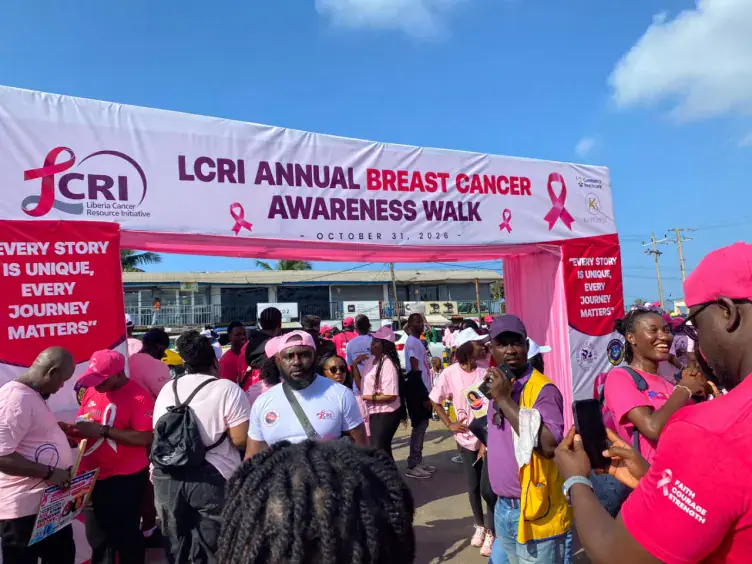
On the final day of Breast Cancer Awareness Month, Liberia's survivors and advocates took to the streets to convey a powerful message: cancer is not a death sentence if detected early. The event, organized by the Liberia Cancer Resource Initiative, drew a considerable crowd, despite being planned on a short timeline. Survivors like Benejane Shaw, who has undergone ten rounds of chemotherapy, and Florence Tugbeh, who has regained her hair, shared their stories, urging fellow Liberians to get screened.
The Liberia Cancer Resource Initiative, led by Christine E. Brooks-Jarrett, has been running this campaign annually, emphasizing that awareness must be a year-round effort. The initiative aims to break the stigma surrounding cancer and encourage women to prioritize their health and get screened. In a country where a cancer diagnosis is often whispered about, this ambition is significant. The event was not just about raising awareness but also about showcasing the resilience of breast cancer survivors.
Dr. Deddeh Supuwood, a medical oncologist at the John F. Kennedy Medical Center, has a personal connection to the cause, having lost her mother to breast cancer. She now dedicates her time to ensuring that fewer Liberian daughters suffer the same fate. According to Dr. Supuwood, saving one woman's life can mean saving an entire family. Her sentiments are echoed by the latest international estimates, which put Liberia's cancer toll at 4,217 new cases and 2,745 deaths annually.
Breast cancer is the most common type, with 885 new cases and 421 deaths reported in 2024, translating to roughly 48 deaths for every 100 women diagnosed. The numbers are estimated, as Liberia lacks a cancer registry to accurately count its patients. This gap is a significant failure of public health. The healthcare system that patients enter is also under-equipped, with no radiotherapy machines, radiation oncologists, mammography units, or national breast and cervical cancer screening programs.
The government has made some efforts to address the issue, including breaking ground for the country's first radiotherapy center in July 2025 and donating equipment and chemotherapy drugs to the Kennedy hospital. However, a lot more needs to be done. The President, Ministry of Health, and Legislature are urged to fund cancer by name, creating a dedicated budget line for cancer drugs, screening, and completing the radiotherapy center.
To effectively tackle the issue, the government should also take screening beyond Monrovia, making mammography, clinical breast exams, and cervical screening accessible in counties, with trained staff to read results and refer patients. Additionally, making key cancer drugs available and subsidizing chemotherapy can prevent families from having to choose what to sell to afford treatment. Groups like the Liberia Cancer Resource Initiative should receive support, including grants, free airtime, and logistical help.
The fight against cancer will not be won with money alone; it requires collective and sustained action. The government can tap into the creativity of local groups, market women's associations, churches, mosques, and radio stations broadcasting in local languages to reach women who may not visit clinics. A modest innovation fund for community cancer projects can help the best ideas grow, and a requirement to measure results can show which ones deserve to be replicated.
Key points
- The Liberian government is urged to create a dedicated budget line for cancer drugs, screening, and completing the radiotherapy center.
- The government should take screening beyond Monrovia, making mammography, clinical breast exams, and cervical screening accessible in counties.
- Collective action, including support from the government and local groups, is necessary to effectively tackle breast cancer in Liberia.