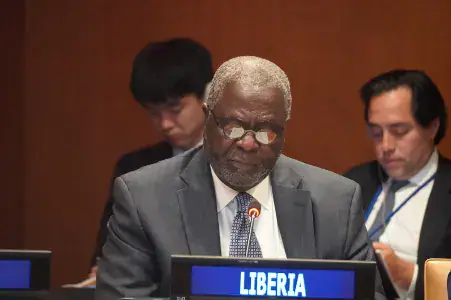
Liberia's Ambassador to the United Nations, Lewis G. Brown II, has outlined three key priorities to combat transnational organized crime. He made these recommendations at a high-level event at the United Nations Headquarters in New York, marking the International Day for the Prevention and Fight against All Forms of Transnational Organized Crime. Ambassador Brown emphasized that organized crime is a serious threat to international peace and security, sustainable development, and human rights worldwide.
Ambassador Brown's first priority is effective cross-border cooperation, enabling countries to request and share relevant evidence to strengthen criminal investigations and prosecutions. This cooperation is crucial in combating transnational organized crime, which often involves networks operating across national borders. By working together, countries can better investigate and prosecute crimes, and prevent criminals from escaping justice.
The second priority outlined by Ambassador Brown is greater collaboration among financial intelligence units and investigators. This collaboration is necessary to trace illicit financial flows, share relevant information, and facilitate the legal recovery of proceeds generated through criminal activities. By working together, countries can disrupt the financial networks of organized crime groups and prevent them from profiting from their crimes.
Ambassador Brown's third priority focuses on prevention, urging increased investment in programs that support young people, particularly by expanding access to drug-dependence treatment services within their communities. He stressed that recovering proceeds from organized crime networks and intervening early to support vulnerable young people are essential to preventing the recurrence of criminal activities and strengthening peace.
Ambassador Brown noted that Liberia understands the challenges involved in rebuilding public trust in state institutions. He emphasized that communities should not be left to bear the consequences of criminal activities while the proceeds are transferred and concealed across national borders. By working together to combat organized crime, countries can help to rebuild trust in state institutions and promote sustainable development.
The Liberian Ambassador to the UN also highlighted the importance of denying organized crime networks the means to continue their activities. He stated that every time proceeds from organized crime are recovered, it denies these networks the means to continue their crimes. Similarly, intervening early to support vulnerable young people gives peace a better chance to last.
Ambassador Brown's recommendations were made in response to the growing threat of transnational organized crime, which poses a significant challenge to international peace and security. His call for cross-border cooperation, financial intelligence sharing, and prevention programs reflects a comprehensive approach to combating this complex issue. By working together, countries can help to prevent organized crime and promote a safer, more secure world.
Key points
- Cross-border cooperation is essential to combat transnational organized crime.
- Financial intelligence sharing can help to disrupt the financial networks of organized crime groups.
- Prevention programs, particularly those supporting young people, are crucial to preventing the recurrence of criminal activities.