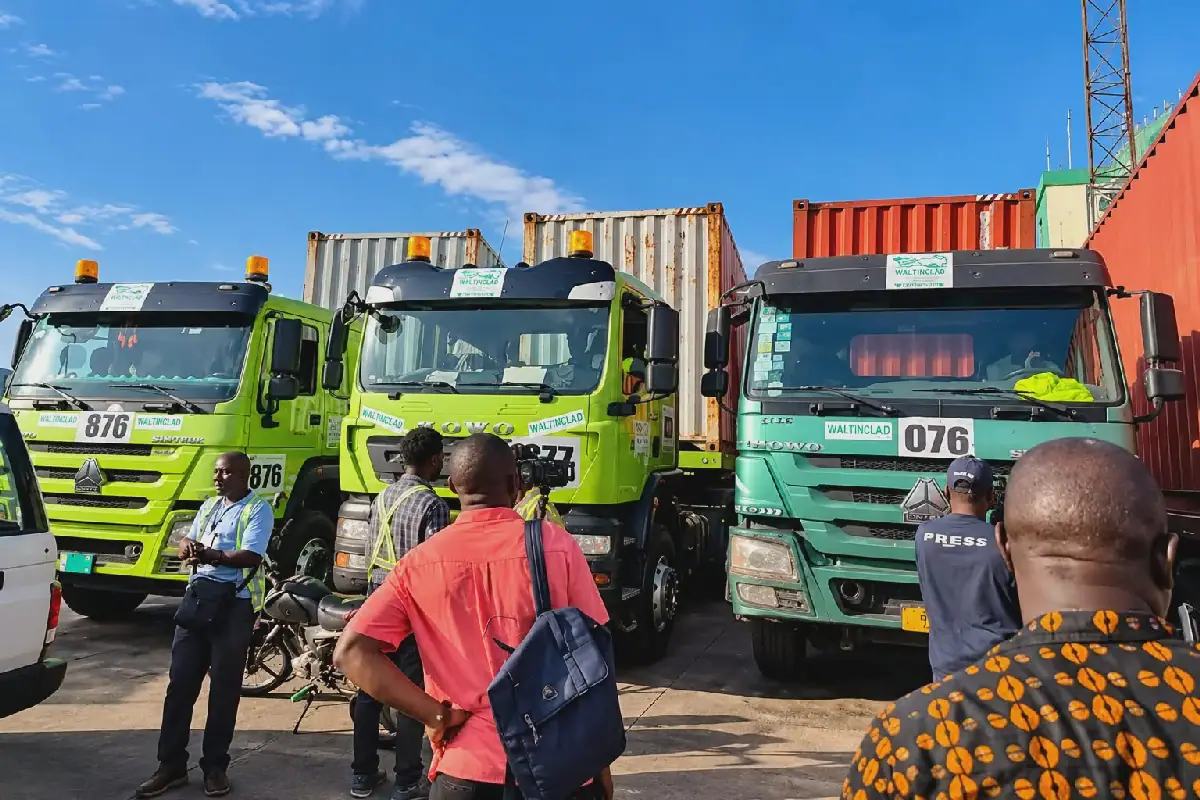
Liberia's Ministry of Agriculture has received the final consignment of agricultural machinery donated by the People's Republic of China, marking a significant milestone in the country's efforts to modernize its agricultural sector. The shipment, comprising 42 containers, arrived at the Freeport of Monrovia and will be moved to their destination in the coming days. This development is part of the government's drive toward mechanized farming, increased food production, and national food self-sufficiency.
The Ministry of Agriculture, under the leadership of Hon. Dr. J. Alexander Nuetah, aims to transition Liberia's agricultural sector from traditional farming practices to more modern and commercially viable systems. The Chinese-donated machinery is expected to contribute to these objectives by strengthening the country's agricultural mechanization capacity and supporting efforts to improve farming efficiency. The Ministry continues to pursue initiatives aimed at improving agricultural productivity, strengthening food security, supporting farmers, and reducing the country's dependence on imported food.
The arrival of the machinery highlights the importance of international partnerships in supporting Liberia's agricultural development agenda. The Government of China's contribution reflects continued cooperation between Liberia and China in advancing agricultural development, technology transfer, and food production. This partnership is expected to translate into practical support for Liberia's farming communities, with the Ministry focusing on ensuring that modern farming equipment becomes accessible to farmers and contributes meaningfully to increased domestic food production.
Agriculture remains central to Liberia's economic development, rural livelihoods, employment creation, and national food security. The Ministry's emphasis on mechanization is crucial in addressing longstanding challenges associated with low agricultural productivity, limited access to modern farming equipment, and dependence on labour-intensive cultivation methods. The Ministry's commitment to building a more productive, competitive, resilient, and food-secure Liberia is reinforced by this development.
With the arrival of this final consignment, the Ministry has taken another important step toward strengthening the resources available to support agricultural modernization. The next critical phase will involve the deployment and effective utilization of the machinery to support farmers and agricultural production across the country. The Ministry's team, led by Minister J. Alexander Nuetah and his Deputy Ministers, will oversee the implementation of the agricultural transformation agenda.
The Chinese-donated machinery is expected to play a significant role in Liberia's quest for national food self-sufficiency. The country's agricultural sector has long been hindered by limited access to modern farming equipment, and the Ministry's efforts to address this challenge are ongoing. The arrival of the 42 containers of machinery represents a significant boost to the country's agricultural mechanization capacity and will support efforts to improve farming efficiency.
The Ministry's progress in implementing its agricultural transformation agenda has been bolstered by the support of international partners, including the Government of China. As the country continues to work toward a more productive and food-secure future, the effective utilization of the donated machinery will be crucial in achieving this goal. The Ministry's commitment to ensuring that modern farming equipment becomes accessible to farmers will be critical in driving progress toward national food self-sufficiency.
Key points
- The Liberian Ministry of Agriculture has received 42 containers of agricultural machinery donated by China to boost mechanization and food production.
- The machinery is expected to strengthen Liberia's agricultural mechanization capacity and support efforts to improve farming efficiency.
- The development is part of the government's drive toward mechanized farming, increased food production, and national food self-sufficiency.