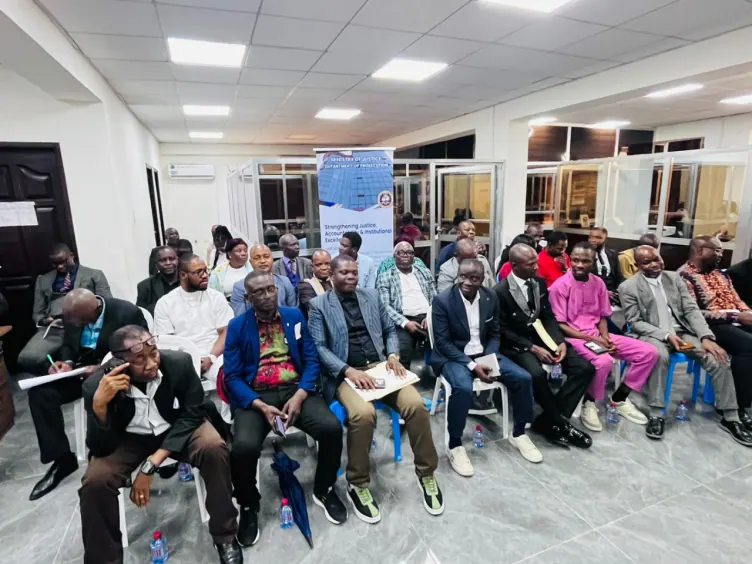
The Liberian justice system, long flagged by the U.S. State Department as broken, is set to undergo reforms with a new charging rule. The rule, ordered by the Solicitor General, requires prosecutors to sign off before police can charge suspects. This move comes amid concerns that arrests often outrun evidence, leading to lengthy pretrial detention. The State Department's human rights report on Liberia documented that lengthy pretrial detention is a serious problem, with some detainees waiting 180 days or more without a hearing.
The new rule is a response to the State Department's findings that Liberia's justice system is plagued by a shortage of trained prosecutors and public defenders, poor court administration, and inadequate police investigation and evidence collection. The report also noted that arrests are often made without judicial authorization, and warrants are sometimes issued without sufficient evidence. As a result, weak evidence at the point of arrest contributes to the backlog of cases.
According to the State Department's report, roughly 60 percent of pretrial detainees, particularly those held on felony charges, spend more than two terms of court, or about 180 days, behind bars without a hearing. Liberian law stipulates that a case should be dismissed if a defendant isn't tried by the next court term with no cause shown, but this provision is rarely enforced. The new charging rule aims to address these issues.
The implementation of the new rule is, however, uncertain. There are concerns that the Solicitor General's office and City Solicitors nationwide may not have the necessary staffing to review every police charge in real-time, potentially creating a new bottleneck. The meeting summary that announced the directive treats it as already standing, while a related measure to assign a Supervisor and Deputy Supervisor to every Magisterial Court is still being formalized.
The new rule is seen as an attempt by the Solicitor General's office to intervene at the charging decision stage, where it has direct authority. Whether it will meaningfully reduce wrongful or evidence-free detention depends on enforcement, including whether police actually route charges through prosecutors in practice, and whether promised written rules and monitoring structures follow.
The State Department's report also highlighted that judicial corruption and a non-functioning bail system contribute to the problems in Liberia's justice system. The report attributed the lengthy pretrial detention to a mix of factors, including the use of detention as a punitive measure, delayed indictments, and poor court record-keeping.
The effectiveness of the new charging rule in reducing pretrial detention and improving the justice system will be closely watched. The rule is part of a broader effort to reform Liberia's justice system, which has been criticized for its inefficiencies and lack of accountability. The success of the rule will depend on its implementation and enforcement.
Key points
- The new charging rule requires prosecutors to sign off before police can charge suspects.
- The Liberian justice system has been plagued by lengthy pretrial detention, with some detainees waiting 180 days or more without a hearing.
- The implementation of the new rule is uncertain, with concerns about the capacity of the Solicitor General's office and City Solicitors nationwide to review every police charge in real-time.