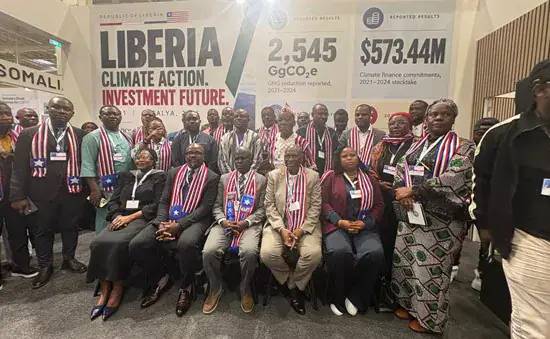
Liberia is participating in the 31st United Nations climate conference, COP31, in Antalya, Türkiye, with a strong delegation led by Dr. Emmanuel K. Urey Yarkpawolo, the Executive Director of the Environmental Protection Agency. The country's participation aims to give its people a voice and a chance to turn international cooperation into tangible benefits at home. Dr. Yarkpawolo emphasized that climate change poses significant threats to everyday life in Liberia, with rising seas, extreme heat, and changing rainfall patterns affecting homes, farms, water, and jobs.
Dr. Yarkpawolo explained that Liberia, as a small polluter, faces outsized harm from climate change, with coastal erosion, floods, and shifting rainfall already straining homes, roads, and farms. He stressed that countries must work together to reduce greenhouse gases and help those most affected, which is why the United Nations climate conference matters. The EPA chief used an analogy of communities sharing a river to illustrate the need for cooperation in addressing climate change, noting that pollution upstream can harm people downstream.
The Liberian delegation to COP31 is diverse, comprising government officials, technical experts, civil society, students, young people, journalists, superintendents, traditional leaders, and religious leaders. Dr. Yarkpawolo emphasized that this broad participation is crucial because climate change affects everyone. Experts follow negotiations, while other delegates share community concerns, report developments, and build partnerships. The delegation has met with UN Secretary-General António Guterres as one of four leaders from the Least Developed Countries group.
During the meeting with the UN Secretary-General, Liberia argued that protecting its rich forests and biodiversity must bring benefits to the country and its communities. Dr. Yarkpawolo stated that Liberia's forests help the world by absorbing carbon dioxide, a gas that warms the planet, and that people protecting these forests deserve support and opportunities to earn a living. The country seeks funding that is easier to access, useful technology, and partnerships to protect coastlines, support farmers, expand clean energy, and safeguard forests.
COP31, which runs from November 9 to 20, 2026, provides a platform for countries to review progress and agree on action to address climate change. Dr. Yarkpawolo explained that the conference is organized into the Blue Zone, managed by the United Nations, and the Green Zone, managed by the host country. The Blue Zone hosts official negotiations, exhibitions, national pavilions, and side events, while the Green Zone welcomes public engagement and showcases practical solutions.
Liberia has made progress in addressing climate change, hosting discussions on farming, youth opportunities, preparing for climate threats, and fair management of natural resources. The country has also discussed protecting people forced to leave their homes by climate impacts, including through a proposed West African Climate Mobility and Resilience Program. Dr. Yarkpawolo revealed that he was one of four leaders from the Least Developed Countries group chosen to meet UN Secretary-General António Guterres.
The outcome of COP31 will be crucial in determining whether Liberia's voice converts into tangible results. Dr. Yarkpawolo conceded that meetings are only the beginning, and success must show in projects delivered and money used openly. The country hopes to achieve concrete outcomes, including accessible funding, technology, and partnerships that support its people and communities in addressing climate change impacts.
Key points
- Liberia seeks accessible funding, technology, and partnerships to protect its forests and communities from climate change impacts.