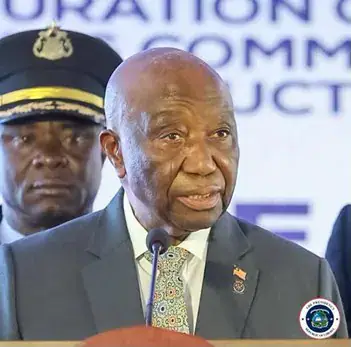
President Joseph Nyuma Boakai of Liberia has convened the Steering Committee for the Liberia Peace, Reconciliation and Memorial Museum, marking a significant step towards national healing and historical preservation. The committee, which includes cabinet officials, members of the diplomatic corps, traditional and religious leaders, and survivors of Liberia's 14-year civil conflict, will oversee the establishment of a national memorial museum. Boakai emphasized that lasting peace requires confronting historical truth, stating that "peace that is not built on truth is a peace that is not yet complete."
The establishment of the national memorial museum directly answers a recommendation of Liberia's Truth and Reconciliation Commission (TRC), which was set up in 2009. The TRC's final report recommended the construction of national memorials, museums, and historical archives to honor victims, educate younger generations, and prevent a relapse into violent conflict. For nearly two decades, however, memorialization efforts remained fragmented, leaving mass grave sites unmarked and vital wartime testimonies vulnerable to erasure.
The museum project is guided by five core pillars: Remember, Understand, Learn, Reconcile, and Prevent. It is envisioned as a multi-functional national sanctuary housing wartime archives, oral testimonies, photographs, and scholarly research centers. The museum will provide a space for Liberians to confront their shared history. President Boakai has emphasized that victims, survivors, and bereaved families will be at the center of the project's governance and design.
The President has signed the Museum's Project Charter, which sets out its purpose, governance, and program of work. The Charter provides a legal framework for the project, ensuring that it is anchored on binding governance rather than mere symbolism. Boakai has challenged the Steering Committee to finalize the implementation plan, budget, working groups, financing strategy, and a concrete 90-day operational roadmap.
The Steering Committee includes expert delegations from Rwanda and South Africa, which are renowned for transforming sites of profound national trauma into enduring engines of civic education and reconciliation. President Boakai has welcomed global technical wisdom but emphasized the importance of national authorship, stating that "this is Liberia's story, and it must be told in Liberia's voice."
The museum project is part of a broader effort to reclaim Liberia's full historical narrative. President Boakai's July 26, 2026, Independence Day policy announcement included the unveiling of the National Historical Recovery and Repatriation Initiative and the revival of the National History Project. These initiatives signal a comprehensive state-led effort to preserve Liberia's history.
The President has urged the Steering Committee to take decisive action, stating that "the Liberian people are watching, and they are waiting, not for speeches, but for action." The 90-day roadmap will test the committee's resolve to establish a national peace and memorial museum that will serve as a lasting tribute to victims and survivors of Liberia's civil conflict.
Key points
- The Steering Committee has been given a 90-day mandate to finalize the implementation plan and budget for the national peace and memorial museum.
- The museum project is guided by five core pillars: Remember, Understand, Learn, Reconcile, and Prevent.
- The project emphasizes national authorship, with President Boakai stating that "this is Liberia's story, and it must be told in Liberia's voice."