President Joseph Nyuma Boakai of Liberia has signed the founding charter for a Peace, Reconciliation and Memorial Museum, marking a significant step towards preserving the country's history and promoting national unity. The museum will gather survivor testimonies, recover records held abroad, and educate future generations about the human cost of conflict and the importance of sustaining peace. This initiative is part of Boakai's efforts to address the country's turbulent past, which claimed an estimated 250,000 lives between 1989 and 2003.
The charter sets out the museum's mandate, leadership, governance, and decision-making procedures, establishing five technical working groups to oversee various aspects of the project. Minister Mamaka Bility chairs the steering committee, with UNDP Resident Representative Ambassador Aliou Mamadou Dia serving as co-chair. The committee will provide strategic guidance and coordinate participation as the project moves toward implementation. Experts from Rwanda and South Africa will share their experience in memorialization and museum development, providing valuable lessons for Liberia.
The museum forms part of Boakai's National Historical Recovery Initiative, launched in July 2026, which seeks to recover historical records and put Liberians at the center of documenting and telling their history. The project follows Boakai's public apology on behalf of the Liberian State to victims and families affected by the civil wars. The museum will collect, verify, preserve, and digitize photographs, government records, audiovisual materials, and survivor testimonies, providing a comprehensive account of Liberia's complex past.
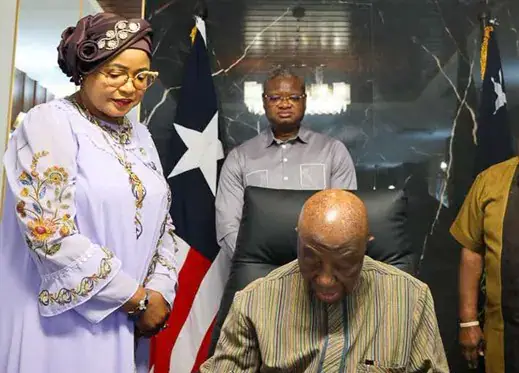
The Liberian Chief Executive signed the Charter alongside Minister Mamaka Bility and UNDP Resident Representative Ambassador Aliou Mamadou Dia on November 13, 2026. Boakai emphasized the importance of remembering the past, stating, "Liberia cannot build a united future on a past it refuses to remember." Bility added, "Today we have put our names to a promise... remembering our past and building a united future is the work of this Museum, and this belongs to every Liberian."
Technical delegations from Rwanda and South Africa arrived in Liberia on November 14 and 15 to join the Government of Liberia, the United Nations Development Programme (UNDP), national stakeholders, and development partners. The visiting experts bring experience in historical preservation, museum development, memorialization, reconciliation, and post-conflict recovery. Their participation builds on a UNDP-supported study mission in East and Southern Africa, led by Bility between August and September 2026.
The inaugural National Steering Committee meeting will run from November 16 to 18 at the Executive Pavilion in Monrovia, bringing together stakeholders to discuss archives management, institutional partnerships, museum design, public education, and the steps toward construction. Historians, researchers, educators, civil society organizations, survivors, young people, and affected communities are expected to contribute to the museum's development, ensuring a comprehensive and inclusive approach.
The museum project faces significant challenges, including the need for patience, money, and political courage. The harder test will be determining whose account will carry the national narrative, highlighting the importance of a balanced and accurate representation of Liberia's complex history. With UNDP's support, the Steering Committee will work to ensure the museum's success, preserving Liberia's collective memory and inspiring future generations to protect the peace.
Key points
- The museum will gather survivor testimonies and recover records held abroad to preserve Liberia's history and promote national unity.
- Experts from Rwanda and South Africa will share their experience in memorialization and museum development to support Liberia's project.
- The museum is part of Boakai's National Historical Recovery Initiative, launched in July 2026, to recover historical records and promote national unity.