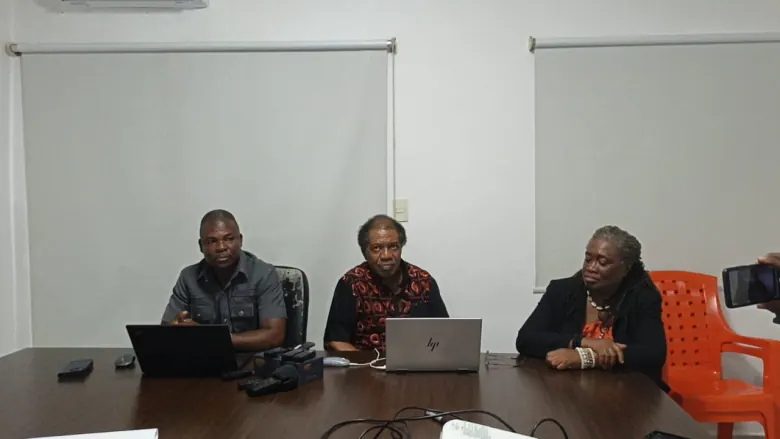
A coalition of civil society groups in Liberia, under the banner of the Civil Society Working Group on Land Rights Reform and the Multi-Actor Platform on Land Governance, has urged the government to provide stronger political will and increased budgetary support to implement the Land Rights Act. This call was made at a news conference in Monrovia on September 30, 2026, where the groups unveiled their 2026 Policy Brief titled “Defending Land, Protecting Rights.”
The policy brief was produced by the Ducor Institute for Social and Economic Research and commissioned by the Sustainable Development Institute and MAP Liberia Land Platform, with support from the International Land Coalition. According to the brief, the Land Rights Act has made significant progress since its passage in 2018, with approximately 70 customary communities, comprising about 380,000 citizens, completing the process required to qualify for land rights and set to receive deeds for the first time.
The groups highlighted that Liberia's land history has been marked by large-scale concessions that contributed to dispossession, rural neglect, and the conditions that fueled the country's 14-year civil war. The 1926 Firestone Agreement, which covered one million acres at six cents per acre, was cited as a key example of this history. Post-war land reform, led by the Governance Commission under former President Ellen Johnson Sirleaf, culminated in the passage of the Land Authority Act in 2016 and the signing of the Land Rights Act by former President George Weah in September 2018.
Despite the progress made, the civil society groups identified several major challenges affecting the implementation of the Land Rights Act. These challenges include low budgetary support, with implementation heavily donor-dependent, and the slow pace of community formalization, which could take many years to complete at the current rate. With an estimated 600 to 700 clans nationwide, the groups stressed that increased investment is needed to accelerate the formalization process.
The groups also pointed to overlapping institutional mandates among several government institutions, including the Liberia Land Authority, Forestry Development Authority, Environmental Protection Agency, Ministry of Mines and Energy, and the newly established Liberia Carbon Marketing Authority. Limited technical capacity within relevant institutions and inadequate public awareness of the Land Rights Act were also cited as major challenges.
To address these challenges, the policy brief stressed that Liberia needs stronger coordination and greater investment to ensure effective implementation of the Land Rights Act. The brief called on the government and development partners to increase investment in customary community formalization, expand public awareness and education on the Land Rights Act, improve land data administration and management, and strengthen county-level land services.
The civil society groups emphasized that secure land tenure places communities in a stronger position to participate in addressing climate change and emerging opportunities in carbon marketing. The statement was issued by the Civil Society Working Group on Land Rights Reform, Rights and Rice Foundation, and Sustainable Development Institute, and noted that the Land Rights Act does not block investment but ensures that investment proceeds on clear, lawful, and stable terms.
Key points
- The Land Rights Act has recorded significant achievements, including the completion of land rights formalization for approximately 70 customary communities.
- The implementation of the Land Rights Act contributes to peace-building, inclusive governance, investment confidence, and stronger climate and environmental governance.
- The civil society groups are calling for increased investment in customary community formalization, public awareness, and land data administration to ensure effective implementation of the Land Rights Act.