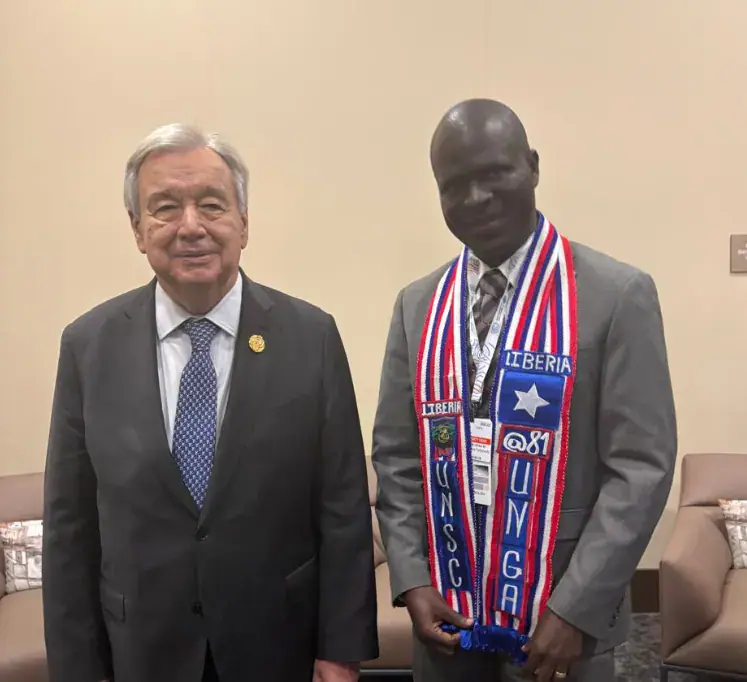
Liberia has appealed for stronger international support to protect its forests and vulnerable coastal communities from the impacts of climate change. Dr. Emmanuel K. Urey Yarkpawolo, Executive Director of Liberia's Environmental Protection Agency, delivered the appeal during a meeting between the UN Secretary-General, António Guterres, and five ministers representing the Least Developed Countries (LDC) Group at COP31. The meeting brought the concerns of climate-vulnerable countries directly to the UN's highest office.
Liberia's forests cover over two-thirds of its territory, serving as vital carbon sinks, supporting biodiversity, and providing essential resources for local communities. However, the country faces growing pressure to reconcile conservation with urgent development needs. Deforestation, changing land use, and competing demands for land threaten the resources Liberia is working to preserve. Sustained international investment is essential to support forest protection while improving livelihoods.
The Liberian intervention highlighted the financial challenge facing countries that maintain globally important ecosystems. Protecting forests requires resources, while communities also need employment, infrastructure, and essential public services. International climate support must help countries meet these responsibilities together. Dr. Urey Yarkpawolo emphasized that vulnerable countries cannot meet escalating climate challenges through domestic resources alone.
Liberia's coastal communities are highly vulnerable to climate change, with approximately 60 percent of the population living near the coastline. Rising sea levels, erosion, and storm surges threaten communities and livelihoods. For these communities, adaptation is an immediate development priority. Protecting homes, public infrastructure, and economic activities requires investment that matches the growing scale of climate impacts.
Liberia called for a substantial expansion of adaptation action, backed by reliable and sustained financing. The EPA Executive Director urged delivery of the goal to triple adaptation finance, alongside existing commitments to provide the resources needed for implementation. He emphasized that financing climate resilience should enable development, rather than deepen the difficult choices vulnerable countries already face.
Other members of the delegation reinforced Liberia's concerns from their national perspectives. Sierra Leone's Minister of Environment highlighted the importance of tripling adaptation financing, while Malawi emphasized clean energy access and the constraints imposed by growing debt burdens. Nepal focused on the vulnerability of mountain ecosystems, warning of glacier loss, flooding, and other consequences of rising temperatures.
The delegation conveyed a common demand: international climate commitments must translate into resources that vulnerable countries can use to protect their people. For Liberia, the meeting placed forest conservation and coastal resilience at the center of that demand. Its message connected the global value of its natural resources with the daily needs of its citizens and called for international cooperation that supports both.
Key points
- Liberia urges international support to protect its forests and vulnerable coastal communities from climate change impacts.
- The country faces growing pressure to reconcile conservation with urgent development needs.
- Liberia called for a substantial expansion of adaptation action, backed by reliable and sustained financing.