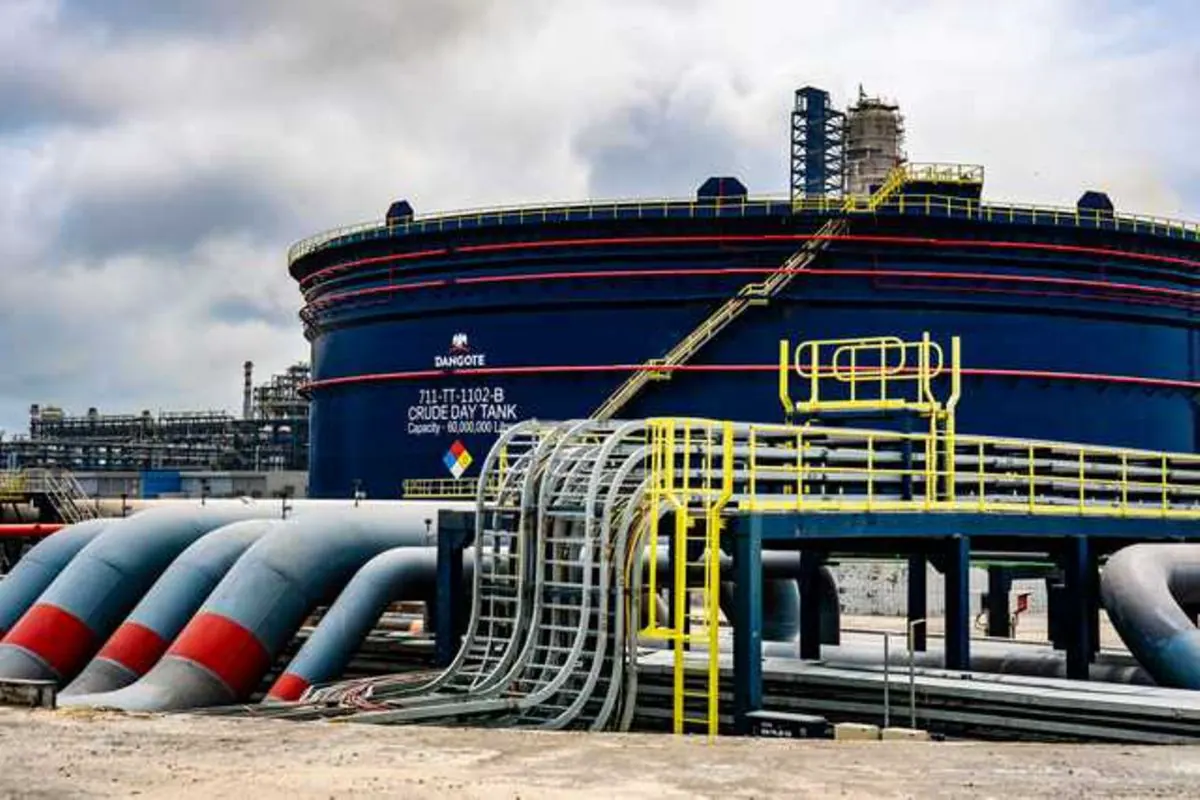
The Dangote Petroleum Refinery in Nigeria has returned to court in Lagos to challenge the granting of petrol import licences to the state oil company and six private marketers. The dispute centres on the interpretation of Section 317(9) of Nigeria's Petroleum Industry Act, 2021, which requires the regulator to promote local refining and license imports only where domestic supply falls short. The Dangote refinery argues that once it can supply the market, imports must stop, while the regulator and state oil company believe imports remain lawful when needed.
A different court in Abuja has ruled that the regulator must issue import licences to marketers who meet statutory conditions, adding to the conflicting court decisions. The cases highlight the challenges faced by regulators in balancing the interests of local refiners and importers. The outcome will have implications for East Africa, particularly Kenya, where a similar Dangote refinery is set to be built in Lamu. The Kenyan government must consider the implications of the Nigerian court's decisions when crafting its own regulations.
The Lamu refinery, expected to have a capacity of 700,000 barrels per day, is being developed at a cost of approximately $16 billion, with 30 percent of the investment offered to Kenya and two of its neighbours. The investor has requested protection against cheap refined imports, but the rules on pricing, offtake, and the rights of state shareholders are yet to be written. The Kenyan government must navigate these complex issues to ensure that the refinery operates efficiently and benefits the country.
One of the key challenges facing Kenya is how to balance the interests of the Lamu refinery and importers. The country's downstream sector is built on many oil marketing companies trading under the Open Tender System (OTS), and the government must ensure that the refinery does not unfairly disadvantage these companies. The Energy Act, 2019, and other regulations must be reviewed and amended to accommodate the new refinery and ensure a level playing field.
The Kenyan government's fuel arrangement with Gulf suppliers, which was introduced as a stop-gap measure in 2023, is set to expire at the end of this year. The government must decide on a new arrangement, taking into account the implications of the Lamu refinery. The rules that replace the current arrangement should be written with the refinery in view, to avoid Kenya paying twice for the same product or being bound to one supplier while acquiring another.
The Nigerian court's decisions also highlight the importance of writing clear rules and regulations for the refinery. The government must cap the offtake commitments of shareholder states, price them at no more than import parity, and review them on a fixed cycle. This will ensure that the refinery operates efficiently and that the government is not left with costly subsidies.
Ultimately, the Kenyan government must ensure that its energy laws and regulations are aligned with the new reality of a domestic refinery. The Energy and Petroleum Regulatory Authority must be given clear powers to regulate the petroleum business, and the Competition Act, 2010, and Public Finance Management Act, 2012, must be applied to the refinery. By doing so, the government can ensure that the Lamu refinery benefits the country and operates in a fair and transparent manner.
Key points
- The Dangote Petroleum Refinery's court battles in Nigeria have implications for Kenya's Lamu refinery.
- The Kenyan government must balance the interests of the Lamu refinery and importers.
- Clear rules and regulations are needed to ensure the efficient operation of the Lamu refinery.