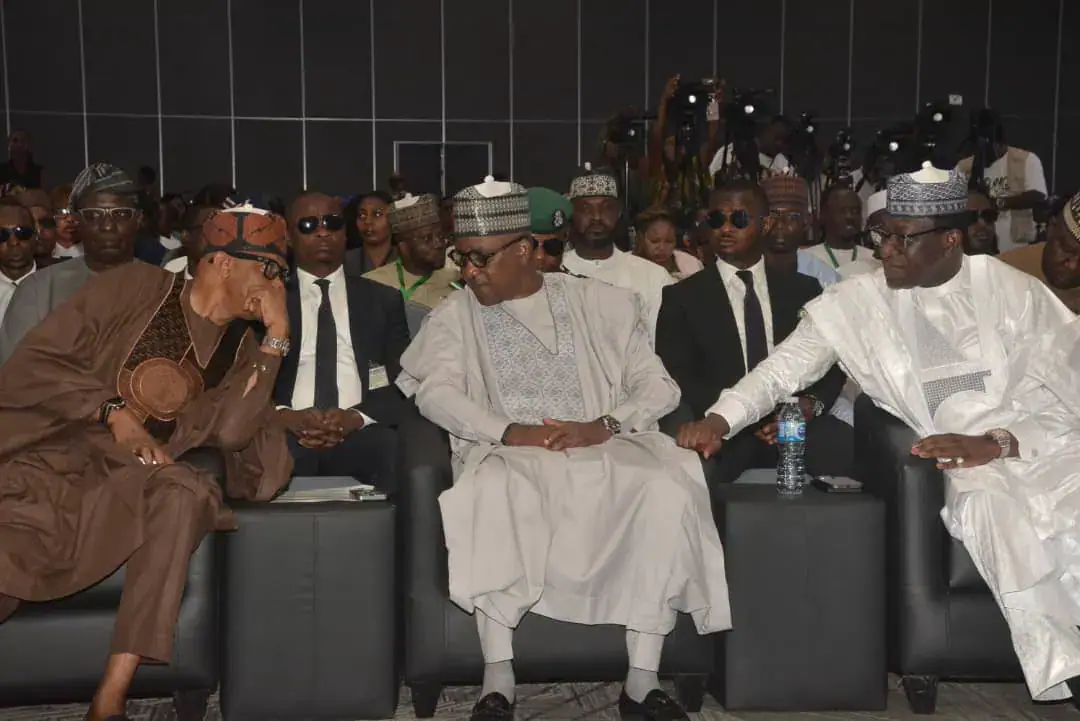
The Managing Director of the Ministry of Finance Incorporated (MOFI), Armstrong Takang, has disclosed that less than 10% of properties across Nigeria have proper land titles. This situation limits access to credit, discourages investment, and weakens confidence in the country's real estate market. According to Mr. Takang, the lack of reliable property documentation has left many Nigerians unable to use their assets as collateral to secure loans.
Mr. Takang made the disclosure on Monday in Abuja at a stakeholder conference organised by the House of Representatives on a proposed legislation to establish the National Real Estate Regulatory Authority (NRERA). He linked the problem to Nigeria's low credit penetration, noting that lending stood at about 12.9% of Gross Domestic Product (GDP), compared with 20.1% across sub-Saharan Africa and 34% in lower-middle-income countries.
The MOFI chief explained that real estate is a major source of collateral for lending, but the absence of verifiable ownership records makes it difficult for financial institutions to accept properties as security. Weak regulatory oversight, fraudulent land transactions, and the absence of a national licensing framework have further undermined the sector's capacity to attract investment.
Mr. Takang also raised concerns about the prevalence of building collapses, disclosing that more than 270 deaths had been recorded in recent years. He warned that the actual figure could be higher because some incidents go unreported. The proposed regulatory authority would introduce standards for property transactions, establish licensing requirements for real estate agents and developers, and provide safeguards for funds paid by prospective property buyers.
Abdulmumin Jibrin, chairman of the House Committee on Housing and Habitat, said the proposed legislation was intended to address institutional gaps and overlapping responsibilities that have weakened the regulation of Nigeria's housing and real estate sector. The Minister of Housing and Urban Development currently lacks direct jurisdiction over all agencies and institutions involved in the housing sector, creating gaps in coordination and duplication of responsibilities.
Nigeria's mortgage penetration remains low, with the Minister of Housing and Urban Development, Muttaqha Darma, identifying limited access to mortgage financing as a major obstacle to homeownership in Nigeria. Mortgage penetration in the country remains below 10%, significantly lower than the levels recorded in some other countries, such as 38% in Malaysia and 40% in South Korea.
The Speaker of the House of Representatives, Abbas Tajudeen, called for a centralised and digitised real estate administrative system to simplify property transactions, improve transparency, and attract investment. He argued that an effective regulatory framework would help protect property buyers and investors from fraudulent transactions, exploitation, and unfair competition.
Key points
- Only 10% of Nigerian properties have proper land titles.
- The proposed National Real Estate Regulatory Authority (NRERA) aims to introduce standards for property transactions and establish licensing requirements for real estate agents and developers.
- Nigeria's mortgage penetration remains low, at below 10%.