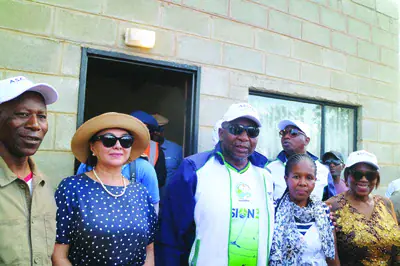
The Rural Electrification Unit (REU) project has officially handed over electricity infrastructure to 873 households in Lesotho's Ha Belo and surrounding villages. The project, which also supplies the Ha Belo Industrial Estate, has connected households in Ha Belo, Morifi, Community, Liqalaneng and Ha-Majara. Residents are looking forward to moving away from years of dependence on candles, paraffin lamps and other alternative sources of lighting.
The arrival of electricity is expected to change daily routines that were previously shaped by darkness and limited access to modern appliances. Residents say simple activities such as preparing meals, preserving food, charging devices and moving around their homes at night are likely to become easier and safer. Many families see the connections as an opportunity to gradually introduce appliances that can reduce domestic workloads and improve household efficiency.
Nthabiseng Lehana, whose house was used for the official electricity demonstration during the handover ceremony, said the development would bring convenience to families while creating a more comfortable home environment. “As women and mothers, we will be able to manage our household activities more easily and create better environments for our children to study.”
The project is also expected to ease recurring household expenses associated with alternative lighting. Residents say regular spending on candles and paraffin often consumed resources that could otherwise have been directed towards family needs. Keneuone Sehlabaka explained that electricity would reduce some of the costs households have carried for years.
Beyond convenience, residents expect improved lighting around homes and public spaces to enhance security during the evening hours. While celebrating the connections, community members stress that electricity should be viewed as part of a broader development agenda. Many believe improvements in roads, healthcare and water services should follow to ensure communities fully benefit from new infrastructure investments.
For the 873 connected households, electricity is not merely about switching on lights. It represents a long-awaited improvement in living standards and a practical step towards greater comfort, safety and household stability. The REU project has given residents access to a service they say will improve their quality of life in practical ways.
The Lesotho government and the REU project have taken a significant step towards improving the lives of residents in Ha Belo and surrounding villages. The project is a welcome relief to households that have relied on alternative sources of lighting for years. With electricity, residents can now look forward to a brighter future with improved living standards and increased opportunities for economic growth and development.
Key points
- 873 households in Lesotho connected to electricity through REU project
- Electricity expected to improve living standards, safety and household stability
- Residents call for broader development agenda to follow infrastructure investments
Reporting sources
- REU brings power relief to households · Informative News website