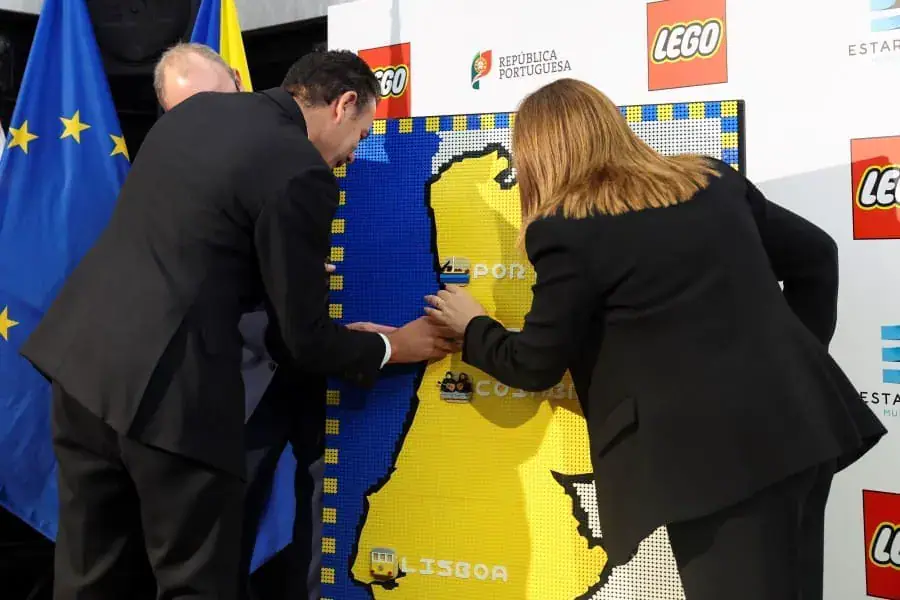
The Danish toy manufacturer Lego has announced plans to invest 1 billion euros in a new factory in Estarreja, Portugal. The factory, expected to be operational by 2030, will create over 1,000 jobs and will be the company's eighth factory worldwide and fourth in Europe. According to Carsten Rasmussen, Lego's director of operations, the investment is part of the company's strategy to expand its production capacity and meet growing demand in Europe, the Middle East, and Africa.
The new factory in Estarreja will cover an area of 60 hectares and will have a total area of 115,000 square meters. It will have the capacity for molding, processing, and packaging, as well as a vertical warehouse. The factory is expected to be one of the most advanced in terms of automation and digitalization, utilizing innovative technologies to increase productivity, sustainability, and operational resilience. Lego Manufacturing Portugal is considered one of the largest investments in production by the brand to date.
The factory is expected to be built with future growth in mind, with production and logistics infrastructure designed to accommodate potential expansions over time. According to Rasmussen, the factory will reinforce the resilience of Lego's European operations and support its regional manufacturing approach. The company's strategy of producing close to the market aims to shorten the supply chain, allowing it to respond quickly to changes in demand while reducing its environmental impact.
Portugal was chosen as the location for the new factory after a thorough evaluation process. Rasmussen stated that the decision was not easy but was ultimately the right one, citing the country's proximity to markets, access to transportation links, commitment to sustainability, and qualified local workforce. The region's growing industrial presence, qualified workforce, and logistics infrastructure are expected to contribute to flexibility, reduced delivery times, and lower costs for customers.
Lego aims to minimize the environmental impact of the new factory, from design to construction and operation. The company plans to obtain 100% renewable energy for its annual needs, with approximately 80% of that energy provided through on-site infrastructure such as solar panels and battery storage. The company also plans to implement water collection, treatment, and reuse systems, as well as initiatives to support local biodiversity.
The factory is expected to be completed by 2030, with construction scheduled to begin in mid-2027. Once operational, the factory will support the complete production of Lego products, including molding, processing, and packaging. The investment in the new factory is part of Lego's long-term strategy to expand its production capacity and meet growing demand.
The new factory in Estarreja is expected to obtain LEED Platinum certification upon completion. The company's commitment to sustainability is reflected in its plans for the factory, which include reducing energy consumption and waste, as well as promoting biodiversity. The investment in the new factory is a significant development for Portugal's economy and is expected to have a positive impact on the region.
Key points
- Lego invests 1 billion euros in new factory in Estarreja, Portugal, creating 1,000 jobs.
- The factory is expected to be operational by 2030 and will support the complete production of Lego products.
- The investment aims to reduce Lego's environmental impact through the use of renewable energy and sustainable practices.
Reporting sources
- Lego investe 1.000 ME e cria 1.000 empregos em fábrica em Estarreja · RecordTV Cabo Verde