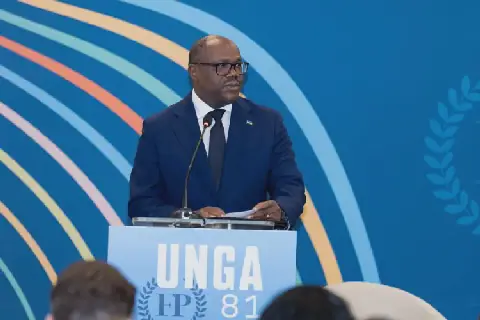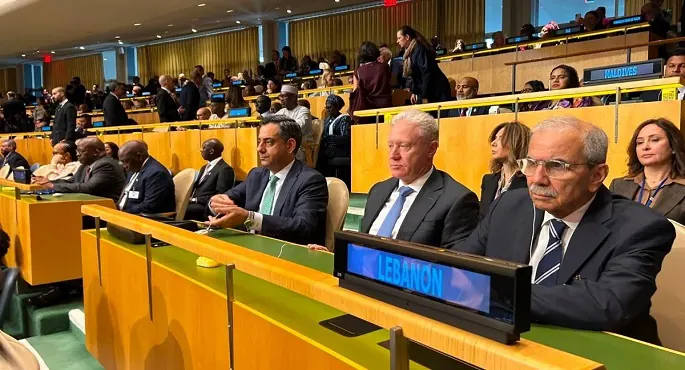
Lebanese Prime Minister Najib Mikati has outlined his vision for a new Lebanon, focusing on internal reform and restoring national sovereignty. Speaking at the 81st session of the UN General Assembly, Mikati emphasized the need for a new international presence in southern Lebanon after the UN Interim Force in Lebanon (UNIFIL) mission concludes its mandate at the end of this year. This new presence aims to ensure continued monitoring, reporting, and communication in the region.
Mikati highlighted the importance of preparing for the post-UNIFIL era, stressing that Lebanon is working to find a suitable formula for this international presence. Various ideas have been proposed, including a potential European force, with France, Italy, or other countries possibly involved. However, Mikati underscored that any international force operating in southern Lebanon must do so under the auspices of a UN Security Council resolution.
The Lebanese Prime Minister's comments come as the country navigates a critical period in its relations with the international community. Lebanon's southern border has been a focal point of tensions, particularly with Israel. A new international presence aims to mitigate these risks and contribute to regional stability. Mikati's statements reflect Lebanon's proactive approach to addressing these challenges.
According to Mikati, Lebanon's vision for a new international presence in the south is centered on ensuring that any future force has a clear mandate and operates within a defined framework. This approach seeks to avoid any potential power vacuum that might arise after UNIFIL's departure. Lebanon is engaging with international partners to explore options for a sustainable presence.
The UNIFIL mission has been a cornerstone of international efforts to stabilize southern Lebanon since its deployment in 1978. As the mission's mandate nears its end, Lebanon and the international community are working together to define a new chapter in peacekeeping and stability efforts in the region. This process involves consultations between Lebanon, the UN, and other stakeholders.
Mikati's address to the UN General Assembly also touched on Lebanon's broader commitment to reform and rebuilding. His government's priorities include strengthening state institutions, improving economic conditions, and enhancing security. These efforts are seen as crucial to Lebanon's long-term stability and prosperity.
As Lebanon looks to the future, the country faces significant challenges, including regional tensions and internal complexities. However, with a clear vision for its future and engagement with the international community, Lebanon aims to navigate these challenges effectively. The post-UNIFIL era will be a critical test of Lebanon's ability to maintain stability and sovereignty.
Key points
- Lebanon is working to establish a new international presence in southern Lebanon after the UNIFIL mission ends its mandate.
- The new presence aims to ensure continued monitoring, reporting, and communication in the region.
- Any international force operating in southern Lebanon must do so under the auspices of a UN Security Council resolution.