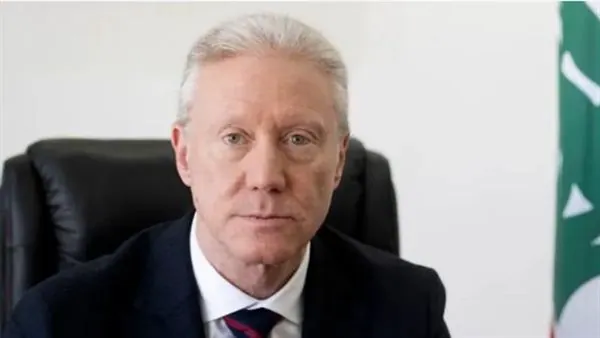
Lebanese Foreign Minister Yusuf Raji recently emphasized that Hezbollah bears greater responsibility for refusing to engage in discussions about limiting state control over weapons. This statement comes as Lebanon faces a complex security situation, particularly with regards to its southern border with Israel. Israel has been expanding its occupation of Lebanese territory, citing the presence of Hezbollah forces in the area as justification.
Hezbollah initially committed to the US-brokered ceasefire agreement, but Israel has been accused of violating its terms numerous times. The Lebanese militant group had agreed to withdraw its forces south of the Litani River as part of the initiative, allowing the Lebanese army to deploy in the area. However, Israel hindered the Lebanese army's efforts to complete its mission, instead expanding its own presence in southern Lebanon.
The situation has been further complicated by Israeli actions, including the publication of a map by Israeli Finance Minister Bezalel Smotrich in 2023, which claimed Lebanese territory as part of Israel. This move was seen as an attempt to solidify Israel's control over southern Lebanon. The Lebanese army has faced obstacles in deploying its forces, with Israel cited as a primary impediment.
In 2025, Lebanese Army Commander General Joseph El-Hage stated that Israel was hindering the deployment of Lebanese forces. At the time, he faced pressure from the US, which reportedly sought to prevent a planned visit to Washington. This development highlighted the challenges faced by Lebanon in securing international cooperation and support.
The Israeli government, led by Prime Minister Benjamin Netanyahu, has been accused of manipulating the situation to its advantage. Despite the US-brokered ceasefire, Israel has reportedly violated its terms on numerous occasions. In response, Lebanese President Joseph Aoun has expressed openness to the deployment of foreign forces along the Lebanese-Israeli border to monitor Israel's compliance with any potential agreement.
The situation remains volatile, with ongoing tensions between Hezbollah and Israel. The Lebanese militant group has cited Israel's continued occupation of Lebanese territory as a justification for its refusal to disarm. Meanwhile, Israel has faced criticism for its actions, including airstrikes targeting towns in southern Lebanon.
The international community remains engaged in efforts to address the situation, with the UN peacekeeping force in Lebanon (UNIFIL) playing a key role. However, the force has faced challenges, including criticism from Israel. Lebanese Prime Minister Najib Mikati has called for reform of the UN Security Council's veto power, particularly with regards to decisions related to genocide and war crimes.
Key points
- Hezbollah's refusal to discuss limiting state control over weapons has been cited as a major obstacle to resolving the security situation in Lebanon.
- Israel's actions, including its expansion of control over Lebanese territory, have contributed to the complex security situation in the region.
- The international community, including the US and UN, remains engaged in efforts to address the situation and promote stability in Lebanon.