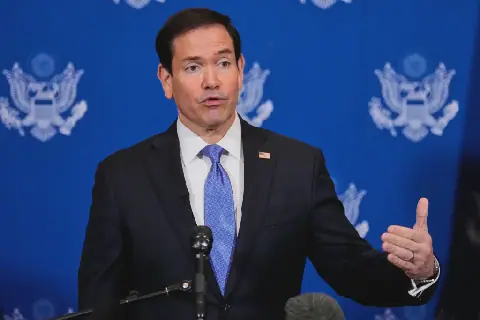
Former President Uhuru Kenyatta has made a significant claim that Raila Odinga won the 2022 General Election, but his victory was stolen. This statement has raised questions about the integrity of the electoral process in Kenya. The timing and context of his claim have invited skepticism, with many wondering why he withheld this information until now. If Mr. Kenyatta had incontrovertible evidence of foul play, it is crucial that he formally tenders it to investigative authorities to protect Kenya's democratic integrity.
The claim by Uhuru Kenyatta has sparked a reaction from former Cabinet Secretary Moses Kuria, who tweeted that Raila Odinga also won the 2007 and 2013 elections, only for the victories to be stolen. This statement has created a contradiction, with Uhuru accusing the current administration of stealing the 2022 election, while Kuria's remarks imply that Uhuru's own administration was responsible for stealing Raila's victories in 2013. This exchange has highlighted a crisis of institutional credibility at the Independent Electoral and Boundaries Commission (IEBC).
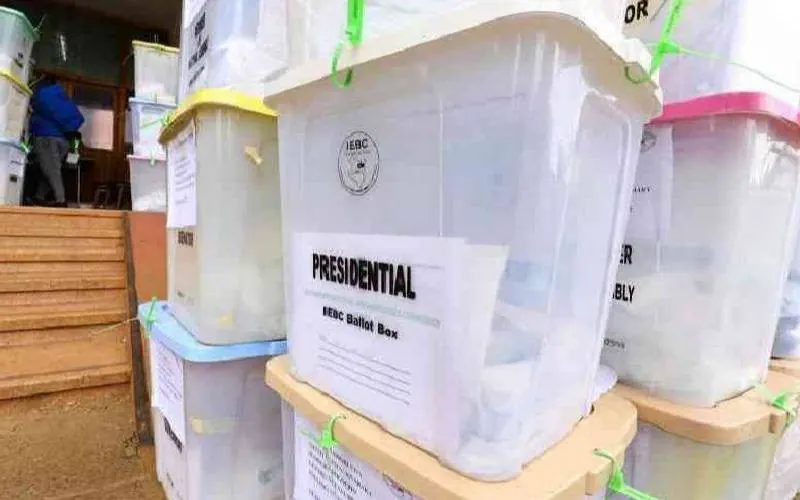
The IEBC has been marred by allegations of systemic rigging, partisan commissioners, and compromised digital networks in successive presidential contests. The division within the IEBC itself, notably the 'Cherera Four' dissenting commissioners who disowned the 2022 presidential results, underscores this deep structural fracture. The public memory of the brutal 2017 murder of Chris Msando, the IEBC's ICT Director, who was killed just nine days before the election, remains a painful reminder of the challenges facing the commission.
A recent High Court ruling has reaffirmed a crucial legal boundary, stating that while the IEBC has the constitutional duty to aggregate and verify presidential votes nationally, it cannot alter figures already declared and certified at the constituency level. This ruling reinforces the principle that primary results must remain inviolable, serving as a check against arbitrary alterations at the national tallying centre.
The question now is whether the IEBC is inherently flawed or if its individual custodians are susceptible to partisan capture. The answer likely lies in both. To escape this cycle, Kenya needs comprehensive electoral reforms. This includes auditing the voting architecture, securing digital infrastructure against third-party exploitation, and enacting strict legal safeguards to ensure absolute independence for electoral officers.
Kenyans deserve leaders chosen by their genuine votes, not leaders imposed through backroom manipulation. The country can no longer afford to tear itself apart every five years over contested polls. Parliament and civil society must address these institutional weak points now, establishing laws and ensuring capable and incorruptible people are at the helm of IEBC.
The 2027 polls are an opportunity for Kenya to make significant changes and ensure that the electoral process is credible and transparent. Key stakeholders, including the government, parliament, and civil society, must work together to implement electoral reforms and ensure that the IEBC is independent and effective.
Key points
- Kenya needs comprehensive electoral reforms to prevent a repeat of the controversies that have marred past elections.
- The IEBC must be able to conduct free and fair elections without interference from external parties.
- Electoral reforms must address the issue of institutional credibility and ensure that the commission is independent and effective.