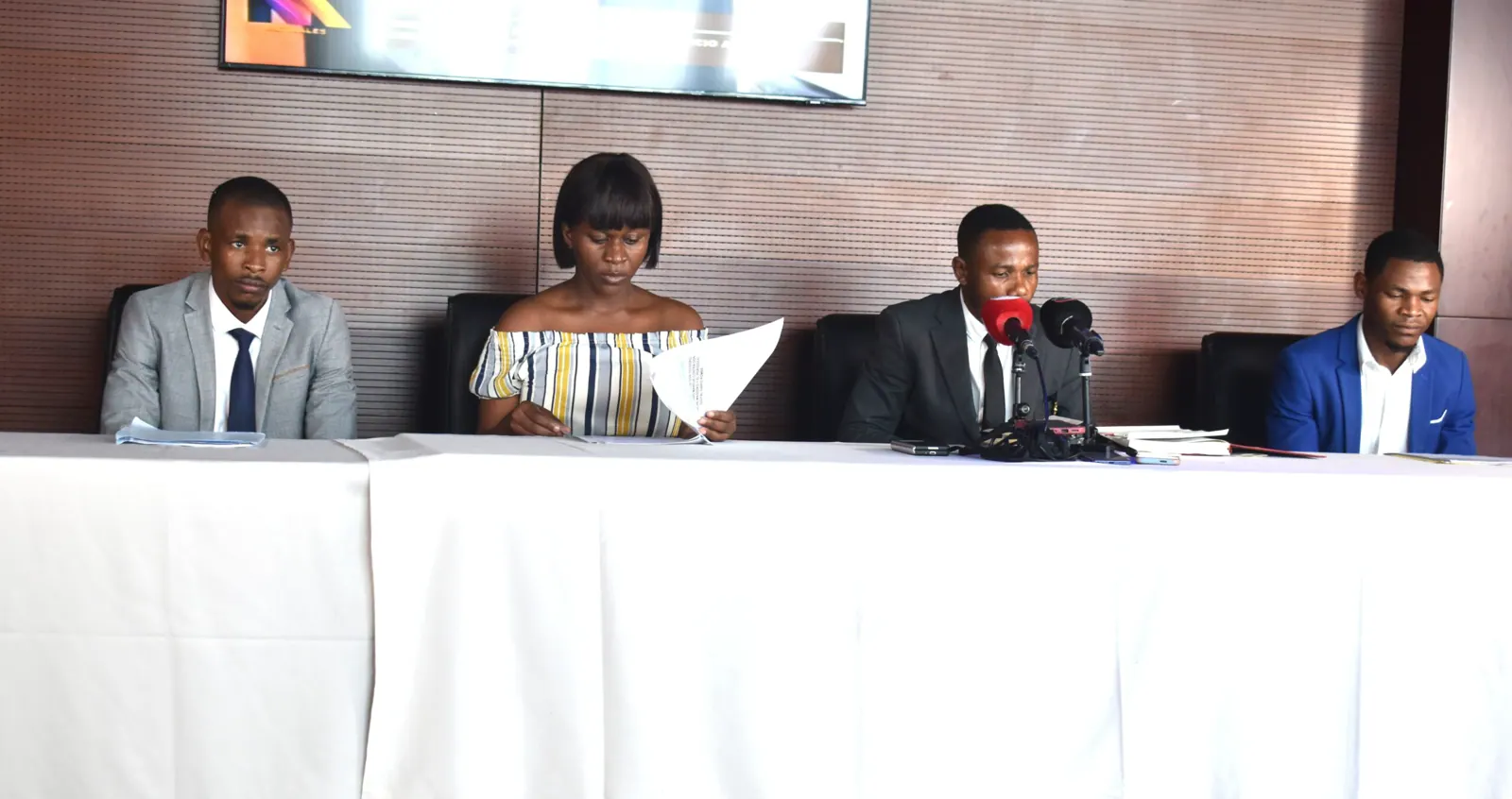
The law firm El Gabinete and Agencia T&E, represented by lawyers Jaime Nsang Mba Mayé, Esperanza Nsué Ensema Mikué, Romualdo Ondo Nuá Mikué, and Jeremías Mevo Nsué Mangue, held a press conference to announce the filing of four criminal complaints. The complaints were submitted on Wednesday, according to the law firm. The actions are based on the country's laws regulating social media and cybercrimes.
The complaints cite articles 2 and 60 of the law, which establish the public order nature of the regulations and their applicability to individuals who use social media and commit cybercrimes, both within and outside the country's territory. Article 2 of the law allows for its application to individuals who commit cybercrimes, while article 60 assigns jurisdiction over these crimes to the Instruction Courts and penal prosecution bodies.
The law firm highlighted the potential penalties for spreading false news through social media, as outlined in article 50 of the law. Individuals who publish or disseminate false information that causes alarm, fear, or unease can face 2-4 years in prison and a fine of 5-50 million CFA francs. If the dissemination damages a person's honor, prestige, or reputation, the penalty increases to 3-6 years in prison and the same fine.
In cases where the information incites hatred, violence, or threatens economic stability, public order, public health, or state security, the penalty can range from 10-25 years in prison and a fine of 100-500 million CFA francs. The law firm emphasized that the complaints mark the beginning of the judicial process and that they await the court's investigation.
During the press conference, the law firm addressed questions about the implications for the accused individuals who reside outside the country. They explained that the law has international scope, allowing for the execution of sentences in other countries, including Spain. The law firm noted that this could lead to the homologation of sentences in Spain, enabling their enforcement in the same terms as in Equatorial Guinea.
The accused individuals, including Diario Rombe and Luz María, have not publicly commented on the complaints. The media outlets are known for their critical reporting on the government and high-ranking officials in Equatorial Guinea. The complaints have sparked concerns about press freedom and the government's tolerance for criticism.
The case will be closely watched by human rights organizations and media advocacy groups, who have expressed concerns about the government's crackdown on dissenting voices. The outcome of the complaints will likely have significant implications for the media landscape in Equatorial Guinea and the ability of journalists to report critically on the government.
Key points
- The complaints are based on Equatorial Guinea's laws regulating social media and cybercrimes.
- The accused individuals face potential penalties of up to 25 years in prison and significant fines.
- The case has raised concerns about press freedom and the government's tolerance for criticism.