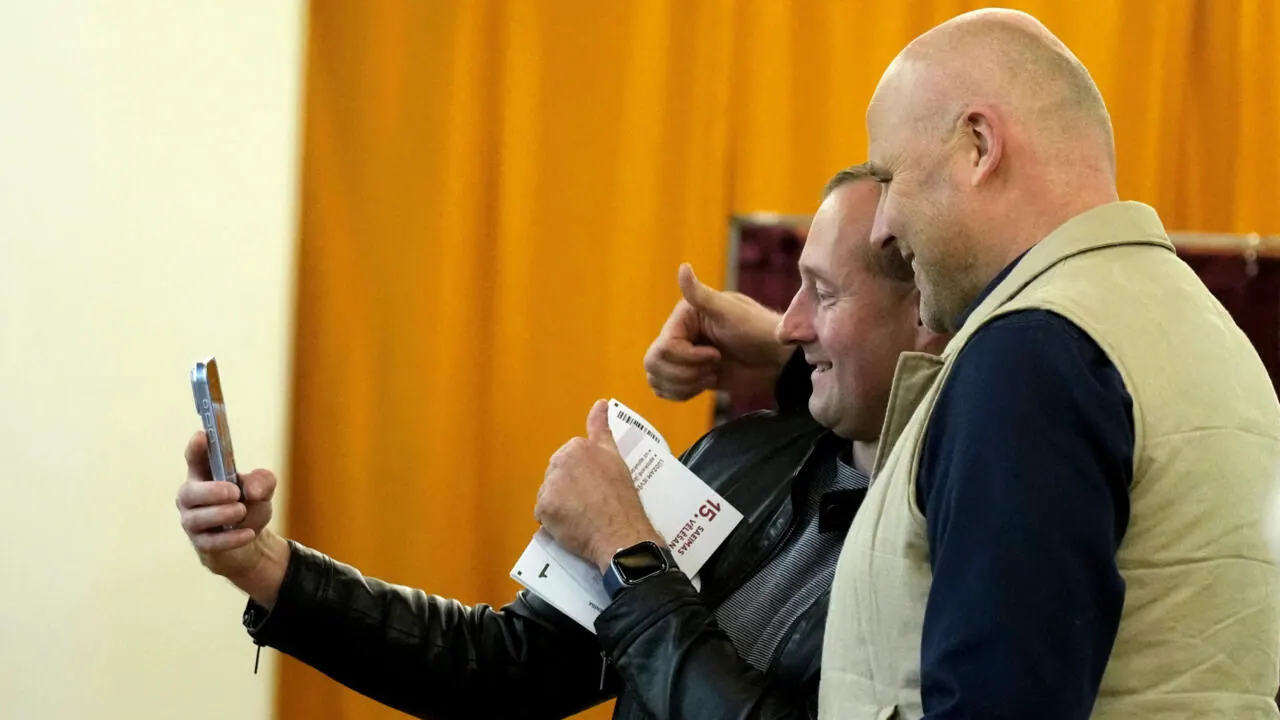
Partial results from Latvia's parliamentary election indicate that Prime Minister Andris Kulbergs' centre-right United List party is leading with 35.8 per cent of the vote, with over half of the votes counted. This suggests that the country will continue its pro-European and pro-Ukrainian stance. The outcome implies that voters desire change, which Kulbergs associates with economic growth and a brighter future for Latvian children.
Kulbergs became prime minister just last May, and his coalition is unlikely to remain intact as one partner, the Union of Greens and Farmers, secured 5.1 per cent of the vote, hovering just above the five per cent threshold to enter parliament. Other coalition parties suggest that Kulbergs will need to create a new ruling coalition. The development may lead to lengthy and complicated coalition talks.
Populist parties made gains during the campaign, which was marked by concerns over Russia and the rising cost of living. Exit polls indicated a lead for Kulbergs, but hesitance among voters to openly show support for radical parties may lead to stronger performances by populist groups than expected. Analysts predicted a significant rise for parties supported by the Russian-speaking electorate.
The Sovereign Power party, viewed as pro-Russian, reportedly received 11 per cent of the vote but is unlikely to enter government, as major parties have dismissed working with it. Latvia First, led by businessman Ainars Slesers, came in second with 13.4 per cent and may prove a more viable coalition partner. The party has focused on domestic challenges like the cost of living.
The Progressives, a pro-European social democratic party, garnered 6.6 per cent and advocates for enhanced social protections and ongoing support for Ukraine. Since Russia's invasion of Ukraine, Latvia has heightened its defence spending to nearly five per cent of its GDP as it views Russia as its primary security threat. Most parties expected in the new parliament broadly support high military expenditure and continued aid to Ukraine.
Amid rising living costs, low wages, and healthcare stresses, the political debate remains focused on these pressing domestic issues. Voting patterns are also shifting among Latvia's large Russian-speaking minority, which previously supported the Harmony party but is now leaning towards economic and social considerations.
Kulbergs emphasized the necessity of a robust economy and strong borders, stating that this is the main task. Preliminary official results are anticipated on Sunday, after which focus will shift to coalition talks.
Key points
- The centre-right United List party leads with 35.8% of the vote.
- Populist parties made gains during the campaign.
- Coalition talks are expected to be lengthy and complicated.