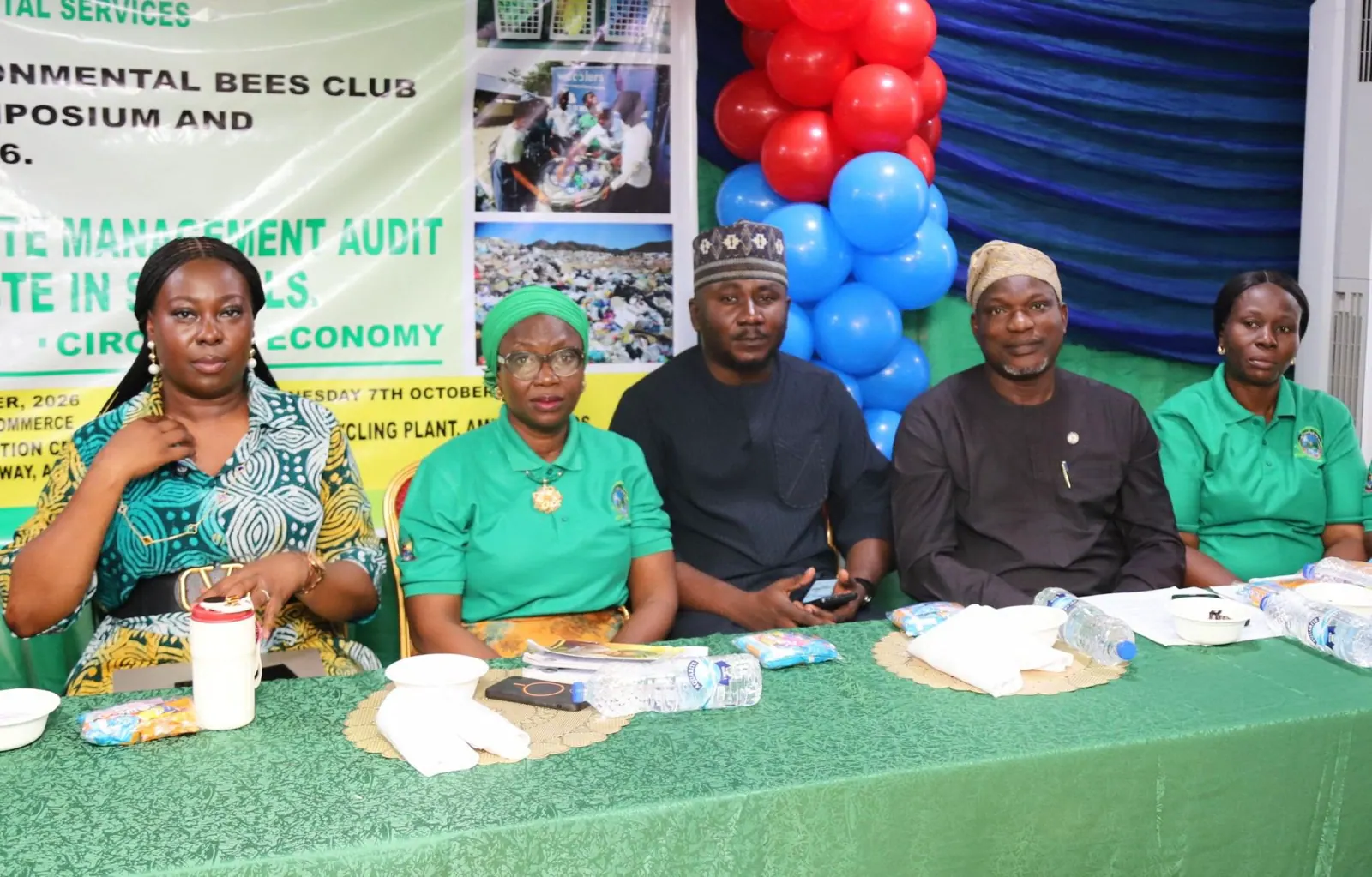
The Lagos State Government has reiterated its commitment to entrenching sustainable waste management practices in schools across the state. This was stated at the 2026 Environmental Bees Club Handlers' Symposium, themed "Effective Waste Management Audit for Zero-Waste Schools: Waste Characterisation and Circular Economy." The event aimed to educate students and teachers on practical waste management techniques.
The Permanent Secretary, Office of Environmental Services, Dr. Gaji Omobolaji, emphasized that effective waste management in schools must go beyond maintaining clean surroundings. He stressed the need for schools to understand the nature, quantity, and sources of waste generated. According to him, this can be achieved through audits and characterization, which provide schools with the necessary evidence to identify materials that could be reused, recovered, recycled, or appropriately disposed of.
Dr. Omobolaji, represented by the Director Environmental Education Unit, Mrs. Monsurat Banire, explained that the Environmental Bees Club has been instrumental in inculcating sound environmental practices among students. He recalled that teachers were exposed to practical urban, school, and home gardening activities in 2024, while the 2025 edition focused on composting, waste-to-wealth initiatives, and other productive uses of discarded materials.
The Permanent Secretary disclosed that over 200 schools participated in the Lagos State Government-UNICEF plastic collection competition. Through this initiative, Lagos State contributed more than one-third of Nigeria's plastic recycling target. He urged Environmental Bees Club handlers to transform waste management into an active learning experience for students.
Dr. Omobolaji stressed the importance of making the concept of circular economy practical and relatable to students. He encouraged them to look beyond the disposal of waste and consider the value that could still be recovered from materials after their initial use. He emphasized that the responsibility is not merely to teach students where waste should be disposed of but to encourage them to ask why the waste was generated in the first place.
Guest lecturer, Ambassador Phillips Obuesi, emphasized that waste characterization is different from waste auditing. He stressed the need for school waste handlers to understand where different categories of waste are generated within their schools. Proper characterization would enable handlers to identify the sources and types of waste generated at various locations and develop appropriate strategies for managing them.
The Lagos State Government's efforts to promote a cleaner, healthier, and more sustainable environment have been commended by stakeholders. The government has expressed confidence that continued collaboration among the government, schools, teachers, and students would strengthen Lagos State's efforts to achieve zero-waste schools. The Environmental Bees Club handlers have been urged to take the lessons and knowledge acquired at the symposium back to their respective schools and strengthen environmental education through practical activities.
Key points
- The Lagos State Government has reaffirmed its commitment to sustainable waste management practices in schools through practical knowledge sharing.
- Effective waste management in schools must go beyond maintaining clean surroundings to understanding the nature, quantity, and sources of waste generated.
- Over 200 schools participated in the Lagos State Government-UNICEF plastic collection competition, contributing more than one-third of Nigeria's plastic recycling target.