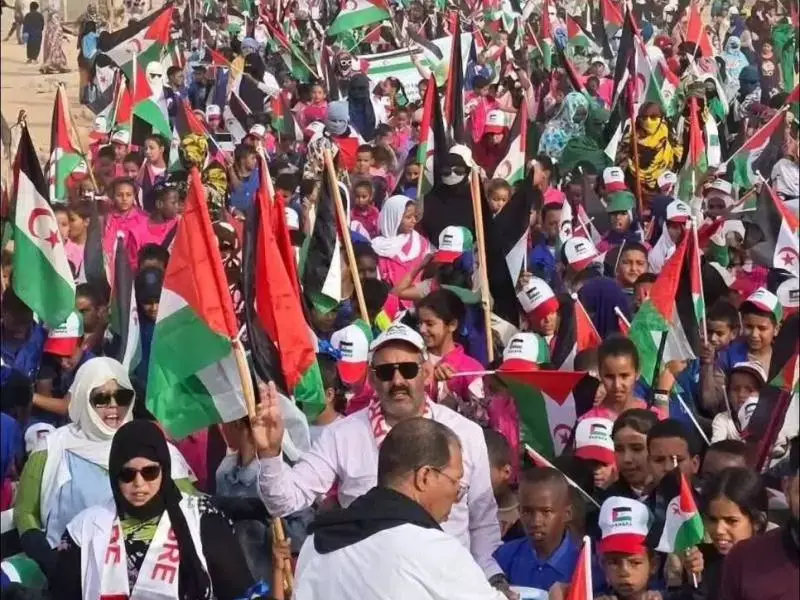
Thousands of people took to the streets in Smara and Dakhla, Western Sahara, on October 29, 2026, to express their opposition to a US project presented to the UN Security Council. The protesters, from various segments of Sahrawi society, waved flags and chanted slogans, calling for the rejection of what they described as a "zero project" that threatens their right to self-determination. The demonstrations were organized in response to a US proposal that the protesters say deviates from international law.
The protesters expressed their rejection of the US project, which they believe undermines their right to self-determination and independence. They emphasized that any solution that does not guarantee their right to self-determination is doomed to fail. The demonstrations were marked by a strong sense of national unity, with participants reaffirming their commitment to the Sahrawi people's inalienable choice for freedom and independence. The protests were widely covered by the Sahrawi press agency, SPS.
The Sahrawi people have historically been committed to their right to self-determination, and the recent protests reflect their determination to protect this right. The US project has sparked widespread concern among Sahrawis, who fear that it may undermine their efforts to achieve independence. The protests in Smara and Dakhla were notable for their peaceful nature, with participants calling for a solution that respects international law.
The Front Polisario, a key player in the Sahrawi independence movement, has threatened to withdraw from the peace process if the US project is adopted. The organization's representative to the UN, Sidi Mohamed Amar, stated that the Front Polisario would secede from the entire peace process if the project is approved. This warning comes as the Sahrawi people reaffirm their rejection of any initiative that ignores their right to self-determination and independence.
The UN Security Council has a critical role to play in resolving the Western Sahara conflict, and the Sahrawi people are calling on the Council to respect international law. The protests in Smara and Dakhla have sent a clear message to the international community that the Sahrawi people will not accept any solution that undermines their right to self-determination. The Sahrawi government has called on the international community to support their efforts to achieve independence.
The protests in Western Sahara have drawn attention to the ongoing conflict in the region. The Sahrawi people have been seeking independence from Morocco since the 1970s, and the conflict has resulted in significant human rights abuses and displacement. The international community has a responsibility to support a peaceful resolution to the conflict that respects the rights of the Sahrawi people.
The outcome of the UN Security Council's deliberations on the US project remains uncertain. The Sahrawi people are anxiously awaiting the Council's decision, which will have significant implications for their future. The protests in Smara and Dakhla have demonstrated the Sahrawi people's determination to protect their rights and achieve independence.
Key points
- The protests in Smara and Dakhla reflect the Sahrawi people's determination to protect their right to self-determination and independence.
- The Front Polisario has threatened to withdraw from the peace process if the US project is adopted.
- The UN Security Council has a critical role to play in resolving the Western Sahara conflict.