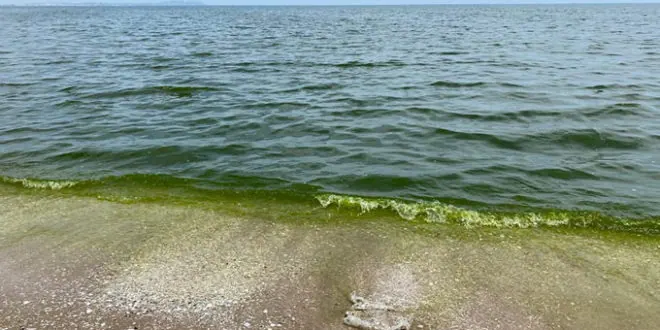
A recent surge in the appearance of white-spotted jellyfish, also known as "fire jellyfish," has been reported on several Tunisian beaches. According to the "Tun-C" Association for Participatory Sciences, this phenomenon may put additional pressure on the available food supply and subsequently impact the entire marine food chain. The association noted that this species feeds on small marine animals called zooplankton, which serve as a vital food source for many other marine creatures.
The "Tun-C" Association reported observing significant quantities of the spotted jellyfish in the Gulf of Tunis, particularly in areas such as Marsa, Gammarth, and Hammam Chott. This species is considered an invasive alien species in the Mediterranean Sea, originating from the western Pacific Ocean. The ease of marine transportation facilitates its spread between regions. Previous studies have documented the risks associated with this species, including the consumption of fish eggs and larvae, as well as crustaceans.
The white-spotted jellyfish is characterized by its rounded, semi-transparent bell, covered with white spots, and can reach a diameter of approximately 50 cm. The first documented scientific observation of this species in Tunisia dates back to August 2012, in Lake Bizerte, where small jellyfish were spotted, followed by adult specimens between September and November of the same year. The species reappeared in 2013, indicating the presence of a locally reproducing population.
According to the "Tun-C" Association, it is more accurate to describe the current situation as a new wave of large-scale appearances of an already existing invasive species, rather than a first-time occurrence. Fortunately, this species is not classified as highly hazardous to humans, as its sting is typically mild and barely perceptible. The association has urged citizens to report any sightings of this species in the sea or on beaches, providing detailed information to help experts track its spread and changes in population.
The association emphasized that citizen participation in monitoring jellyfish is valuable, as demonstrated by scientific experiments in the Mediterranean. By sharing observations, citizens can contribute to a better understanding of the species' presence and distribution. The information collected will be shared with relevant authorities to ensure effective monitoring and management of the situation.
The appearance of large numbers of white-spotted jellyfish on Tunisian beaches has raised concerns about the potential impact on the marine ecosystem. As an invasive species, it may disrupt the delicate balance of the food chain and affect the livelihoods of people dependent on fishing and tourism. Further research and monitoring are necessary to assess the situation and develop strategies to mitigate any adverse effects.
The "Tun-C" Association has called for continued vigilance and cooperation from the public in reporting any sightings of the white-spotted jellyfish. By working together, it is possible to gather essential information and take proactive measures to protect the marine environment and prevent any potential harm to humans and wildlife.
Key points
- The white-spotted jellyfish is an invasive alien species that feeds on zooplankton, a vital food source for many marine creatures.
- The species has been observed on several Tunisian beaches, including those in the Gulf of Tunis.
- Citizen participation in monitoring jellyfish is crucial for understanding the species' presence and distribution.