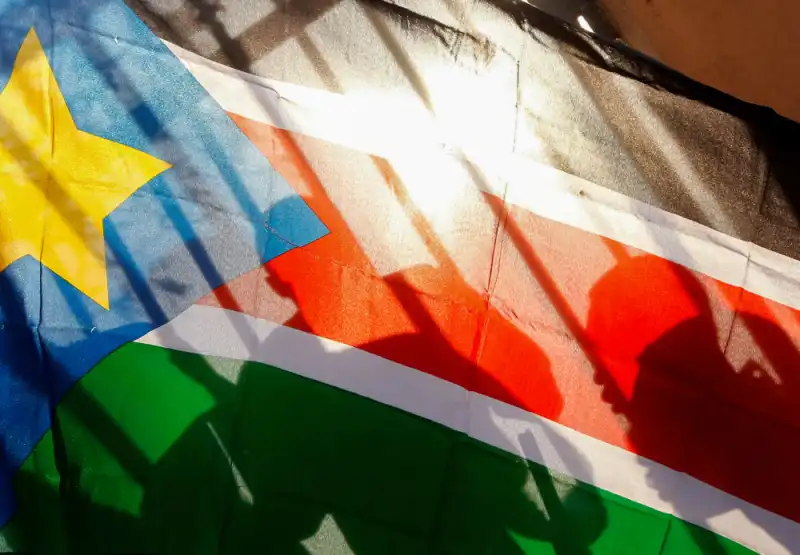
Thongxay Nilakout, a 49-year-old Laotian man, has left South Sudan for Laos after spending over a year in detention in the African country. Nilakout was deported by the United States to South Sudan in July 2025 and had been held in Juba, the capital city, since then. His attorney, Tin Nguyen, stated that Nilakout's ordeal could have been avoided if he had been deported directly to Laos. A Lao consular officer had reportedly informed Nilakout's family that a travel document had already been issued for his return.
According to Nguyen, Nilakout left South Sudan on Thursday afternoon for Vientiane, the capital of Laos. The Laotian man's deportation to South Sudan was part of a larger group of eight individuals who were sent to Africa in May 2025. The group was initially rerouted to a U.S. military base in Djibouti after a federal judge blocked their deportation to South Sudan midflight. However, a Supreme Court ruling allowed their removal, and they arrived in Juba aboard a military aircraft.
The U.S. Department of Homeland Security has stated that it is preparing a response to questions about Nilakout's case but has requested more time to comment. Nilakout and the other seven individuals had criminal convictions in the U.S. but had served their prison sentences before being taken into immigration custody. Nguyen expressed relief that Nilakout's deportation to Laos had been facilitated, stating that it was proof that his client should have been sent to Laos from the outset.
The choice of South Sudan as a deportation destination was widely criticized due to the country's poor human rights record and political instability. In 2025, armed conflict in South Sudan displaced over half a million people, according to the United Nations. Despite these concerns, around a dozen African countries have accepted third-country deportees from the U.S., with some reportedly receiving millions of dollars in payments. However, details of the agreement between the U.S. and South Sudan remain unclear.
Nilakout's personal history is complex, having resettled in the U.S. as a child in 1980 after his family fled Laos. He spent time in a refugee camp in Thailand before moving to the U.S. In 1995, he was sentenced to life in prison without parole for his role in the murder of a German tourist during an armed robbery in Southern California. However, following a 2012 U.S. Supreme Court ruling that found mandatory life sentences without parole for juvenile offenders unconstitutional, Nilakout became eligible for parole and was released in 2023.
After his release from prison, Nilakout was working as a restaurant cook when U.S. Immigration and Customs Enforcement took him into custody in March 2025. His attorney has stated that Nilakout's deportation to Laos is a relief for his family. Four of the original eight deportees remain in South Sudan, including two Burmese nationals. The incident has highlighted concerns about the U.S. deportation policies, particularly with regard to individuals being sent to countries with questionable human rights records.
The South Sudan Foreign Ministry has stated that it coordinated Nilakout's repatriation with the Laotian government, which provided assurances against torture or other ill treatment upon his return. This development brings closure to a lengthy and contentious process for Nilakout and his family. The case also underscores the complexities and challenges surrounding international deportations, particularly when individuals are sent to countries with which they have no connection.
Key points
- Thongxay Nilakout's deportation to Laos marks the end of his over-year-long detention in South Sudan.
- The U.S. deportation policy has faced criticism for sending individuals to countries with poor human rights records.
- Nilakout's case highlights the complexities and challenges surrounding international deportations.