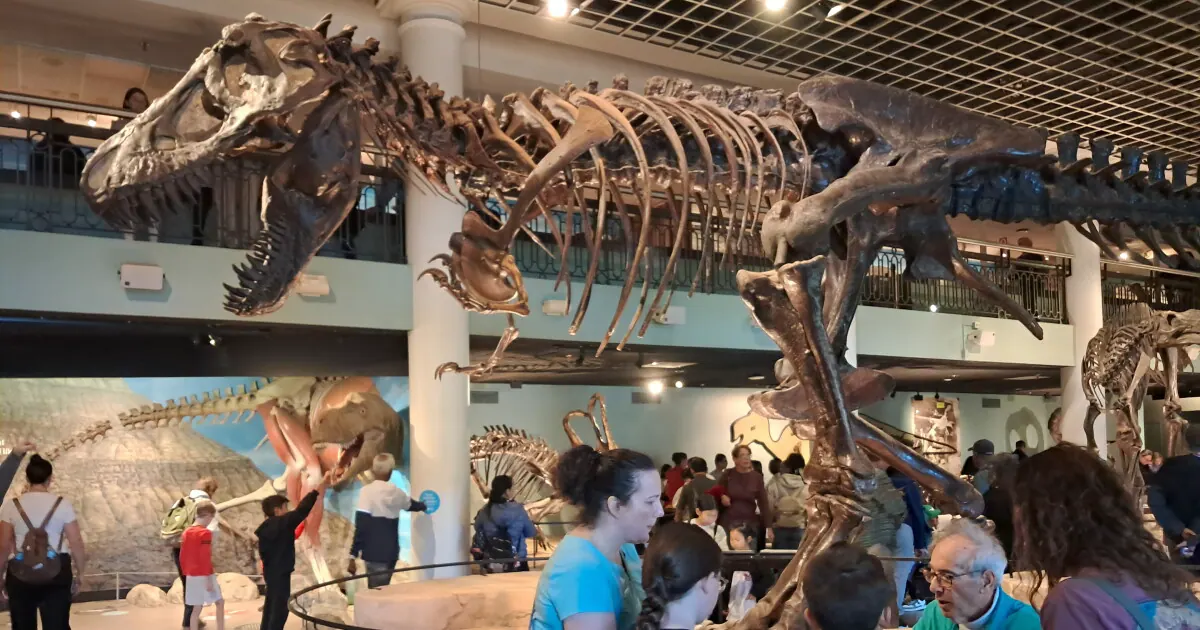
The Academy of Natural Sciences in Philadelphia, a renowned natural history museum, has closed its doors to the public after nearly 200 years of operation. The museum, which was founded in 1812 and opened to the public in 1828, was a significant cultural and scientific institution in the United States. Its closure was announced on September 1, and despite efforts to save it, the museum shut down on September 30. The closure has sparked an outpouring of nostalgia and sadness among locals and visitors who have fond memories of visiting the museum.
The Academy of Natural Sciences was a pioneer in natural history, being the first place in the world to display a dinosaur skeleton in 1868. Its collection of scientific specimens is widely recognized as one of the most important in the world, with over 19 million specimens, including Thomas Jefferson's fossil collection and plant samples gathered by Lewis and Clark. The museum also housed an archive of 73,000 holotype specimens, which scientists use as references for defining and naming species. These specimens will be preserved, but it's unclear what this means for the general public.
The closure of the museum has been attributed to financial struggles, with Drexel University, which took over financial responsibility for the Academy in 2011, citing rising costs and declining attendance post-pandemic. However, in the museum's last few weeks, attendance skyrocketed, and revenue was more than 20 times higher than the previous year. Some critics have accused Drexel of not participating in efforts to save the museum or providing details on how much it would cost to keep it open. The university has stated that it remains committed to protecting the Academy's legacy.
The closure of the Academy of Natural Sciences has sparked concerns about the future of cultural and scientific institutions in the United States. A survey by the American Alliance of Museums found that a third of its members had government grants and contracts cancelled, and more than two-thirds were affected by executive orders. The financial pressures on museums are not limited to federal funding, but also include philanthropy, corporate donations, and individual giving. The closure of the Academy has raised questions about the sustainability of these institutions and the importance of preserving their legacies.
In a last-ditch effort to save the museum, the William Penn Foundation offered a year's worth of bridge funding to explore more permanent solutions. However, Drexel has stated that it would need a plan for long-term sustainability before considering reopening the museum. The city of Philadelphia is also taking steps to preserve the museum's legacy, with the city council proposing legislation to alter local zoning overlays and holding public hearings to investigate the circumstances surrounding the closure.
The closure of the Academy of Natural Sciences has also raised questions about the future of its building, which is over 150 years old. There is speculation that Drexel plans to sell the building, which has sparked concerns among local residents and officials. The city council has proposed legislation to give it subpoena power over Drexel, and plans to hold public hearings to investigate the circumstances surrounding the closure.
The closure of the Academy of Natural Sciences is a significant loss for the city of Philadelphia and the scientific community. While there are efforts underway to preserve its legacy, the future of the museum remains uncertain. The closure has also sparked a conversation about the importance of preserving cultural and scientific institutions and the need for sustainable funding models to support these institutions.
Key points
- The Academy of Natural Sciences in Philadelphia has closed its doors after nearly 200 years of operation due to financial struggles.
- The closure has sparked concerns about the future of cultural and scientific institutions in the United States and the importance of preserving their legacies.
- The city of Philadelphia is taking steps to preserve the museum's legacy, including proposing legislation to alter local zoning overlays and holding public hearings to investigate the circumstances surrounding the closure.