Namibia's Minister of Agriculture, Fisheries and Water and Land Reform, Inge Zaamwani, has ordered a five-year performance audit of farms acquired under the country's land reform program. This move is long overdue and aims to assess the effectiveness of land reform beyond mere statistics. For decades, land reform has been a sensitive topic in Namibia, carrying the weight of historical dispossession and unequal ownership patterns. The audit will evaluate the number of farms purchased, hectares transferred, and beneficiaries announced, but more importantly, it will examine the outcomes and impacts of these allocations.
The real question is what happens after land is allocated, and the minister's instruction to the newly constituted Land Reform Advisory Commission to investigate the productivity of allocated farms and the challenges faced by beneficiaries is crucial. This shift in focus from inputs to outcomes is essential to understanding the success of land reform. The commission's findings will provide insights into the effectiveness of current policies and identify areas for improvement. By moving beyond the audit culture, Namibia's land reform debate can transition from rhetoric to tangible results.
The true test of this initiative will be whether the government acts on the audit's findings. If the commission identifies idle farms, struggling beneficiaries, or unallocated properties, the government must take concrete actions to address these issues. This includes holding responsible officials accountable, changing failing policies, and providing meaningful support to beneficiaries. The minister's emphasis on exercising independent judgment and challenging assumptions is also vital, as it will enable the commission to provide unbiased recommendations.
The proposed modernization and digitalization of land acquisition and allocation processes are also critical to improving the efficiency and transparency of land reform. A largely manual and cumbersome system creates unnecessary delays and weakens transparency, making it harder to track the journey of a farm from acquisition to allocation to productive use. A digital system would enable the government to answer key questions about land reform, such as which farms have been acquired, where they are located, and what they are being used for.
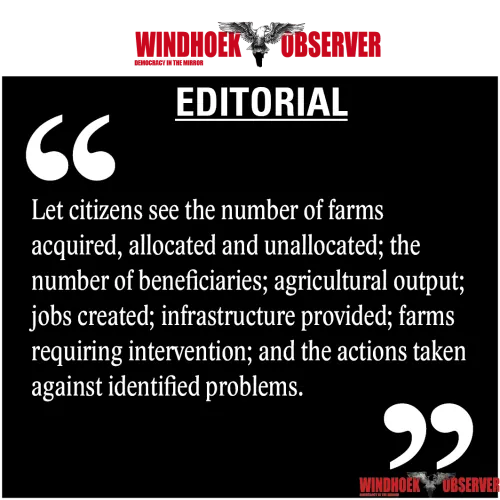
One of the dangers of auditing is that it can become a substitute for reform. Namibia has no shortage of assessments, but what it needs is implementation. The minister's commitment to quarterly meetings with the commission is encouraging, but it is crucial that recommendations are converted into decisions, budgets, timelines, and measurable interventions. Publishing an annual land reform performance report based on the audit would also provide citizens with a clear understanding of progress and challenges.
The historical injustice that land reform seeks to address is real, and the contemporary demand for land is high. However, justice and productivity must not be treated as competing objectives. The best land reform program is one that restores opportunity while creating productive farmers, stronger rural communities, more employment, and greater food security. The minister has started in the right place by asking difficult questions; now, the government must take concrete actions to address the challenges identified.
The commission's success will be judged not by the report it produces but by the reforms that follow. Namibia has heard many promises about land reform, but what it needs now is evidence that the government can take an audit, confront uncomfortable findings, and do something about them. The government's ability to implement meaningful reforms will be a critical step towards addressing the country's historical injustices and meeting the demands of its citizens.
Key points
- The Namibian government must shift its focus from inputs to outcomes in its land reform program, prioritizing productivity, employment, and food security.
- A digital system for land acquisition and allocation is necessary to improve transparency and efficiency.
- The government must take concrete actions to address the challenges identified by the audit, including holding officials accountable and providing support to beneficiaries.