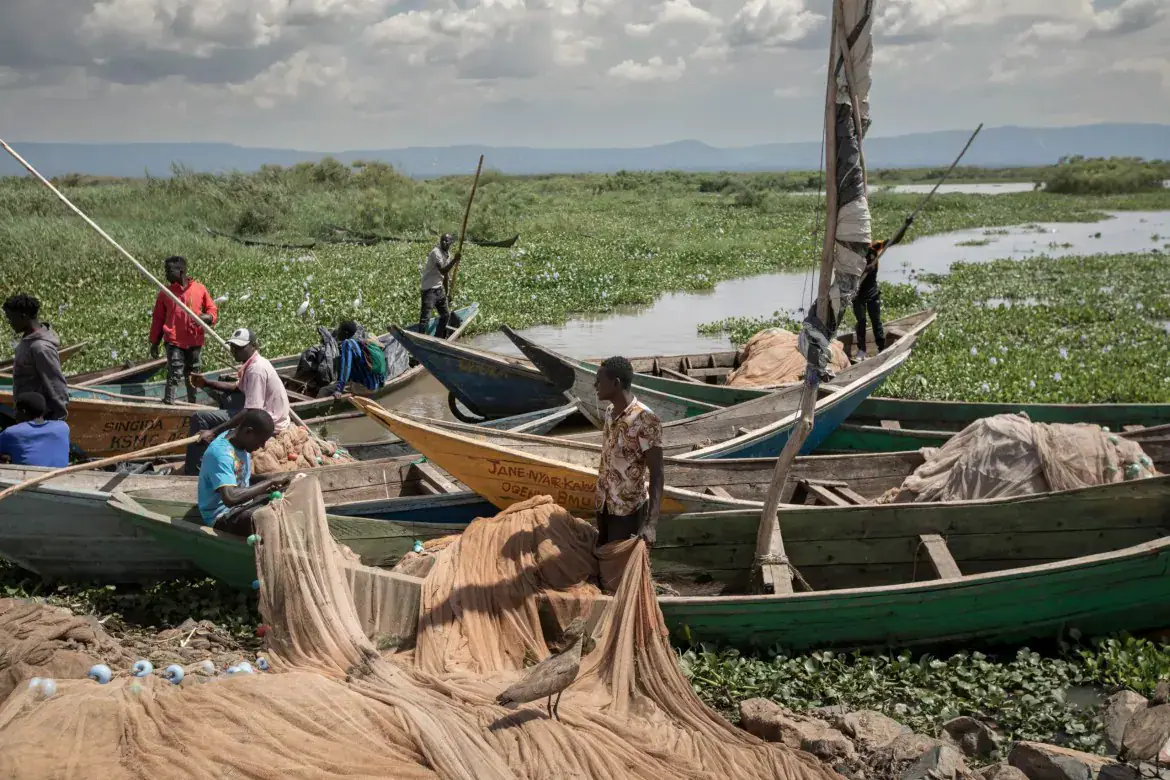
The United Nations Educational, Scientific and Cultural Organization's World Heritage Committee has proposed designating Lake Victoria as a Living Cultural Landscape. This proposal was made during the committee's meeting in Busan, South Korea, where over 100 civil society groups from 35 countries supported the recognition. The proposal highlights the lake's cultural significance, based on the fishing knowledge, rituals, and oral traditions of its lakeside communities.
Lake Victoria, the largest tropical lake on Earth, is facing significant environmental challenges. The lake's waters are contaminated, fisheries are decimated, and shorelines are eroding. These issues have spurred renewed calls to protect the lake, which supports over 45 million people across the region. For decades, Lake Victoria's fishing industry relied on Nile tilapia and Nile perch, introduced to the lake in the 1950s.
The Nile perch, a voracious predator, has been blamed for the disappearance of around 200 native cichlid species. The perch became the lake's most lucrative prize, with its fillets exported to Europe and the Middle East. However, overfishing has dramatically reduced fish stocks, including perch. Many fishermen have turned to using illegal fine-mesh nets that catch juvenile fish before they can reproduce.
The effects of overfishing and pollution are evident in the declining fish stocks and the number of plants processing Nile perch. In Kenya, the catch fell from 94,349 metric tons in 2021 to 70,231 metric tons in 2025. In Uganda, the number of plants processing Nile perch has dropped from 21 to six. Pollution from farms, gold mining, and shoreline cities has compounded the damage.
The World Meteorological Organization expects this year's El Niño to last into 2027, raising the risk of further displacement. Exceptional rains linked with climate change have already lifted the lake to record levels in 2020 and 2024, causing floods that have forced hundreds of thousands of people from their homes and swallowed farmland and fish landing sites.
If approved, inscription on the World Heritage list could bring international attention, technical help, and limited funding. It would also commit the governments of Kenya, Uganda, and Tanzania to protecting the lake under an agreed management plan. The proposal insists that local communities must be protected from displacement and the livelihoods of fishers and women who sell their catch must be safeguarded.
The designation of Lake Victoria as a Living Cultural Landscape could provide a much-needed boost to conservation efforts. The lake's cultural significance and environmental importance make it a unique and valuable resource that requires protection. The proposal will be considered by UNESCO, and a decision is expected in the coming months.
Key points
- Lake Victoria faces significant environmental challenges, including overfishing, pollution, and climate change.
- The proposed designation of Lake Victoria as a Living Cultural Landscape aims to protect the lake's cultural significance and environmental importance.
- The inscription on the World Heritage list could bring international attention, technical help, and limited funding to conservation efforts.
Reporting sources
- Lake Victoria proposed for UNESCO’s Living Cultural Landscape status · The Tanzania Times – News from Tanzania, Africa, World, Breaking News, Weather, Environment and Climate Change