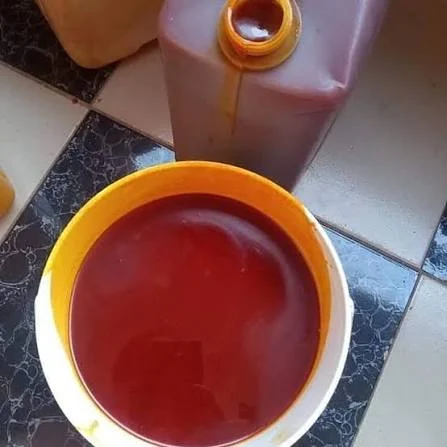
The Lagos State Consumer Protection Agency has warned residents about the growing threat of fake palm oil in markets. According to the agency, palm oil is particularly vulnerable to adulteration due to its high trading volume and consumers' association of deep-red color with quality. This has led to the increasing use of sophisticated methods to adulterate the product. The agency has urged residents to be cautious when purchasing palm oil.
A Senior Lecturer in the Department of Food Technology at Auchi Polytechnic, Dr. Nurah Oseni, presented a paper on palm oil adulteration at the Lagos State Food Safety Conference and Exhibition 2026. Oseni identified several emerging risks, including the use of potentially carcinogenic Sudan and Azo dyes to alter the color of palm oil. She also raised concerns about the blending of palm oil with recovered or recycled oils, including spent cooking oil.
The lecturer proposed a five-step surveillance framework for Lagos, comprising "Risk Map, Sample, Screen, Confirm and Act". This framework would be supported by an adulteration intelligence database and coordinated responsibilities among processors, traders, laboratories, regulators, researchers, and consumers. Oseni stressed the need for stronger surveillance and improved detection mechanisms across the supply chain.
Oseni advised consumers to use simple visual checks as an initial precaution when purchasing palm oil. She explained that palm oil might separate into layers, with the lower layer typically appearing orange to red-yellowish rather than uniformly deep red. However, she cautioned that visual checks alone could not confirm adulteration.
The General Manager and Chief Executive Officer of LASCOPA, Afolabi Solebo, reaffirmed the agency's commitment to protecting consumers from unsafe and substandard products. Solebo urged Lagos residents to "shine their eyes" and report suspected adulterated palm oil and unscrupulous traders through the agency's official channels.
The Lagos State Government has intensified market surveillance across the state to protect consumers from unsafe and substandard products. The government has also urged residents to report any suspected cases of adulterated palm oil. This move is aimed at ensuring the safety and well-being of consumers in the state.
The issue of palm oil adulteration has significant implications for public health, as consuming adulterated palm oil can have serious health consequences. The Lagos State Consumer Protection Agency has therefore called on residents to be vigilant and report any suspected cases of adulterated palm oil.
Key points
- The Lagos State Consumer Protection Agency has raised the alarm over increasingly sophisticated adulteration of palm oil.
- Palm oil is particularly vulnerable to adulteration due to its high trading volume and consumers' association of deep-red color with quality.
- The agency has proposed a five-step surveillance framework to address the issue of palm oil adulteration.