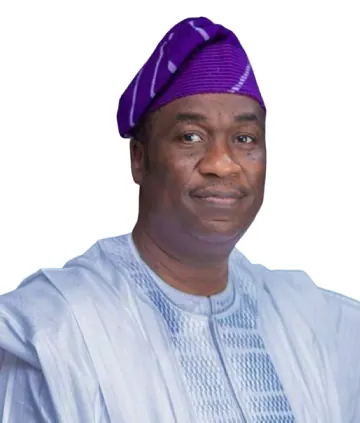
Lagos is Nigeria's economic oxygen, driving the country's output through trade, manufacturing, ports, financial services, and logistics. The state's economic performance has a ripple effect on the nation, shaping investment choices, jobs, supply chains, and fiscal behaviour. As such, the idea of a Lagos State Economic Council and the potential candidacy of Dr. Kadri Obafemi Hamzat as governor in 2027 should not be dismissed as mere campaign talk. It is a question of national economic strategy.
A Lagos State Economic Council is crucial for continuous, coordinated, and data-driven economic planning. Dr. Hamzat, the APC gubernatorial candidate, has proposed this idea, taking a cue from the National Economic Council but keeping the focus local. The council would bring together state executives, local government leaders, and key stakeholders to review performance, track policies, and fix problems sector by sector. This move aims to reduce unnecessary friction for businesses and build on gains made since 1999.
The proposed council's strongest part is its practical link to everyday business realities. It seeks to coordinate government charges, tackle multiple and unauthorised levies, and give businesses a clearer picture of what they will pay. Predictability matters for Lagos, which is competing for capital, talent, and long-term contracts. When costs are opaque or keep shifting, ambition becomes expensive. A properly empowered Economic Council could reduce friction, improve transparency, and give private capital the stability it needs.
Lagos has tried versions of economic advisory groups before, but Dr. Hamzat's proposal takes it further. It moves beyond occasional consultation or branding exercises and tries to embed economic oversight into the regular work of government. The council recognises that Lagos is not one uniform economy, with divisions having different strengths. By including local government leadership and working across the state, it can help spread decision-making and make development priorities more responsive to local realities.
Dr. Hamzat's proposal is well-positioned because it is not theoretical. He has pushed for this idea with clarity, and it is grounded in real data. The current Sanwo-Olu administration has also made efforts to position Lagos as a serious global financial hub through platforms like the Lagos International Financial Centre Council. Dr. Hamzat's version builds on this tradition, aiming to keep Lagos competitive and cut unnecessary friction for businesses.
The Lagos State Economic Council would help address the state's infrastructure gaps, rising costs, and governance reliability. These factors shape investment choices and fiscal behaviour, far beyond the state. By bringing together key stakeholders, the council can help fix problems sector by sector and give businesses the stability they need. This move is crucial for Nigeria's economic strategy, as Lagos sets the pace for the country's economy.
In conclusion, the Lagos State Economic Council is a strategic move for Nigeria's economic hub. Dr. Kadri Obafemi Hamzat's proposal has the potential to keep Lagos competitive, reduce friction, and improve transparency. With its practical link to everyday business realities and recognition of Lagos' diverse economy, the council can help drive the state's economic performance and, by extension, Nigeria's national output.
Key points
- Dr. Kadri Obafemi Hamzat proposes a Lagos State Economic Council to drive continuous, coordinated, and data-driven economic planning.