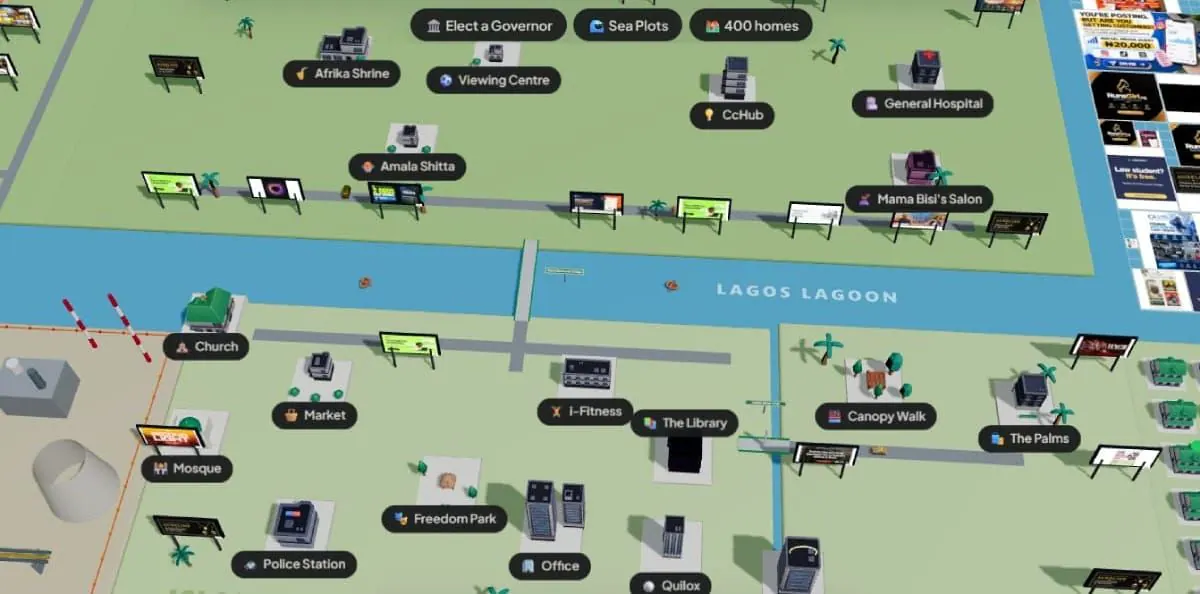
Lagos Run, a locally developed digital entertainment product, has achieved remarkable success in its first four days of operation, attracting over 1.8 million players and nearly 12 million visits. The game's administrator dashboard, reviewed by BusinessDay, showed 1,807,618 players, 11,966,101 all-time visits, and 5,843,702 unique visitors. At the time of the dashboard capture, 145,443 people were online and playing simultaneously, demonstrating the game's rapid user acquisition and traffic growth.
The game's revenue generation is also noteworthy, with $46,900 earned over the four-day period. According to the dashboard, this translates to an average of about $11,725 in revenue per day. While this figure is impressive, it is essential to distinguish revenue from profit, as the dashboard does not provide information on development, infrastructure, marketing, payment processing, or other operating costs. The revenue works out to roughly 2.6 cents per player if divided by the cumulative player figure.
The success of Lagos Run can be attributed to Nigeria's large digital population and the growing gaming economy. The country's young population, increasing smartphone penetration, and expanding internet access have created a fertile ground for digital entertainment products. Lagos Run's early performance provides a practical test of whether this audience can be converted into a commercially viable digital entertainment market. The game's ability to attract millions of visitors within days demonstrates that Nigerian technology companies can potentially build consumer platforms around entertainment.
The traffic figures also show the potential value of Nigeria's expanding digital consumer economy. As mobile connectivity improves and smartphones become the primary gateway to the internet for millions of Nigerians, gaming platforms increasingly compete for the same scarce resource as social media, streaming, fintech, and other digital services: users' time and attention. Lagos Run's early performance is relevant beyond gaming, as it demonstrates the potential for Nigerian-made games to match local tastes, culture, and spending behavior.
For investors and potential competitors, the numbers raise a broader question about the size of Nigeria's gaming market. If a locally developed title can attract over 1.8 million players and nearly 12 million visits in its first few days, the market may have more room for Nigerian-made games. The opportunity is not limited to the games themselves, as a sufficiently large player base can support an ecosystem involving developers, publishers, advertisers, payment providers, creators, streamers, and other digital businesses.
The immediate test for Lagos Run is whether the platform can move from a high-velocity launch to sustained usage. The dashboard shows 1,151,780 active users for the week, compared with 886,171 active users recorded for the day. It also shows almost 12 million total visits, demonstrating that users are returning to the platform rather than merely arriving once. The 145,443 concurrent players recorded on the dashboard are particularly significant, as they provide a snapshot of real-time engagement.
The bigger question for Nigeria's gaming industry is whether Lagos Run represents a one-off viral surge or an early sign that the country's digital entertainment economy is finally reaching the scale its population suggests. The game's success offers more than a launch success story, providing an early data point for an industry trying to prove that Nigeria's enormous online population can become a monetizable gaming audience. The numbers are striking: 1.8 million players, 5.8 million unique visitors, almost 12 million visits, and $46,900 in reported revenue within four days.
Key points
- The game has generated $46,900 in revenue within four days of launch.
- Lagos Run has attracted over 1.8 million players and nearly 12 million visits.
- The game's success raises questions about the size of Nigeria's gaming market and its potential for growth.