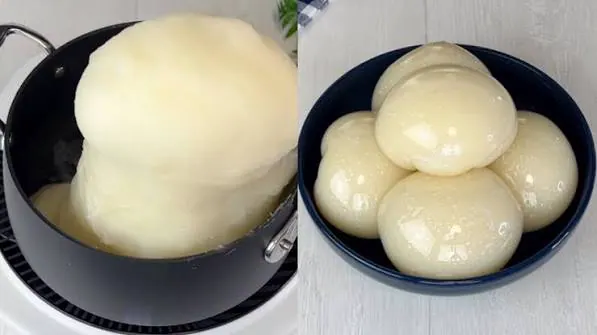
Some residents of Lagos State have raised concerns over the preparation, handling, and preservation of fufu, citing suspected poor hygiene and unsafe processing practices by some producers. Fufu, a staple food made from fermented cassava, is a popular meal in Nigeria. However, consumers have expressed concerns about the way it is processed and preserved, leading some to reduce their consumption or prepare it themselves.
The traditional process of making fufu involves peeling, soaking, and fermenting cassava, then blending, straining, and cooking it into a smooth dough. However, some consumers have reported encountering questionable practices among producers, including the use of detergent to wash the cassava and the presence of foreign objects in the fufu. These concerns have led some residents to start preparing fufu themselves, citing the risk of consuming contaminated or spoiled products.
A resident of Ajegunle, Miss Omena Udonwa, said her family's concerns about fufu processing had prompted them to start preparing it themselves. Udonwa reported encountering a piece of rubber inside a fufu she bought recently and expressed concern about the use of detergent by some producers. Her experience highlights the need for greater care and attention to quality in fufu production.
A Costain resident, Mr Adedayo Falade, expressed concern about the quality of some fufu sold in Lagos, citing poor processing practices that result in foul-smelling and sticky products. Falade alleged that some processors prioritized profit over proper processing practices, putting consumers at risk. He now sources fufu from outside Lagos, where he trusts the preparation methods.
Another resident of Agege, Mrs Anuoluwapo Ayeni, urged consumers to be careful about where they purchased fufu, citing the risk of health challenges from poor quality products. While acknowledging that some reliable processors were still operating, Ayeni advised consumers to pay greater attention to the quality and source of the food they purchased.
In contrast, a fufu processor at Santana International, Mrs Hope Aniekan, said her establishment followed traditional methods in processing and preserving fufu. Aniekan explained that the cassava was thoroughly washed and soaked before being ground and filtered, and that only salt was used as a means of preservation. She alleged that some unscrupulous processors used harmful substances to accelerate fermentation.
Another fufu trader, Mama Chinonso, said she used a warmer to preserve her fufu, keeping it fresh for up to three days in warm weather and one week in cold weather. Chinonso emphasized that she only sold products that she and her family could eat, highlighting the importance of trust and quality in food production.
Key points
- Some Lagos residents have raised concerns over suspected unsafe fufu processing practices.
- Consumers have reported encountering questionable practices, including the use of detergent and presence of foreign objects.
- Some fufu processors have been accused of prioritizing profit over proper processing practices.