In Lagos State, Nigeria, the handling and sale of raw meat are marred by poor sanitation, improper handling, and prolonged exposure in open markets, creating potential health risks for consumers. The state's residents commonly consume meat at home, in restaurants, bukas, and roadside food stalls, making the hygiene conditions under which meat is handled a significant public health concern. With an estimated 6,000 to 10,000 cattle slaughtered daily in Lagos, the journey from slaughterhouse to dining tables exposes meat to several points of contamination.
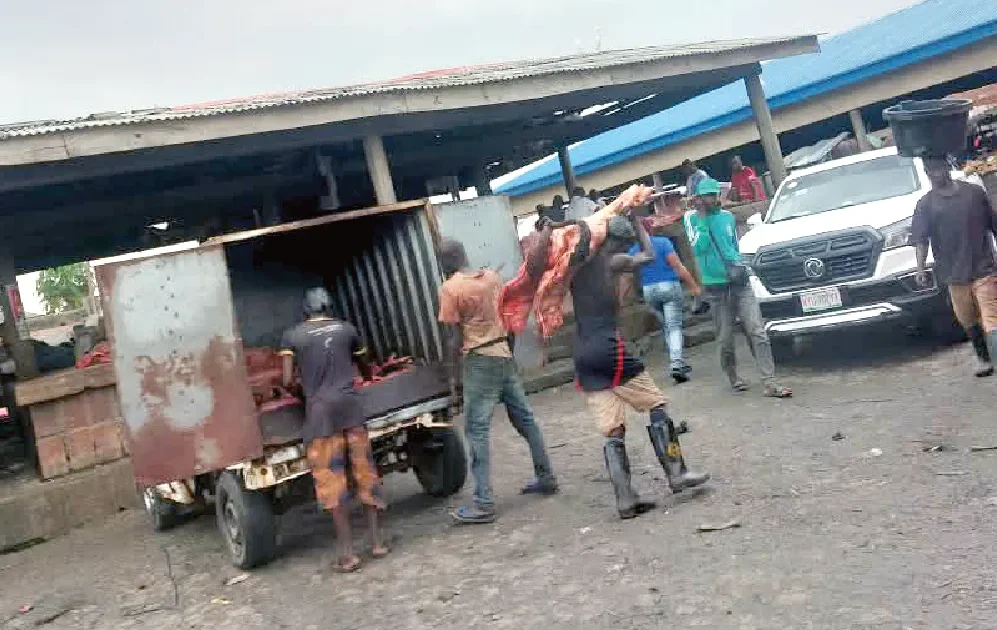
A visit to the Oko-Oba Abattoir in the Agege area of Lagos revealed a troubling pattern of unhygienic handling of meat meant for human consumption. Flies were seen settling on exposed portions of cow meat as butchers cut cattle parts into smaller portions for direct sale to retailers and consumers. The market is a major abattoir supplying chunks of raw meat to several markets across Lagos. Meat porters were observed offloading from vans and carrying chunks of meat directly against their bodies, without visible aprons, gloves, or hair coverings, creating opportunities for microorganisms to get onto the meat.
The surrounding environment of the Oko-Oba Abattoir was filled with dark stagnant water and decaying organic waste. In some parts of the market, massive cuts of raw meat sat exposed on rough wooden tables under umbrellas, conditions that can turn raw meat into a thriving ground for harmful bacteria in the Lagos heat. A butcher, Mufutau, argued that cleanliness in the market has improved, but the situation still poses health risks. The Lagos Commissioner for Agriculture, Abisola Olusanya, stated in 2024 that Lagos slaughters not less than 10,000 heads of cattle daily.
A visit to the popular Mile 12 market in the Kosofe Local Government Area of Lagos also revealed poor handling and display of meat. The meat sellers' section is situated in an environment that could predispose raw meat to contamination, with no visible separation between the handling area and the wider market environment. Flies were seen moving around the stalls where meat was being handled and sold, while the environment creates favourable conditions for rodents and bedbugs. Both butchers and consumers did not observe strict hygiene measures when handling meat.
In the Oniyanrin area of Mile 12, raw meat was seen being transferred from a van into a wheelbarrow and later placed directly on porous wooden tables that had absorbed blood and fluids over time. While some porters handling the meat carcasses wore an apron, others operated without any protective equipment. A butcher, Wasiu Success, explained that flies are attracted to meat stalls, but argued that customers need to see the meat before they buy, and some customers won't buy if they don't touch every piece.
The poor handling and display of meat in Lagos markets have become a source of concern for public health. Many residents have accepted the unhygienic situation as an unavoidable part of the meat value chain. A resident of the Mushin area of Lagos, Mrs Omotadase Yasr, shared her experience of buying meat from the market that was packed with a fly inside. The situation has been normalised in the state, with residents expressing concerns about the potential health risks.
Experts warn that poor handling and display of meat create opportunities for microorganisms to get onto the meat and spread from one surface to another. The recent waste management crisis in Lagos has worsened the situation, turning meat into a potential public health concern. To mitigate this risk, there is a need for improved sanitation, proper handling, and covered display cases for meat in markets across Lagos.
Key points
- An estimated 6,000 to 10,000 cattle are slaughtered daily in Lagos, exposing meat to several points of contamination.
- Poor handling and display of meat in Lagos markets create potential health risks for consumers.
- The unhygienic conditions in Lagos markets have become a source of concern for public health, with many residents at risk of foodborne illnesses.