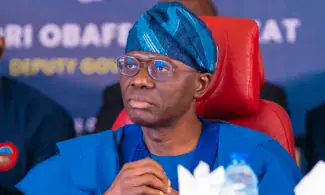
The Lagos State government under Governor Babajide Sanwo-Olu spent about ₦19.02 billion on refreshments, entertainment, hospitality, honoraria, and sitting allowances between January and June 2026. This is according to the Lagos State Government’s 2026 Second Quarter (Q2) Budget Implementation Report. The spending raises questions about the state’s priorities at a time when patients struggle with overcrowded hospitals, long waiting hours, and disruptions to essential medical services.
A breakdown of the spending shows that ₦15,969,457,589 was spent on refreshments, entertainment, and hospitality against an annual budget of ₦32.95 billion. This represents approximately 48.5 per cent of the amount budgeted for the entire year, with six months still remaining in the 2026 financial year. The government also spent ₦3,050,070,029 on honoraria and sitting allowances out of an annual allocation of ₦4.115 billion, representing approximately 74.1 per cent of the yearly budget within the first half of the year.
In contrast, the state government’s spending on primary healthcare during the same period stood at ₦7,328,006,100.44, representing approximately 38.1 per cent of its annual budget of ₦19.23 billion. This is amid industrial actions by healthcare workers, complaints over poor remuneration and welfare, and persistent shortages of medical personnel in public hospitals in the state.
The spending figures come against the backdrop of a worsening healthcare access crisis in Lagos, where patients struggle with overcrowded public hospitals, prolonged waiting periods, rising medical expenses, and disruptions caused by industrial actions by healthcare workers. The pressure on Lagos State public hospitals was particularly visible during the prolonged industrial action by members of the Joint Health Sector Unions (JOHESU), which began in December 2025 and continued into January 2026.
The JOHESU Lagos State Council Secretary, Adegboyega Kabiawu, said the union's grievances included unresolved salary and professional recognition issues, unequal implementation of retention allowances, errors in call-duty and shift-duty allowances, and inadequate transportation for health workers. The union had previously had about 10 staff buses serving the health sector across the three tiers of healthcare in Lagos, but only one remained functional.
The crisis has not been limited to non-medical health workers. In June 2026, resident doctors at LASUTH embarked on a three-day warning strike over unresolved welfare concerns, including delayed implementation of revised professional allowances, non-payment of specialist allowances to eligible senior registrars, outstanding salary shortfalls, and promotion arrears. The Nigerian Medical Association (NMA), Lagos State branch, warned at the time that the dispute could trigger wider disruptions across the state's healthcare system if the grievances were not addressed.
The welfare disputes have raised concerns about the state's ability to retain medical professionals at a time when Nigeria's health sector is already battling the migration of doctors and other skilled workers. The pressure on the healthcare system was further highlighted in September as media reports documented long queues and doctor shortages at several Lagos public hospitals.
Key points
- The Lagos State government spent ₦19.02 billion on refreshments, entertainment, hospitality, honoraria, and sitting allowances between January and June 2026.
- The state government’s spending on primary healthcare during the same period stood at ₦7,328,006,100.44.
- The spending raises questions about the state’s priorities at a time when patients struggle with overcrowded hospitals, long waiting hours, and disruptions to essential medical services.