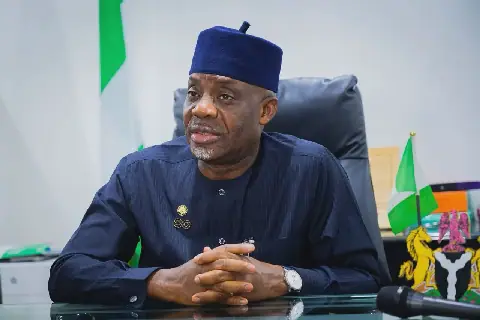
The Lagos State Government has embarked on an ambitious project to strengthen its digital infrastructure, with a focus on expanding its fibre-optic network. Since 2019, over 3,000 kilometres of fibre-optic infrastructure have been deployed, with plans to increase this to approximately 6,000 kilometres. This development is expected to improve broadband connectivity, enhance digital public services, and alleviate some of the infrastructure challenges faced by technology companies, startups, and businesses operating in the state.
Deputy Governor of Lagos State, Dr. Kadri Obafemi Hamzat, highlighted the significance of digital infrastructure in the state's development at PodFest 2026. He emphasized that the government has shifted its perspective on digital infrastructure, now viewing it as critical to supporting the modern economy. The next phase of the fibre rollout will involve extending ducts along strategic corridors. Additionally, the Lagos State Infrastructure Maintenance and Regulatory Agency (LASIMRA) has attracted over $22 million in direct investment commitments for further cable expansion.
The benefits of the fibre expansion are expected to be far-reaching, impacting various sectors such as technology businesses, creative industries, healthcare, and education. According to Dr. Hamzat, the expansion will result in faster uploads for creators, lower costs for startups, and increased access for schools and health centres. For instance, hospitals will benefit from faster record retrieval. This push for enhanced digital infrastructure comes as demand for reliable and high-capacity connectivity continues to rise in Nigeria.
Data from the Nigerian Communications Commission (NCC) indicates that broadband subscriptions in Nigeria reached 124.42 million in July 2026, with internet data consumption soaring to 1.66 million terabytes in the same month. These figures underscore the growing pressure on the country's digital infrastructure as more Nigerians, businesses, and public institutions rely on internet connectivity for various purposes, including payments, commerce, education, healthcare, entertainment, and government services.
Despite the progress, the concentration of fibre infrastructure in major economic centres remains a national challenge. NCC data analysed in July revealed that Lagos has approximately 11,586.7km of deployed fibre, accounting for 11.46 per cent of the national total. Furthermore, Lagos and the Federal Capital Territory together account for 18.35 per cent of Nigeria's deployed fibre infrastructure. This raises concerns about the pace at which digital infrastructure can be extended beyond major commercial centres to secondary cities and underserved communities.
The Lagos fibre expansion is part of a broader national effort to address the infrastructure gap that has hindered broadband growth and increased the cost of delivering digital services in several parts of the country. At the national level, the Federal Government is pursuing Project BRIDGE, which aims to facilitate the deployment of 90,000km of fibre infrastructure across the 36 states and the Federal Capital Territory, connecting over 770 local government areas.
The success of the Lagos fibre expansion project and similar initiatives nationwide will be crucial in bridging the digital divide and promoting inclusive economic growth. As the demand for reliable and high-capacity connectivity continues to rise, the government's efforts to enhance digital infrastructure will play a vital role in supporting the growth of businesses, improving public services, and enhancing the overall quality of life for Nigerians.
Key points
- The Lagos State Government aims to expand its fibre-optic infrastructure to 6,000km to enhance broadband connectivity and reduce costs.
- The expansion is expected to impact various sectors, including technology businesses, creative industries, healthcare, and education.
- The project is part of a broader national effort to address the infrastructure gap and promote inclusive economic growth.