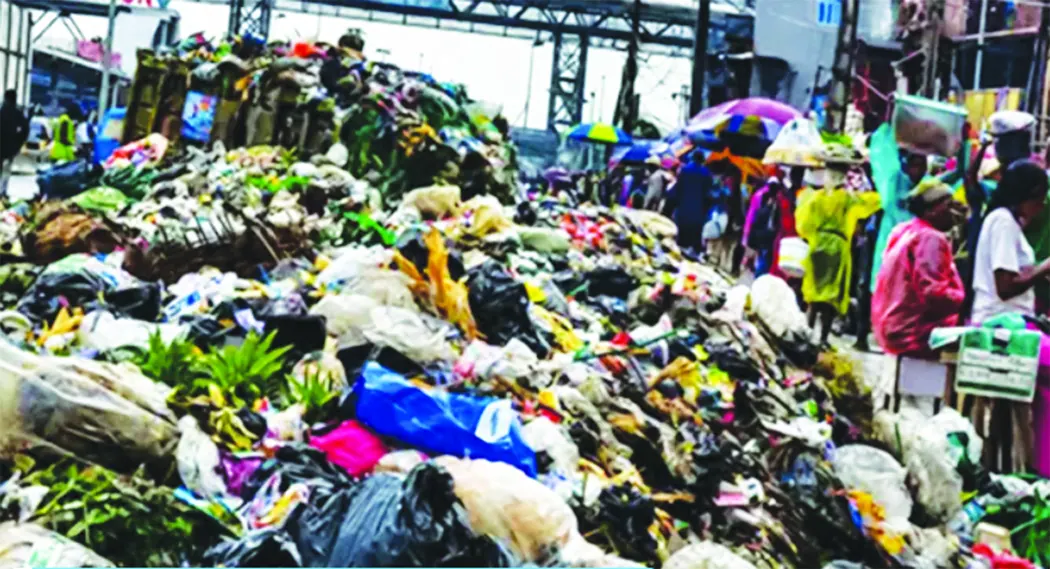
Lagos, Nigeria's megacity and gateway to West Africa, is facing a severe waste management crisis, with streets, markets, medians, and drainage channels overflowing with refuse. The situation has sparked concerns about environmental and public health risks. Despite being marketed as a megacity with a safe and clean environment, large parts of Lagos State tell a different story. The waste crisis has been ongoing for five months, with no signs of improvement.
The waste management system in Lagos operates through a partnership between the Lagos State Waste Management Authority (LAWMA) and accredited Private Sector Participants (PSPs). LAWMA oversees policy and supervision, while PSPs are assigned specific districts and local government areas to collect household and commercial waste. However, the system appears to have broken down, with residents reporting missed collections lasting weeks or even months despite paying for the service.
Residents and property owners pay monthly service charges for waste collection, but PSP operators have pointed to rising diesel costs, vehicle maintenance, and long distances to disposal sites as challenges. State authorities have acknowledged operational bottlenecks, underperforming operators, and shortages of trucks. The government has responded with efforts to clear refuse black spots and reintroduced monthly sanitation exercises.
The situation has revived memories of the 2015-2019 period, when Lagos battled a similar waste crisis. Major roads, markets, and drainage channels became dumping grounds as the state's waste management system struggled with infrastructure and operational bottlenecks. The crisis had significant environmental and health implications, with residents exposed to potential health risks.
In 2017, the Lagos State government brought in Visionscape to modernize waste collection and evacuation across the state. However, the arrangement soon became embroiled in the complexities of Lagos' waste management politics. The new operator struggled to make a significant impact, and the waste crisis persisted.
The current waste crisis has significant implications for the environment and public health. Decomposing refuse brings offensive odors and environmental hazards, while blocked drainage channels obstruct motorists, pedestrians, and businesses. Residents are exposed to potential health risks, including the spread of diseases.
The Lagos State government faces a significant challenge in addressing the waste management crisis. With the crisis showing no signs of improvement, residents are calling for a more sustainable solution. The government must work with PSP operators and other stakeholders to develop a effective waste management system that prioritizes environmental and public health concerns.
Key points
- The waste management crisis in Lagos has significant environmental and public health implications.
- The crisis has been ongoing for five months, with no signs of improvement.
- The government has responded with efforts to clear refuse black spots and reintroduced monthly sanitation exercises.