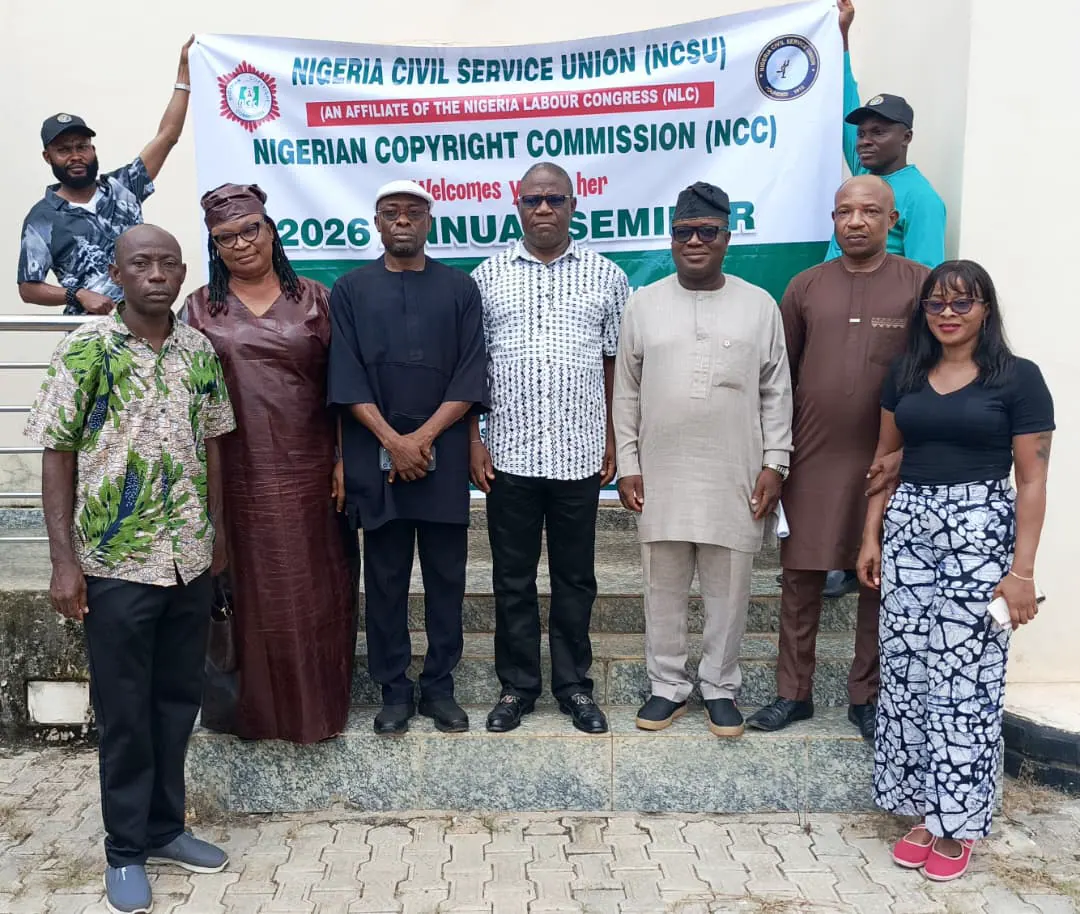
The Nigerian Civil Service Union (NCSU) has emphasized the need for stronger collaboration between organised labour, the Nigerian Copyright Commission (NCC), and stakeholders in Nigeria's creative industry. This call was made at the 2026 annual seminar of the NCSU NCC Unit held in Abuja, with the theme, "The Labour Movement as a Valuable Tool in the Protection and Promotion of the Creative Industry in Nigeria." The seminar aimed to examine the relationship between trade unions, the NCC, and the creative sector.
The Chairman of the NCC Unit, Comrade Emeka Ngene, welcomed participants and described the seminar as timely, given the growing importance of the creative industry to Nigeria's economic and national development. He said the programme provided an opportunity to equip workers with knowledge to support engagements on staff welfare, improved working conditions, and collaboration with relevant agencies. Ngene commended the Director-General of the NCC, Dr. John Asein, for welfare-oriented initiatives, including allowances already paid to staff and approval of a job-specific allowance expected to take effect from October 2026.
Representing the Director-General, the Deputy Director and Head of Human Resource Management Department, Mr. Sunday Popoola, conveyed Asein's goodwill to the union and commended the NCC Unit for its responsible and constructive approach to union activities. Popoola said management remained committed to staff welfare and maintaining an open-door policy for addressing workers' concerns. He stressed that employee welfare must go hand-in-hand with productivity and effective public service delivery, urging staff to maintain professionalism and satisfy stakeholders.
The Assistant General Secretary, Federal Council, NCSU, and resource person at the seminar, Comrade Yildet Bigwan, explained the distinction between workers' rights and privileges. He urged employees to pursue enforceable rights through appropriate labour mechanisms while handling privileges through negotiation, tact, and diplomacy. Bigwan also stressed the importance of clearly defined duties and employment responsibilities, noting that organised labour has a role to play in ensuring compliance with applicable labour standards.
Bigwan called for stronger community outreach and public education to enable creators, artisans, and other workers to understand copyright, intellectual property rights, and available avenues for protecting and commercialising their works. He advocated stronger collaboration with creative associations and stakeholders across the music, film, television, entertainment, and other creative sectors. According to him, a stronger labour movement could contribute to improved working conditions and remuneration, better contractual practices, and stronger intellectual property protection.
The seminar identified measures to promote the creative industry, including greater awareness of labour rights, flexible union structures, promotion of written employment contracts, and stronger collaboration among unions and creative-sector organisations. Social protection for workers in non-standard employment and intellectual property education and enforcement through training and professional development were also discussed. The event featured a question-and-answer session, meet-and-greet, entertainment, and refreshments.
The seminar had members of the Union at the NCC headquarters attending physically, while others from various state commands participated virtually. The Nigerian Civil Service Union's call for stronger collaboration between labour, the Copyright Commission, and stakeholders aims to improve workers' welfare and protect intellectual property in Nigeria's creative industry. The union's efforts seek to promote a stronger labour movement and contribute to Nigeria's economic and national development.
Key points
- The Nigerian Civil Service Union calls for stronger collaboration between labour, the Copyright Commission, and stakeholders to improve workers' welfare and protect intellectual property.
- A stronger labour movement could contribute to improved working conditions and remuneration, better contractual practices, and stronger intellectual property protection.
- The seminar identified measures to promote the creative industry, including greater awareness of labour rights and intellectual property education and enforcement.