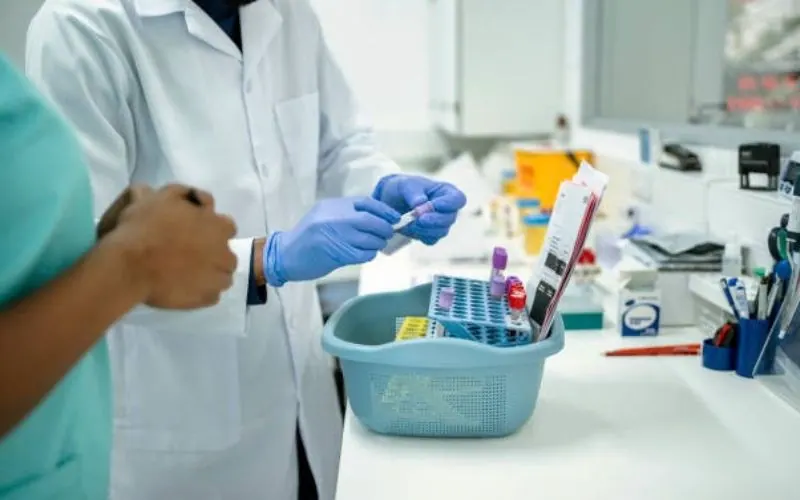
Growing concerns have emerged in Kenya over the safety and accuracy of medical and clinical laboratory test results. More than 10,000 facilities handling patient samples, including private, faith-based, public hospital laboratories, and research institutions, are not being physically inspected. Instead, inspectors from the Kenya Medical Laboratory Technicians and Technologists Board (KMLTTB) are relying on virtual reviews and phone assessments to audit facilities.
The remote audits have sparked alarm within the sector, with health professionals questioning whether physical premises, equipment, cold-chain storage, reagents, testing protocols, and personnel competence can be adequately verified from a distance. An insider familiar with the inspection process said physical audits are essential, warning that several facilities are allegedly operating with unvalidated diagnostic test kits and without baseline quality control checks.
The insider emphasized that clinical laboratory results guide critical medical decisions, including diagnosis, drug prescriptions, and treatment plans, making strict oversight indispensable to Kenya’s Universal Health Coverage (UHC) rollout. Routine physical inspections are also critical for national disease surveillance and outbreak detection. If there is a disease outbreak, confirmation begins in the laboratory, and outbreak investigations rely on verifiable diagnostic accuracy.
The oversight gaps have brought scrutiny to the welfare and operational capacity of medical laboratory inspectors engaged by the KMLTTB. In a petition dated August 21, 2026, addressed to President William Ruto, inspectors appealed for intervention regarding their employment terms and the board's declining regulatory reach. They stated that they serve as the frontline workforce safeguarding diagnostic reliability across the country.
Despite serving the KMLTTB for periods ranging between two and ten years, the inspectors claimed they have never been issued formal employment contracts. They cited lack of pension benefits, annual leave, and gratuity, alongside unpaid statutory deductions and daily subsistence allowances that fall below standard rates set by the Salaries and Remuneration Commission (SRC).
The petition warned that these precarious working conditions threaten institutional memory, regulatory continuity, and workforce morale, urging the government to establish a clear framework to regularize staff and modernize regulatory tools. The inspectors also warned that systemic regulatory weaknesses directly imperil the newly established Social Health Authority (SHA), which requires medical facilities to operate an accredited clinical laboratory to qualify for public health financing and patient reimbursement.
The inspectors urged the Ministry of Health to reinforce the KMLTTB's enforcement mandate to ensure public health funds are channeled only to accredited, high-standard diagnostic centers. Efforts to obtain comment from the Ministry of Health and the KMLTTB were unsuccessful by the time of publication. The situation highlights the need for strengthened regulatory oversight to ensure the quality and accuracy of laboratory test results in Kenya.
Key points
- Physical inspections of medical laboratories in Kenya have been replaced with virtual reviews and phone assessments, sparking concerns over safety and accuracy.
- Medical laboratory inspectors have petitioned the government for better employment terms and improved regulatory capacity.
- The situation imperils the newly established Social Health Authority, which requires accredited clinical laboratories for public health financing and patient reimbursement.