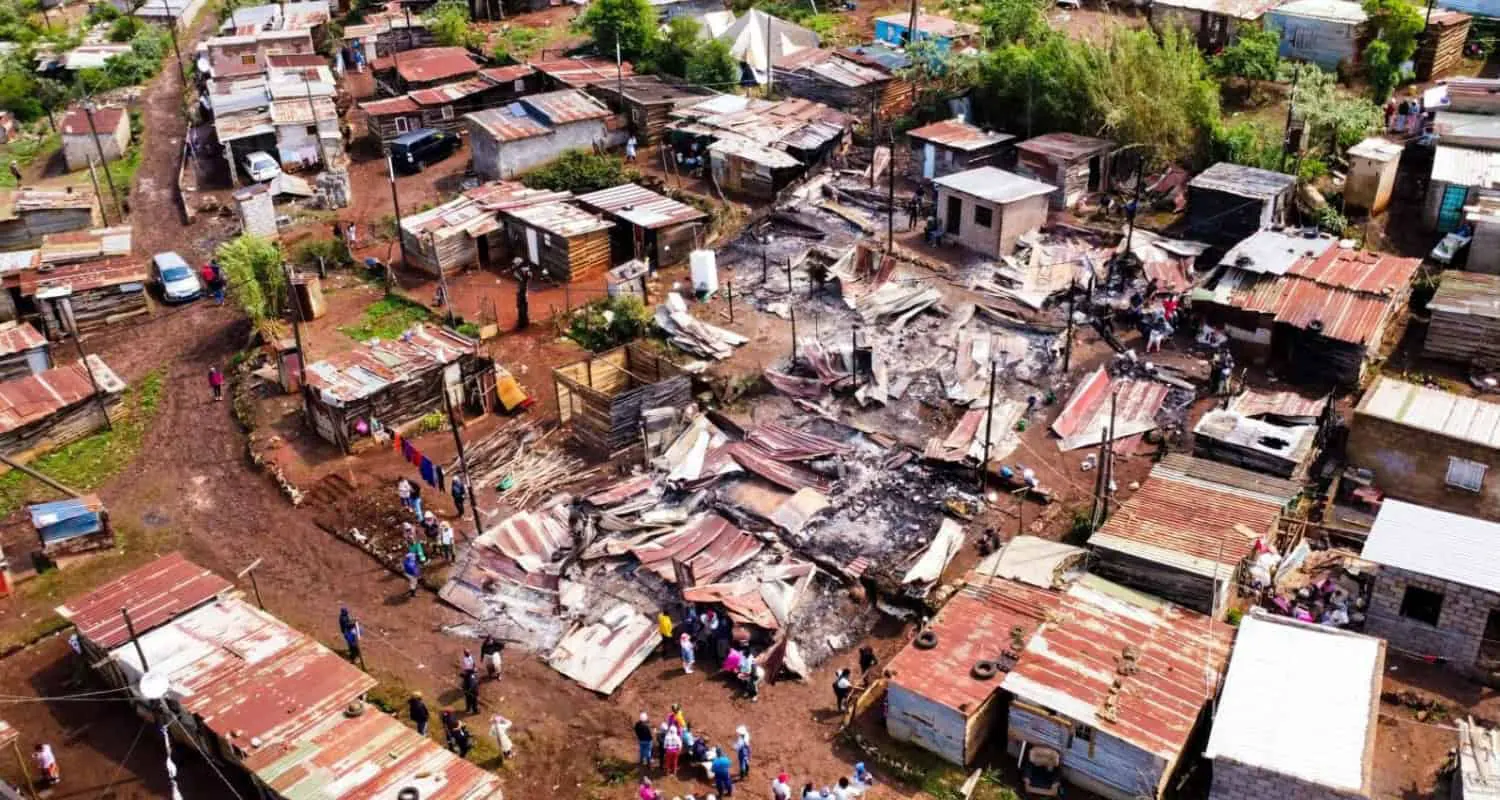
A devastating fire at the Swapo informal settlement in Copesville, KwaZulu-Natal, has left several foreign nationals without homes. The fire, which occurred on Saturday, destroyed 20 shacks and claimed the life of a woman, with her partner suffering serious burn injuries. According to KwaZulu-Natal Human Settlements MEC Siboniso Duma, a verification process revealed that 19 foreign nationals had been living in the destroyed shacks.
The verification process, conducted by Msunduzi Municipality, found that a foreign national was allegedly renting out the shacks for R250 each, with illegal electricity connections supplying the structures. Duma stated that one person claiming to be South African was also living in the area, but their identification document was questionable. The MEC said they are engaging with the Department of Home Affairs to verify the authenticity of the ID.
The fire is believed to have originated in the shack occupied by the woman who died and her partner. Duma revealed that the woman and her partner, as well as a child who initially reported to have suffered burns, were all foreign nationals. The MEC also alleged that some South Africans were attempting to claim government assistance on behalf of foreign nationals.
As a result of the verification process, Duma announced that the provincial government would not provide emergency housing support to foreign nationals affected by the fire. He stated that this decision was in line with government policy, which prioritizes assistance for qualifying South African beneficiaries.
Duma emphasized that government housing resources must be reserved for South Africans, citing the significant financial losses incurred by the Human Settlements Department due to fraud involving the sale and rental of RDP houses to foreign nationals. He claimed that the department had lost over R2 billion, including costs associated with land purchase, rezoning, and construction.
The MEC's announcement has significant implications for foreign nationals living in informal settlements in KwaZulu-Natal. Duma's stance on emergency housing assistance reflects a broader government policy aimed at prioritizing South African citizens. However, this decision may exacerbate the challenges faced by undocumented foreign nationals who have lost their homes.
The incident highlights the complexities surrounding informal settlements and the provision of emergency housing assistance. As the government continues to grapple with these issues, affected communities will be closely watching the developments. The KwaZulu-Natal government has reiterated its commitment to upholding policy and ensuring that resources are allocated to qualifying beneficiaries.
Key points
- The KZN government will not provide emergency housing assistance to foreign nationals affected by the Copesville shack fire.
- The decision is in line with government policy, which prioritizes assistance for qualifying South African beneficiaries.
- The Human Settlements Department has lost over R2 billion due to fraud involving the sale and rental of RDP houses to foreign nationals.