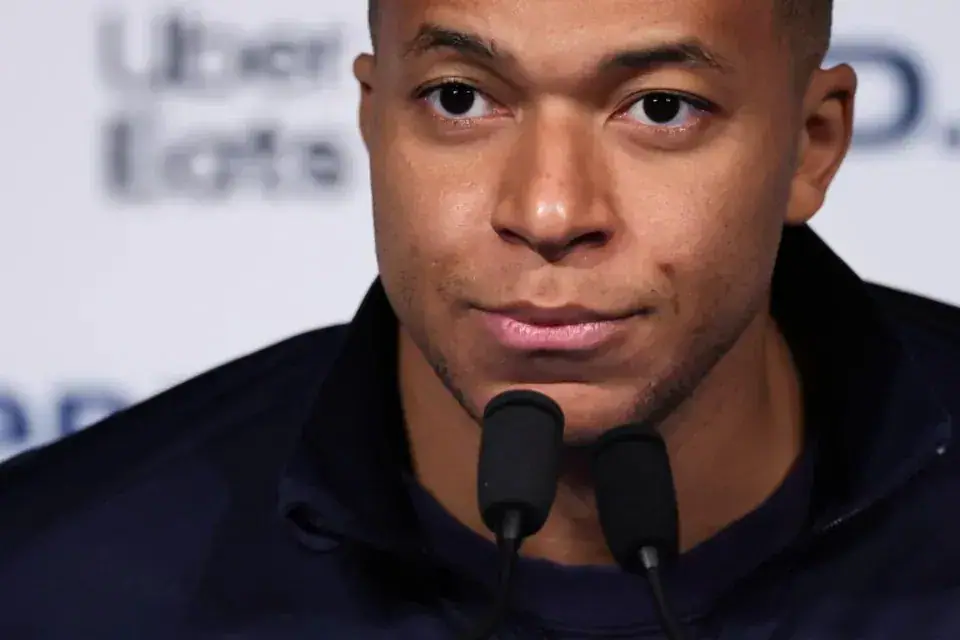
French football superstar Kylian Mbappé has issued an apology for his recent comments about Mao Zedong, the former Chinese leader. A video clip showed Mbappé joking about a meme that associated him with Mao, sparking widespread outrage in China. The comments led to the cancellation of several endorsement deals with major Chinese brands, including Dongpeng, Mengniu, and Milkground. These companies stated that they have a "zero-tolerance" policy for actions or words that hurt national sentiments.
The controversy began when a video clip from the podcast "The Bridge" featuring Mbappé and his teammate Aurélien Tchouaméni surfaced online. In the clip, Mbappé discussed memes that associate him with historical figures, including Mao Zedong. He mentioned that he often uses one such meme online with his friends. The meme in question features Mbappé's face superimposed on an image of Mao Zedong. This type of meme is part of a larger trend of associating Mbappé's image with historical figures, often to mock or criticize his influence.
The backlash in China was swift and severe. Three major Chinese brands, Dongpeng, Mengniu, and Milkground, announced that they were ending their endorsement deals with Mbappé, effective immediately. The companies stated that they would not tolerate any actions or words that hurt national sentiments. The Chinese state-run media outlet CMG also suspended broadcasts of Spanish football matches, including those featuring Mbappé, due to his "very serious" comments.
Mbappé quickly apologized for his comments, stating that he had "a deep respect for the Chinese people and their history" and was "sincerely sorry" for any offense caused. His apology was released in French, English, and Mandarin. The Spanish football league also expressed its regret for the offense caused by Mbappé's comments, presenting its own apology. The incident highlights the challenges that international celebrities face when making comments about sensitive topics.
The controversy surrounding Mbappé's comments has sparked a wider debate about cultural sensitivity and the responsibilities of public figures. In China, Mao Zedong is still revered as a national hero, despite his complicated legacy. The Chinese government has been sensitive to criticism of Mao and other historical figures, and has taken steps to regulate online content and prevent the spread of "slanderous" information.
The incident has also highlighted Mbappé's significant popularity in China, where football is a highly popular sport. Mbappé has a large following on Chinese social media platforms, including Weibo and Xiaohongshu. However, his comments have sparked a backlash, with many Chinese users expressing outrage and disappointment. The incident may have implications for Mbappé's brand and his relationships with Chinese sponsors.
The Chinese government has weighed in on the controversy, with the Ministry of Foreign Affairs stating that it is natural for Chinese people to reject comments that hurt their sentiments. The state-run newspaper China Daily has also called for greater respect and understanding from international celebrities, warning that they can be "instrumentalized" for political purposes. Mbappé's apology may help to mitigate the damage, but the incident serves as a reminder of the complexities of cultural diplomacy in the age of social media.
Key points
- Mbappé's comments about Mao Zedong sparked widespread outrage in China.
- The incident highlights the challenges that international celebrities face when making comments about sensitive topics.
- Mbappé has apologized for his comments, but the incident may have implications for his brand and relationships with Chinese sponsors.