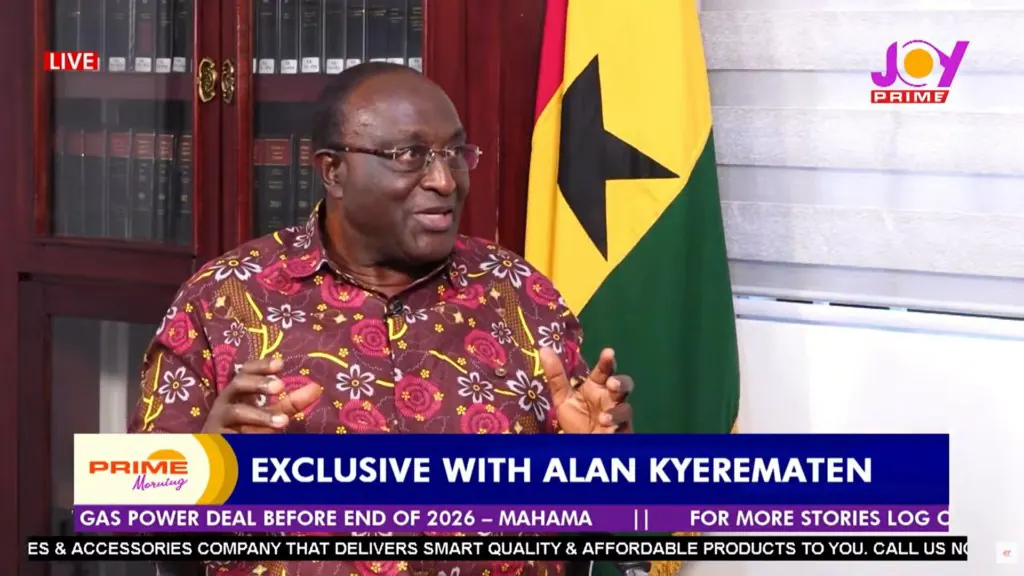
Alan Kyerematen, leader of the United Party, has renewed his call for Ghanaians to look beyond the country's two dominant political parties, the NPP and NDC. He argues that these parties bear responsibility for Ghana's unresolved development problems, including unreliable electricity and water shortages. Kyerematen's comments come as Ghanaians continue to experience persistent power cuts, water shortages, and healthcare challenges. He hopes that in the 2028 general election, Ghanaians will chart a different course for the country.
Kyerematen pointed to 34 years of alternating control of government by the NPP and NDC, questioning why basic infrastructure problems remain unresolved despite that long stretch in power. He cited poor roads, an unstable power supply, and communities without running water for as long as three decades as evidence of a deeper systemic failure. The United Party leader also referenced recurring difficulties with the Computerised School Selection and Placement System and serious challenges in the health sector.
Kyerematen leads the United Party, which he presents as a third political force distinct from the NPP and the NDC. He leaned on his own political history and public recognition to make his case, telling Joy Prime's Nathaniel Attoh that he is widely known across the country by his popular nickname, Alan Cash. Kyerematen added that he believes he has conducted his politics in a civilised way, earning him public goodwill.
Ghana's political landscape has been dominated by the NPP and NDC since the return to multiparty democracy, with power alternating between the two parties in successive elections. For ordinary Ghanaians, Kyerematen's remarks tap into long-running frustrations over dumsor-style power cuts, unreliable pipe-borne water in some communities, congestion during school placement season, and strain on public hospitals.
Kyerematen's comments do not include specific policy proposals for addressing the infrastructure, energy, or healthcare gaps he described. However, he has framed 2028 as the target election for Ghanaians to make what he called a strategic choice. The United Party leader's call for change comes as Ghanaians prepare for another election cycle.
Whether a third-party challenge can gain sufficient traction to break the two-party grip on Ghanaian politics remains untested at the presidential level. Kyerematen's remarks have sparked discussions about the possibility of a new political force emerging in Ghana. The United Party's electoral strategy, candidate plans, and specific policy platform remain unclear.
Kyerematen's call for Ghanaians to end the NPP-NDC duopoly by 2028 has significant implications for the country's political landscape. As the 2028 election approaches, Ghanaians will have to decide whether to continue with the current two-party system or explore alternative options. The United Party's ability to gain traction and present a viable alternative will be crucial in shaping the country's future.
Key points
- Kyerematen cites 34 years of NPP-NDC dominance as the reason for Ghana's unresolved development problems.
- The United Party leader presents his party as a third political force distinct from the NPP and NDC.
- Kyerematen frames 2028 as the target election for Ghanaians to make a strategic choice and end the NPP-NDC duopoly.