The Kwenda project has distributed agricultural equipment to over 100 cooperatives in Angola's Bié province as part of its "productive inclusion" program. The program aims to provide production means to enhance production capacity and generate income for beneficiary families. The equipment distributed includes moto-cultivators, plows, hoes, moto-pumps, and three-wheeled motorized vehicles. This initiative is expected to support the development of the agricultural sector in the region.
According to Belarmino Jelembi, Director-General of the Local Development Institute - FAS, the equipment will be paid for in a modality to be defined by the cooperatives and FAS. He emphasized that the payment modality will not harm the cooperatives but rather contribute to their development. The Kwenda project has already started with the incentive for bean production, allowing families to increase production and commercialize surpluses, transforming agricultural activity into a source of income.
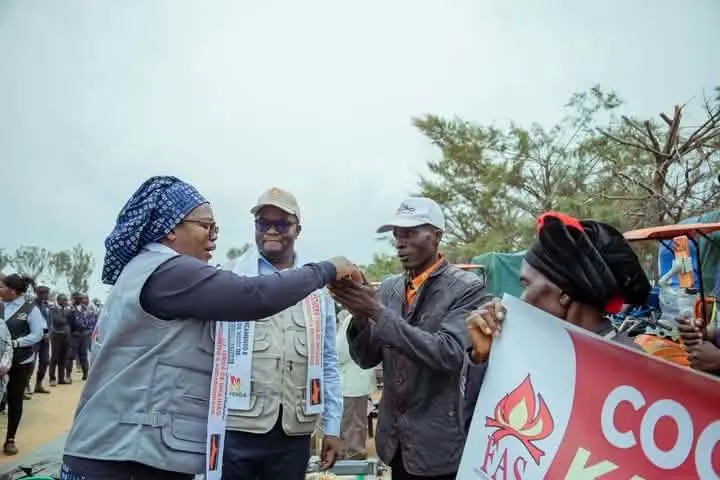
The Director-General of FAS highlighted that the focus on agricultural cooperatives and access to production means will enhance production capacity and income generation for beneficiary families in the covered municipalities. A total of 3,764 beneficiaries from cooperatives in the municipalities of Andulo, Calucinga, Camacupa, and Nharea have been covered. The equipment was handed over to the cooperatives by Celeste Elavoco David Adolfo, Governor of Bié Province.
Governor Celeste Elavoco David Adolfo commended the results achieved by Kwenda in the municipality of Andulo, comparing the program to a seed sown in the ground, which has yielded fruits through support to families and communities. She noted that Kwenda has contributed to transforming received support into productive activities and small businesses, enabling beneficiaries to gradually generate income and achieve greater economic autonomy.
The cooperatives have assured that they will conserve the received equipment, produce various agricultural products on a large scale, and make repayments into community accounts for cooperative development. However, it was reported that many organized cooperatives were not accepted in the selection process due to not meeting the required criteria.
The second phase of Kwenda in Bié Province is set to start on September 26. The project has been making significant strides in supporting agricultural development and improving the livelihoods of beneficiary families. The distribution of equipment is expected to have a positive impact on food security and economic growth in the region.
The Kwenda project's efforts to support agricultural cooperatives and enhance production capacity align with the Angolan government's goals to promote economic development and reduce poverty. The project's success in Bié Province will likely serve as a model for similar initiatives in other regions of the country.
Key points
- Over 100 agricultural cooperatives in Bié Province receive equipment from Kwenda project to boost production capacity.
- The equipment distributed includes moto-cultivators, plows, hoes, moto-pumps, and three-wheeled motorized vehicles.
- A total of 3,764 beneficiaries from cooperatives in four municipalities have been covered by the project.