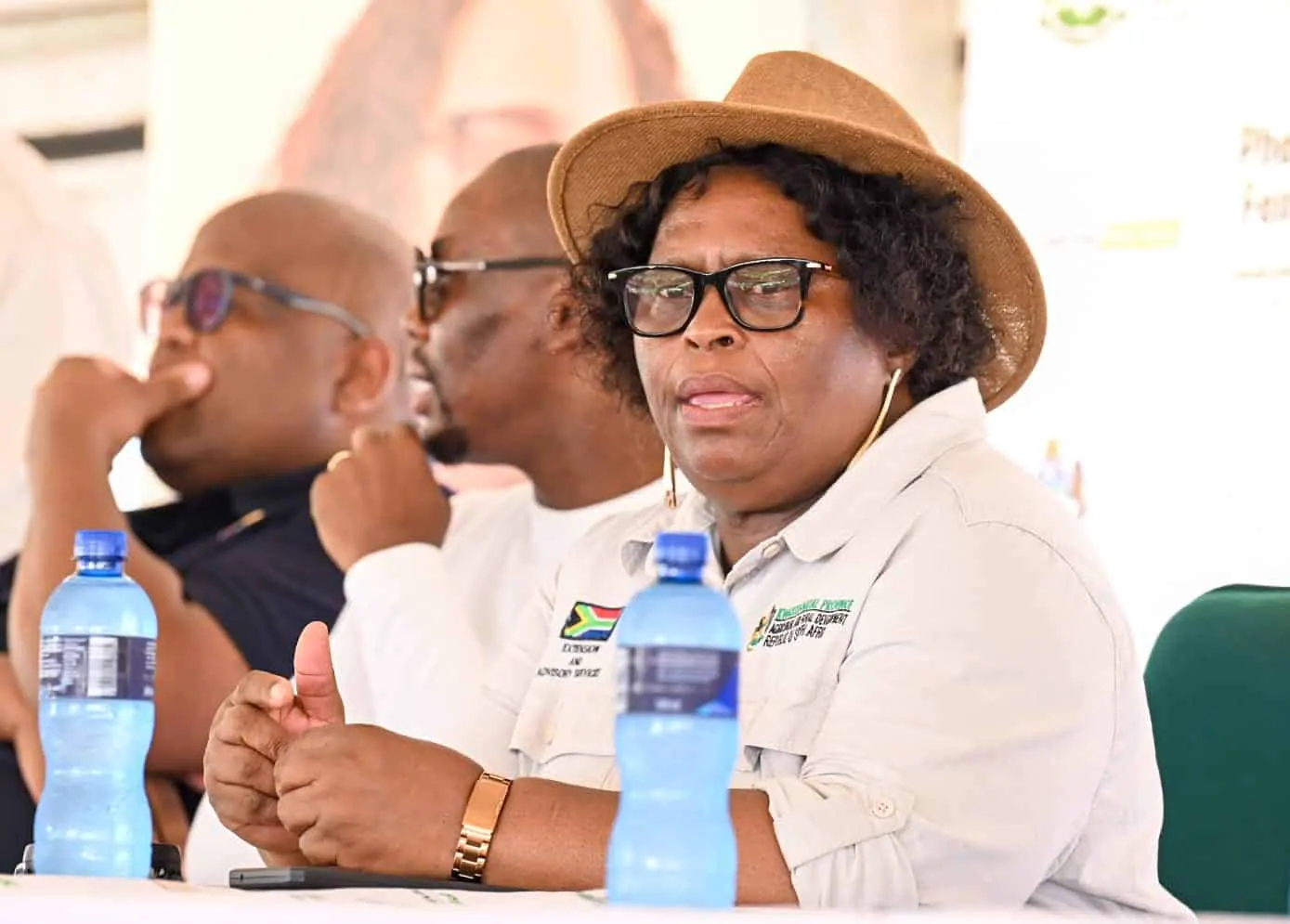
The KwaZulu-Natal provincial government has intensified its efforts to strengthen food security and support small-scale farmers with the launch of the 2026/27 Multi-Planting Season in the Dlebe area of Ulundi. Premier Thamsanqa Ntuli, accompanied by Agriculture and Rural Development MEC Thembeni kaMadlopha-Mthethwa and members of the provincial Cabinet, highlighted the importance of expanding agricultural production while helping rural communities withstand climate-related challenges.
The provincial multi-planting programme aims to accelerate food production through coordinated summer cropping, with government support including mechanization, production inputs, and extension services for household and smallholder farmers. The launch showcased projects already being cultivated by rural communities, including the Vukuzakhe Co-operative at KwaGuqu, where 20 women are producing vegetables on a two-hectare plot.
The co-operative members welcomed Ntuli and kaMadlopha-Mthethwa as they visited the project, which the department has identified for further support. KaMadlopha-Mthethwa said the department would assist the cooperative with fencing, irrigation, and production inputs such as seeds and fertilizer, while also helping the farmers access markets for their produce.
For livestock farmers in the area, government support was also marked by the official handover of the newly constructed KwaNgqindi Dip Tank. Small-scale livestock farmers welcomed the facility, saying it would make a significant difference to communities that previously had to travel long distances to access the nearest dip tank.
Local farmer Sizwe Mbatha said the community had long raised concerns about the distance to the nearest facility, which made it difficult for some farmers to regularly dip their cattle. Mbatha welcomed the intervention by the KZN Department of Agriculture and Rural Development, saying bringing the facility closer to farmers in the KwaGoqo area would make livestock health services more accessible.
The new dip tank is expected to support disease prevention and improve the health of livestock in the farming community. KaMadlopha-Mthethwa said the facility would help prevent animal diseases while bringing government veterinary and livestock services closer to farming communities.
The provincial programme is also expected to include the development of new irrigated sites and the intake of young people into agriculture. A key component of this year’s planting season is climate preparedness, with farmers being equipped with information about El Niño and its potential impact on rainfall, grazing, and food security.
Key points
- The programme aims to make agriculture a more significant contributor to household food security and rural economic activity.
- The launch included the ceremonial planting and engagement with beneficiaries cultivating land earmarked for the programme.
- Government support includes mechanization, production inputs, and extension services for household and smallholder farmers.