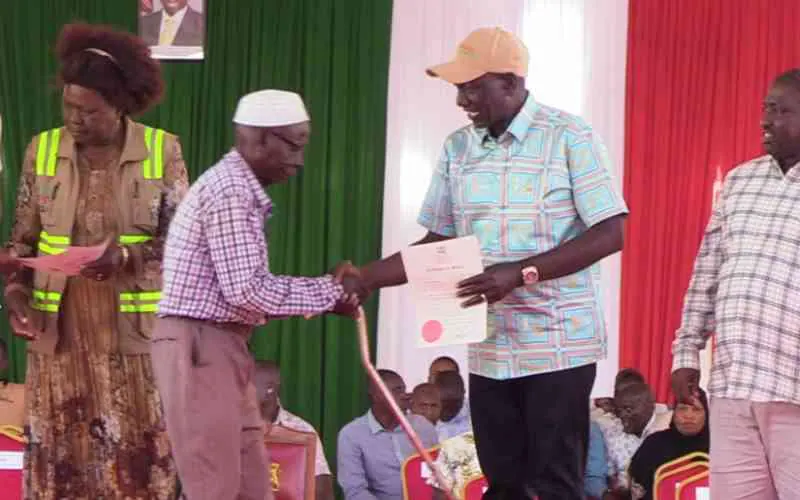
Residents of Kwale, Kenya, have rejected newly issued title deeds, claiming the documents reflect smaller land sizes than the ancestral land their families have occupied and cultivated for generations. The residents are demanding that the government revoke the disputed titles and conduct a fresh adjudication process based on traditional and ancestral boundaries. This development comes days after President William Ruto issued 300,000 title deeds in the Coast region to address long-standing land ownership challenges.
The government issued over 26,000 title deeds at Kibaoni in Lunga Lunga subcounty to Kwale residents, with a promise to distribute additional documents to rightful landowners before the end of the year. However, some residents say the acreage indicated in the documents does not correspond with the land they and their families have occupied for decades. The residents, led by Buda Mbwana of Anzwani village, support efforts to formalize land ownership but want the government to ensure that title deeds reflect the actual ancestral land held by families.
Mbwana stated that some residents were allocated plots measuring 50 by 100 feet or even smaller, despite their families having occupied larger parcels of land for generations. He called on the government to return to the affected areas, consult residents, and establish the original boundaries of family land before issuing new title deeds. The residents' concerns are not limited to land size, as they also question why families that have occupied large ancestral parcels for decades are being issued titles covering less than a quarter of an acre.
Dala Enea from Gazi Township accused the government of treating families who have lived on ancestral land for generations as squatters. Enea expressed concerns about the small land sizes, asking where his children would go if he was given just a piece of land that is barely a quarter of an acre. Ms. Mwatime Ali, a resident of Anzwani, also questioned why residents had been classified as squatters despite having lived on and cultivated their ancestral land for generations.
Ali described the adjudication process as flawed, alleging that some parcels had been allocated to more than three individuals, creating confusion and fears of future land disputes. She further accused surveyors involved in the adjudication process of disregarding traditional boundaries and creating new ones that had divided ancestral land into smaller portions. The residents are now calling on the government to suspend the disputed titles and conduct a fresh verification of land ownership.
The residents want the government to consult affected communities to ensure ancestral boundaries are respected before new title deeds are issued. They argue that the current title deeds do not reflect reality, with some residents describing the allocated land as "shambas, not plots." The government had aimed to address long-standing land ownership challenges through the issuance of title deeds, but the residents' concerns have created a new hurdle.
The Kwale residents' rejection of the title deeds has sparked a renewed debate on land ownership and adjudication processes in Kenya. The government's efforts to formalize land ownership and provide title deeds to landowners have been welcomed, but the residents' concerns highlight the need for a more thorough and inclusive process. The issue has also raised questions about the role of traditional and ancestral boundaries in determining land ownership.
Key points
- Kwale residents reject title deeds due to smaller land sizes than ancestral land.
- Residents demand a fresh adjudication process based on traditional and ancestral boundaries.
- Government issued 300,000 title deeds in the Coast region to address land ownership challenges.