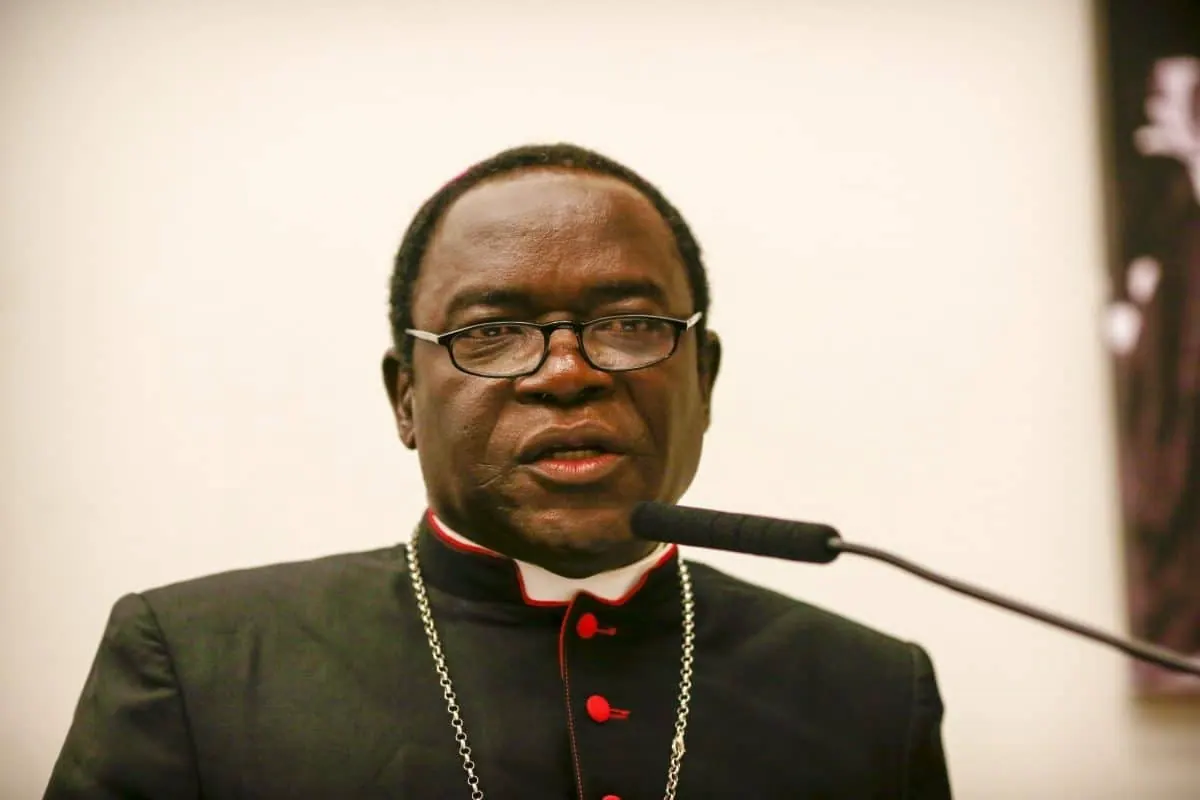
The Catholic Bishop of Sokoto Diocese, Bishop Matthew Hassan Kukah, has expressed concern over the gradual erosion of Catholic values in Nigeria's public and private life. He made this statement while delivering a lecture titled, "To Conquer or to Serve? Thoughts on the Contributions of the Catholic Church to Human Development and the Making of a Good Society in Nigeria." The lecture was part of activities commemorating the life and legacy of the late Rev. Fr. Denis Slattery.
Kukah reflected on the concept of "soft power" developed by the late Harvard scholar, Joseph Nye, which closely aligns with the teachings of Jesus Christ and the approach adopted by missionaries who established schools, hospitals, and other institutions across Nigeria. He challenged former students of Catholic institutions to reflect on whether the values they acquired in Catholic schools had continued to influence their decisions in their professional, political, and private lives.
The bishop argued that competing social, political, ethnic, and fraternity affiliations had increasingly influenced the choices of many Catholics, sometimes at the expense of commitment to the Church. He stated that where people repeatedly invest their time, resources, friendships, and ambition eventually forms them, and if the parish receives the remnants of their time while other associations receive their best energy, those associations will exercise greater influence over their public choices.
Kukah warned that failure to transmit Catholic values to younger generations could weaken the Church's influence in society. He stressed that once the Church is unable to hand on to its children a moral banner of Catholic values without stain, the future is in danger, as moral values erode, diminish, and finally vanish from moral choices.
The bishop traced the historical contribution of Catholic missionaries to Nigeria's development, particularly in education and healthcare. He noted that missionaries regarded the improvement of earthly life as an important component of their Christian mission and established schools and healthcare facilities as part of their evangelization and human development efforts.
Kukah cited Catholic Church statistics indicating that the Church operates more than 231,000 schools and universities in 171 countries, educating about 72 million students. In Nigeria, there are about 5,100 Catholic nursery, primary, and secondary schools, excluding tertiary institutions, which represent important channels through which the Church has contributed to Nigeria's human capital development.
Kukah urged the Catholic community to reflect on its historical legacy and consider how it could renew its contribution to building a just and morally responsible Nigerian society. He emphasized that the challenge before the Church is not merely to preserve its institutions but to ensure that the values that inspired their creation continue to shape the conduct of those who pass through them.
Key points
- Bishop Matthew Hassan Kukah laments erosion of Catholic values in Nigeria's public and private life.
- The Catholic Church has contributed significantly to Nigeria's development, particularly in education and healthcare.
- Failure to transmit Catholic values to younger generations could weaken the Church's influence in society.