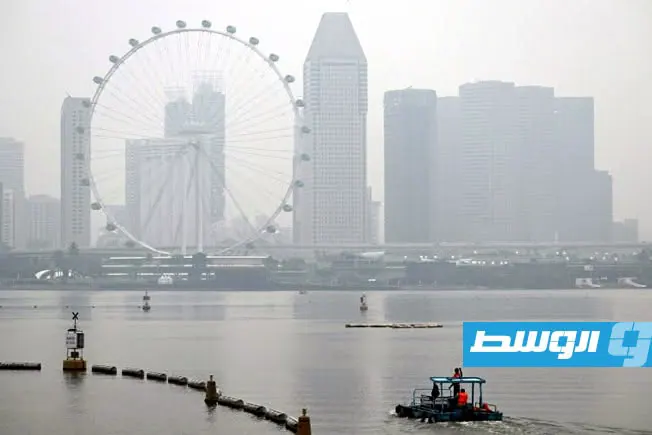
Kuala Lumpur, the capital of Malaysia, has taken the top spot on the list of most polluted cities globally, with Singapore ranking third. This is due to a thick haze caused by forest fires in neighboring Indonesia. According to data from Swiss-based air quality monitoring organization IQAir, Kuala Lumpur recorded a reading of 166 points on the air quality index, while Singapore registered 155 points. Both readings exceed 150 points, categorizing them as "unhealthy."
The haze affecting several regional cities has persisted for over a month, resulting from ongoing fires on the Indonesian islands of Borneo and Sumatra. The situation has worsened due to traditional agricultural burning and hot, dry weather conditions brought on by the El Niño climatic phenomenon. These factors have combined to increase the severity and difficulty of controlling the fires.
Indonesia has responded by deploying thousands of soldiers to combat the forest fires. The country's efforts aim to mitigate the impact of the haze on neighboring countries and improve regional air quality. The situation highlights the transboundary nature of environmental issues and the need for coordinated responses.
The effects of the haze have been felt across the region, with both Malaysia and Singapore experiencing significant declines in air quality. Residents in these countries have been advised to take precautions to minimize their exposure to the polluted air. The situation has also raised concerns about the long-term health impacts of such environmental events.
Air quality monitoring organizations like IQAir play a crucial role in tracking and reporting pollution levels. Their data informs the public and policymakers about the severity of air quality issues, enabling more effective decision-making. In this case, the data has helped raise awareness about the haze's impact and prompted responses from governments.
The El Niño phenomenon has been linked to increased fire risk and severity in various parts of the world. Understanding and addressing this climatic event is essential for mitigating its effects on the environment and human health. Research into El Niño and its implications for environmental management is ongoing.
The haze crisis highlights the importance of regional cooperation in addressing environmental challenges. Indonesia, Malaysia, and Singapore must work together to develop and implement effective strategies for managing forest fires and improving air quality. This cooperation can help reduce the impact of such environmental events and promote a healthier environment for all.
Key points
- Kuala Lumpur has topped the list of most polluted cities globally due to haze from Indonesian forest fires.
- The haze has affected several regional cities, including Singapore, which ranks third in pollution levels.
- Indonesia has deployed thousands of soldiers to combat the forest fires, which have been exacerbated by the El Niño climatic phenomenon.