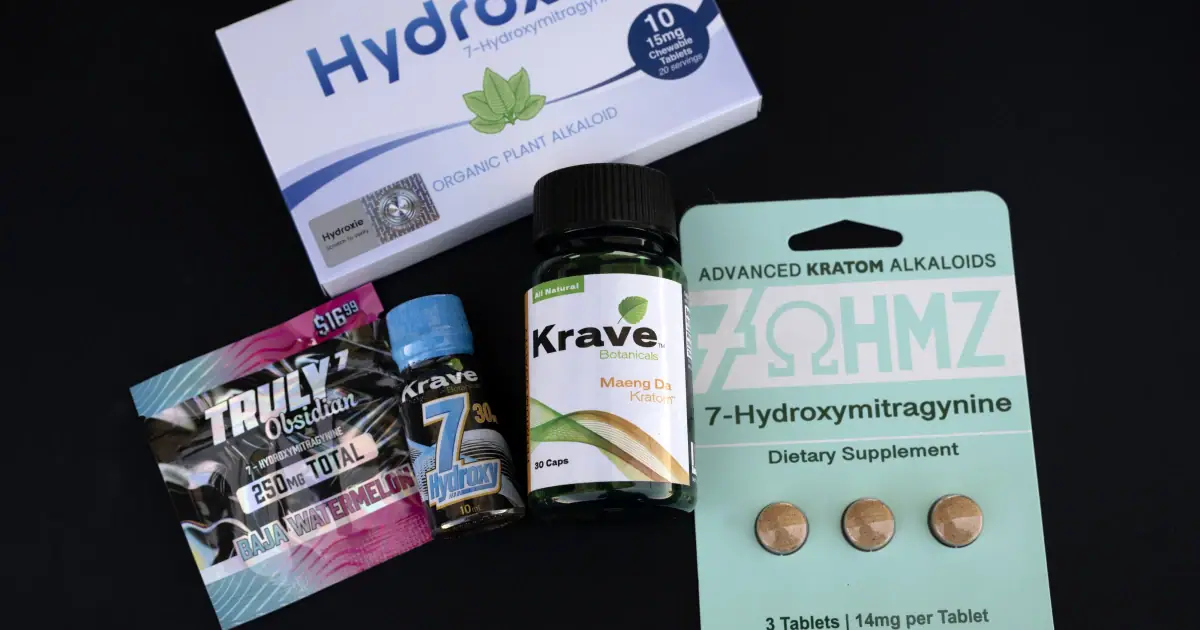
Tyler, 38, credits kratom leaf powders with helping him overcome opioid addiction a decade ago. However, after discovering 7-OH products at a gas station, he experienced euphoria similar to opioids. His positive experience turned negative when he struggled with withdrawal symptoms and ended up in a rapid detox program in Michigan. Tyler's story highlights the potential risks associated with kratom and 7-OH products, which have become increasingly popular in recent years.
Kratom, derived from a tree in the coffee family, has been used by some individuals to manage opioid addiction, chronic pain, and mental health. 7-OH, or 7-hydroxymitragynine, is a major psychoactive ingredient in kratom, found in small amounts naturally. However, highly concentrated 7-OH products have emerged, often in the form of tablets, gummies, and tonics, which can be misleadingly labeled. This lack of clear labeling makes it difficult for users to determine the quantity of substances they are consuming.
Researchers and policy officials have observed classic signs of addiction among users of kratom and 7-OH products. David Epstein, a senior investigator at the National Institute on Drug Abuse, notes that estimates of kratom use vary widely, ranging from 5 million to 15 million people in the US. The US government has attempted to restrict kratom and 7-OH products, but strong opposition from advocacy groups has kept them federally legal. However, a federal crackdown on certain 7-OH products is likely, with new restrictions potentially taking effect soon.
The path to regulating 7-OH products has been complex. In August, the DEA restricted three semi-synthetic opioids derived from 7-OH, but later revised its stance after backlash from kratom advocates. The US Department of Health and Human Services issued a new recommendation on 7-OH and MGPI, leading the DEA to plan restrictions on products with higher concentrations of these substances. Advocates argue that natural kratom products should remain legal, as they claim to have helped individuals manage chronic pain and opioid addiction.
Some researchers have reported a significant increase in calls related to kratom, with a 1,200% rise in reports between 2015 and 2025. A recent report from 53 US poison control centers documented 233 deaths associated with kratom during 2015-2025, with 79% of those deaths involving multiple substances. Chris Holstege, a physician and professor of emergency medicine, notes that the most severe outcomes were linked to individuals using multiple substances alongside kratom products.
Despite concerns over addiction, some individuals report benefits from using kratom or 7-OH products. Angela Wilson, 44, credits 7-OH with helping her manage chronic pain related to endometriosis and symptoms of depression. She has been taking 32-40 milligrams of 7-OH daily for over a year and claims it has been "life-changing" for her and her family. However, Epstein warns that the risk of addiction is higher with 7-OH products than with whole leaf kratom.
As the federal government considers new restrictions on 7-OH products, individuals like Wilson and Tyler share their stories, highlighting the complexities surrounding kratom and 7-OH regulation. While some advocate for stricter controls, others argue that these products have helped them manage chronic pain and opioid addiction. The debate underscores the need for further research and nuanced discussions about the risks and benefits associated with kratom and 7-OH products.
Key points
- Kratom and 7-OH products pose risks of addiction and unclear labeling.
- Federal crackdown on certain 7-OH products is likely.
- Some individuals report benefits from using kratom or 7-OH products for opioid addiction and pain relief.