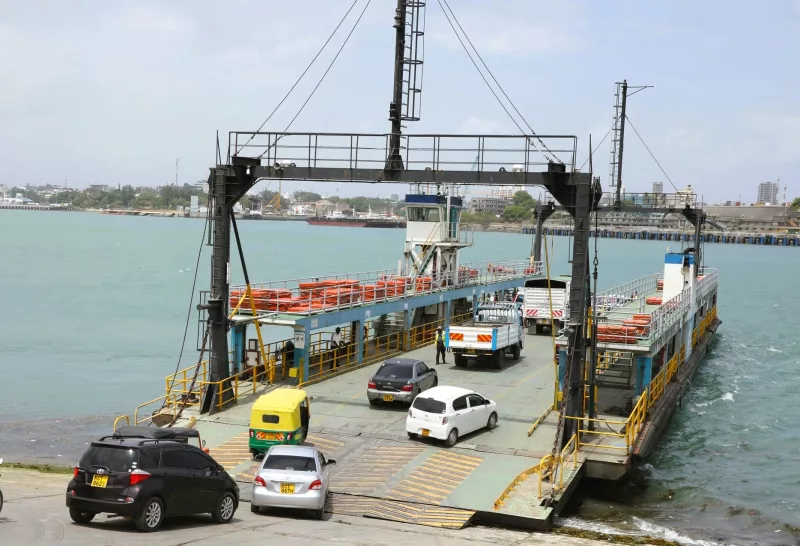
The Kenya Ports Authority (KPA) is upgrading the Likoni Ferry passenger terminal in Mombasa to maximize economic rewards and improve the ferry experience for over 500,000 passengers and 6,000 vehicles that use the service daily. The project, which is 70% complete, aims to ease congestion, enhance safety, and modernize the crossing. The Likoni Ferry is a vital 500-meter maritime crossing that connects Mombasa Island to the southern mainland suburb of Likoni, serving as the main highway route to Diani Beach in Kwale County and the Tanzania border.
The Likoni Ferry is fully managed and operated by the KPA, following the dissolution and absorption of the former Kenya Ferry Services (KFS). The ferries that ply the Likoni channel on a 24-hour basis play an important role in supporting fishing, trade, tourism, and local economic activities, serving as a lifeline for communities that depend on the Mombasa Island and South Coast for their livelihoods. The current ferries operating across the Likoni Channel include MV Jambo, MV Kwale, MV Likoni, and MV Safari.
KPA Chief Executive Officer (CEO) Capt. William Ruto said that the multimillion-shilling ferry project is aimed at easing congestion and ensuring a better experience for thousands of commuters who rely on the ferry. He said the new ferry terminal project aligns with the national government’s vision to improve regional maritime connectivity, positioning the port of Mombasa as a logistics hub in the region. The project also creates an opportunity for traders to operate in an organized commercial space.
The new terminal is part of a broader Traffic Circulation Management Plan being implemented by KPA to enhance safe passage of people and motor vehicles using the ferries daily. The primary objective of the Likoni ferry infrastructure upgrade is to provide safe, efficient, and reliable water transportation services for commuting residents and visitors alike. The project will enhance pedestrian facilities, ensure dedicated public transport areas, and upgrade roads and pavements, creating a safer and more connected environment around the ferry.
Capt. Ruto emphasized that the design of the new terminal rests on five pillars of connectivity – spatial, functional, environmental, social, and cultural – ensuring the ferry space will be not only efficient but also inclusive and dignified. The scope of works includes the reconstruction of passenger holding bays and the widening of landing ramps to ease the constant pressure of vehicles moving in and out of the marine vessels. Pedestrian skybridges and safer waiting sheds will be added to protect commuters from the daily scramble.
The government has committed Sh3 billion towards the project, with the new ferry expected to begin operations by December this year. The project is expected to be ready by early 2028 and will significantly improve mobility, safety, and business activities around the busy crossing point. Stakeholders and residents have welcomed the move to decongest the Likoni ferry crossing, noting that congestion and delays on this vital crossing are increasingly becoming a trade barrier for the region.
For years, residents and travelers have raised concerns over traffic congestion, long waiting hours, and overcrowding at the crossing, particularly during rush hours and holiday periods. The KPA CEO said safety remains a key priority in the development, noting that the new facilities have been designed to improve crowd control and enhance commuter safety. The project will also accommodate over 300 informal traders, ensuring small businesses remain part of the ferry ecosystem.
Key points
- The Likoni Ferry upgrade project aims to ease congestion, enhance safety, and modernize the crossing.
- The project will improve mobility, safety, and business activities around the busy crossing point.
- The new terminal will provide safe, efficient, and reliable water transportation services for commuting residents and visitors.