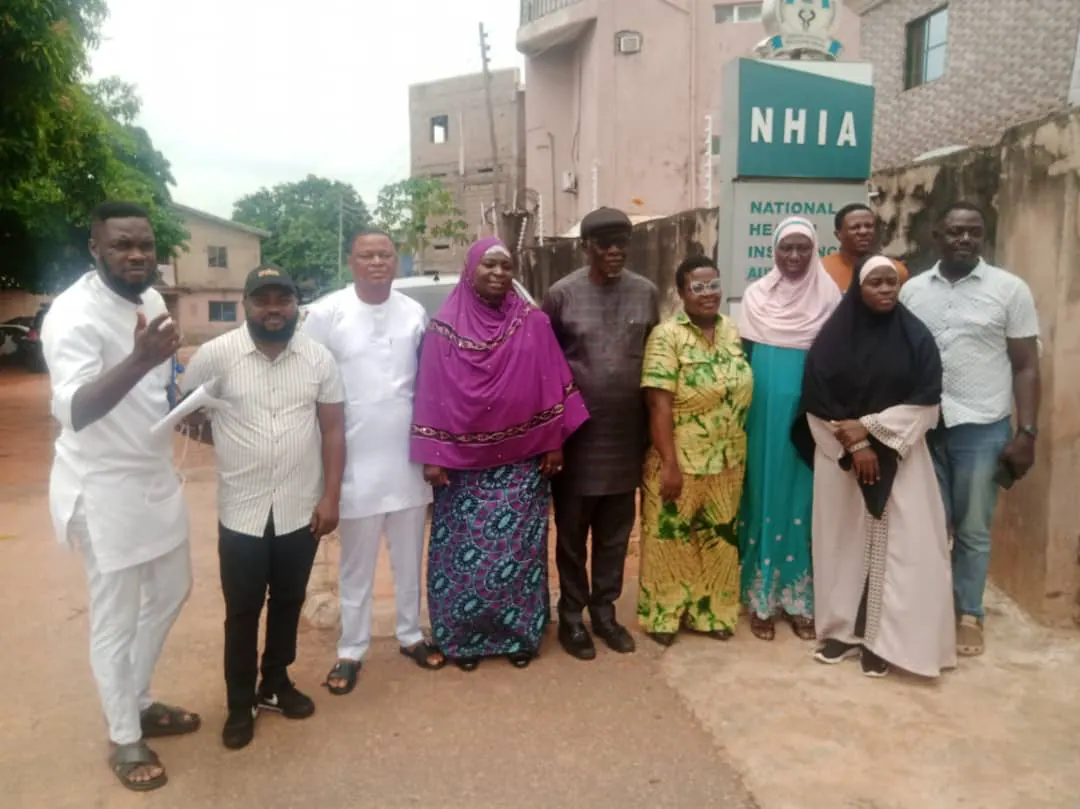
A civil society organisation, SAVE Initiative, has expressed concerns over the persistent gaps in access to healthcare in Kogi east. The organisation called on the National Health Insurance Authority (NHIA) to strengthen accountability and community-driven monitoring systems to improve service delivery. This was stated by the Executive Director of the organisation, Okai Muhammed, during an advocacy visit to the NHIA in Lokoja, the Kogi State capital.
Muhammed presented findings from a Community-Led Monitoring (CLM) exercise conducted across several communities in Kogi east. The findings revealed a disturbing pattern of neglect, poor infrastructure, and systemic barriers preventing citizens from accessing life-saving treatment. According to Muhammed, people are dying not because treatment does not exist, but because they cannot access it. He noted that access to healthcare services, especially for malaria, has remained far beyond the reach of many rural dwellers.
The CLM programme focuses on HIV/AIDS, Tuberculosis, and Malaria (HTM) and engages community members to track healthcare delivery and expose gaps in service quality and accessibility. Muhammed explained that data collected through client exit interviews conducted by field officers showed that many patients are turned away due to lack of drugs, personnel, or functional equipment. He described the condition of Primary Healthcare Centres (PHCs) as “grossly inadequate and unfit for human service.”
Muhammed criticised the state of healthcare facilities across Egume, Agala, Anyigba, and other parts of Kogi East. He noted that visiting a general hospital often reveals a lack of essential equipment and personnel. The situation has led to a significant number of patients being turned away due to the inability of the facilities to provide adequate care. This has resulted in calls for urgent intervention from the NHIA.
Other stakeholders have also expressed concerns over the conduct of some hospitals operating under the National Health Insurance Scheme. Chief Stephen Salawu, Executive Director of Citizens Empowerment Projects Advocacy Trust (CEPAT), criticised the practice of some hospitals telling patients that prescribed drugs are out of stock and forcing them to purchase them outside at additional cost. Salawu urged the NHIA to ensure that enrollees can access healthcare services seamlessly across the state.
Responding to the concerns, Dr Musa Rukaiyat, speaking on behalf of NHIA, commended SAVE Initiative for the advocacy and admitted that several Primary Healthcare Centres in Kogi State remain in deplorable condition. She explained that under the Basic Healthcare Provision Fund, resources are allocated to improve access to care, with funding shared between the NHIA and the National Primary Health Care Development Agency for infrastructure and service delivery.
Dr Rukaiyat noted that the NHIA has provisions that allow enrollees to receive medical care beyond their registered locations. She also explained that there is a policy mandating hospitals to procure any prescribed medication not readily available for an enrollee in need. Dr Rukaiyat urged enrollees to channel their complaints to the agency for prompt action to ensure they enjoy quality healthcare services.
Key points
- The SAVE Initiative has called for strengthened accountability and community-driven monitoring systems to improve healthcare service delivery in Kogi east.
- The NHIA has admitted that several Primary Healthcare Centres in Kogi State remain in deplorable condition despite ongoing interventions.
- The agency has provisions that allow enrollees to receive medical care beyond their registered locations.